Low VOC paint means the coating carries a certified low volatile organic compound content, usually measured in grams per litre, and it's the right call for bedrooms, nurseries and anywhere occupants are sensitive to fumes. It doesn't remove every risk: ventilation still matters once the tin is open, and tinting a "low VOC" base can quietly push the finished colour above the threshold you thought you were buying.
TL;DR:
- Tinting can significantly increase VOC levels, especially with saturated colors, so confirm the retailer uses certified low-VOC tint systems before purchasing.
- Even genuinely low-VOC paint requires continuous ventilation during and after application, ideally for at least 72 hours, to minimize indoor emissions.
- Safety data sheets and certification marks like GreenGuard or Green Seal provide more accurate VOC and emission information than marketing claims on the can.
- Low-VOC options are most available in interior matt and satin wall paints, with durability considerations influencing VOC levels for exterior and high-traffic finishes.
- Schedule low-VOC painting during renovation phases that allow for full off-gassing time and consider using a portable HEPA filter for prolonged drying or humid conditions.
Table of Contents
- What does low VOC paint actually mean?
- Health and environmental benefits of low VOC paint
- Low VOC vs zero VOC: the tinting caveat that trips people up
- How to use low VOC paint safely: ventilation and reoccupation
- How to choose a low VOC paint: data sheets and certification marks
- Which paint types and finishes come in low VOC options
- Planning tip: fit low VOC painting into your renovation schedule
- A short note on balancing health, performance and cost
- Plan your painting and ventilation schedule with House A-Z
- Sources
- FAQ
What does low VOC paint actually mean?
VOC content is measured in grams per litre (g/L), and that figure is the backbone of every low or zero VOC claim on a tin. Zero-VOC is not literally zero; it's a threshold set at the can, before any colourant goes in, so the number on the shelf label describes the base, not necessarily what ends up on your wall.
Thresholds vary by paint category and by jurisdiction, which is why a "low VOC" flat wall paint and a "low VOC" gloss trim paint can carry very different g/L limits and still both wear the label honestly. The complicating factor is exemption. The EPA notes that certain compounds excluded from outdoor air-quality rules can still matter indoors, and that some certification schemes measure raw content while others measure actual emissions after the paint is dry. Those are different things. A product can pass a content test and still emit noticeably indoors, so the label is a useful filter, not a guarantee of clean air.
Health and environmental benefits of low VOC paint
The immediate, noticeable benefit is less odour and a faster return to a room that doesn't smell like a chemistry set. Lower solvent content generally means less off-gassing in the days after painting, and retailer guidance from B&Q lists reduced odour and lower environmental impact among the standard advantages of switching away from conventional solvent-heavy formulas.
Infants, people with asthma, and anyone with chemical sensitivities tend to benefit most, since their reactions to airborne irritants show up faster and more severely than they would for a healthy adult. The World Health Organization's work on air pollutants frames VOCs as one of several indoor pollutant categories worth managing for exactly this reason.
Low VOC is one measure, though, not a full safety rating. Pigments, preservatives, and other non-VOC ingredients can still affect sensitive people, and a paint can be low in VOCs while still smelling strong or containing other additives worth checking on the data sheet.
Low VOC vs zero VOC: the tinting caveat that trips people up
Here's the catch almost nobody explains at the till: the VOC figure on the tin usually describes the base product, before your chosen colour goes in. Tinting adds VOCs, sometimes enough to knock a "zero VOC" base well above its own claimed limit once it's mixed to your chosen shade.
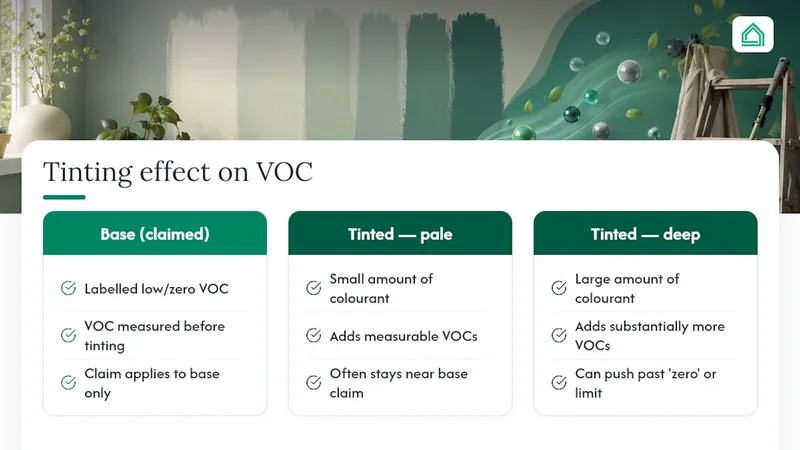
Lowe's buying guidance confirms that zero-VOC is a regulatory threshold that tinting can push past, and independent analysis backs this up: universal colourants commonly add measurable VOCs, and odour intensity doesn't reliably track VOC content either way. A pale, low-saturation colour needs relatively little tint. A deep, saturated navy or forest green needs considerably more, which is precisely when the final can drifts furthest from the base claim.
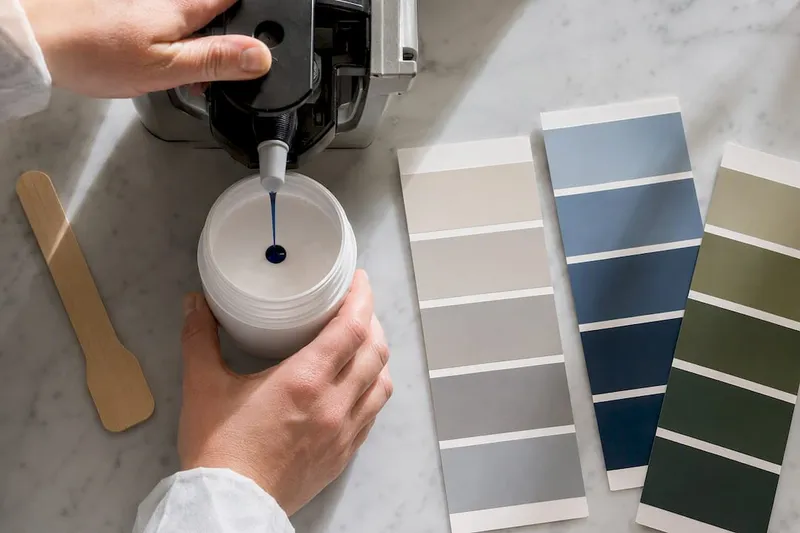
The fix is simple: ask the retailer or the paint counter whether they use a certified low-VOC tint system, not just a low-VOC base. If they can't answer that, treat the "low VOC" label as aspirational rather than confirmed.
How to use low VOC paint safely: ventilation and reoccupation
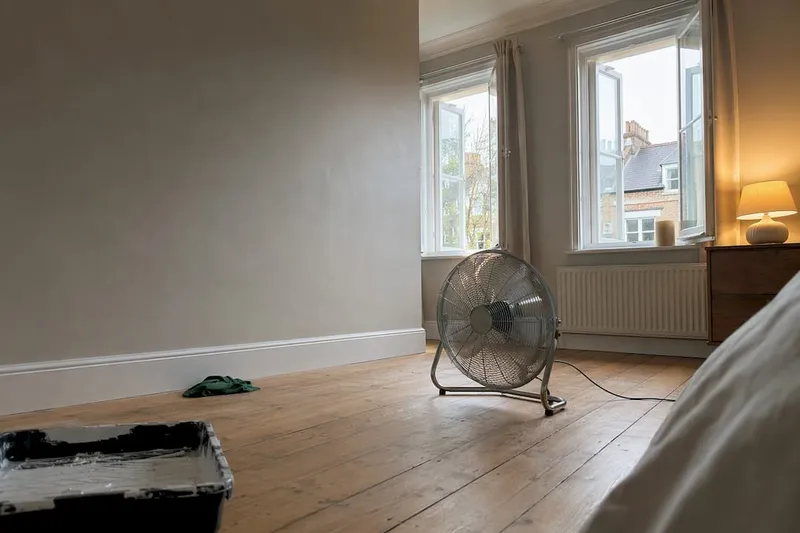
Even a genuinely low-VOC product needs airflow while you work and afterwards. VOC emissions peak during application itself, when solvents are actively evaporating off a wet film.
- Ventilate continuously while painting. Open windows, run extractor fans, and keep air moving through the room for the full duration of the job.
- Keep ventilating after you finish. Manufacturer guidance from Behr recommends continuous ventilation for at least 72 hours post-application, since many emissions drop sharply in that window.
- Don't assume it's over at 72 hours. Some emissions can linger for two weeks or longer at lower, tapering levels, which matters more for infants and people with respiratory conditions than for a healthy adult passing through occasionally.
- Plan around sensitive occupants. If you're painting a nursery or a bedroom used by someone with asthma, time the job for a weekend when the room can sit empty and aired, or arrange for them to sleep elsewhere for a few nights.
- Use a portable HEPA filter in the room if the paint is drying slowly due to cold or humid conditions, which extends the emission tail.
Pro Tip: If a room can't get a proper cross-breeze, improving general indoor air handling before you paint, rather than after, makes the 72-hour window far more effective.
How to choose a low VOC paint: data sheets and certification marks
Skip the marketing copy on the front of the tin and go straight to two documents: the technical data sheet and the safety data sheet. Buyer guidance confirms these list the VOC figure as supplied and, where available, as mixed, plus recoat times and application conditions that affect how fast fumes actually clear.
Third-party marks like GreenGuard Gold or Green Seal are worth checking too, but understand what each one tests. Some certify raw VOC content at the can; others test actual emissions from a cured, dry film, which is closer to what you'll breathe once the paint is on the wall.
A practical checklist before you buy:
- Confirm the g/L figure on the data sheet, not just the "low VOC" badge on the front.
- Ask specifically whether the tint system is certified low VOC, not only the base.
- Check the recommended recoat and ventilation times for that specific product.
- Prioritise certified low-VOC options for nurseries, bedrooms, and any room with limited airflow.
Which paint types and finishes come in low VOC options
Interior wall paints in matt and satin finishes have the widest low-VOC selection, and most major ranges now offer a compliant version alongside the standard formula. Primers and trim paints are catching up too, though options thin out for specialist finishes like high-gloss enamel.
Durability sometimes has to win the trade-off. Exterior paint, front doors, and skirting boards that see constant knocks and scuffs generally need the tougher, more solvent-dependent formulas, and a slightly higher VOC figure there is a reasonable compromise given the low ongoing exposure outdoors or in a well-ventilated hallway.
For sheen, matt suits low-traffic living spaces where you're not wiping the walls down. Satin or eggshell earns its keep in kitchens, bathrooms, and children's rooms, where wipeability matters more than a perfectly flat look, and both are widely available in low-VOC formulations.
Planning tip: fit low VOC painting into your renovation schedule
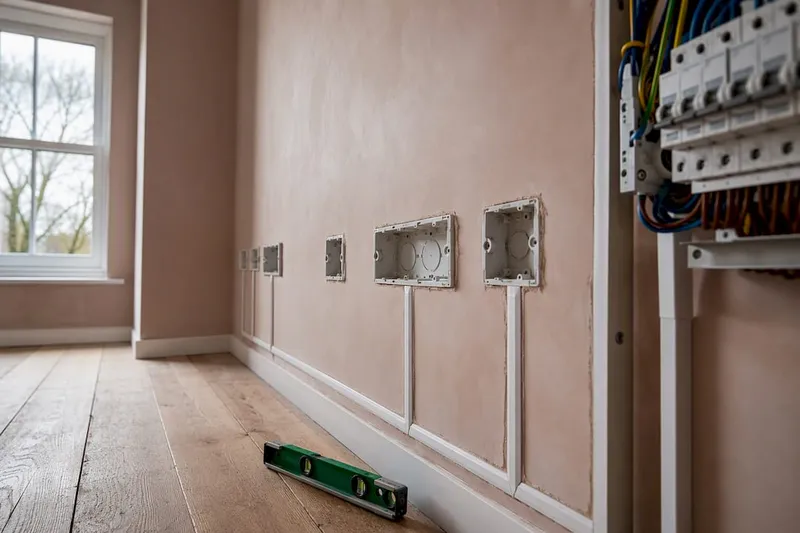
Prioritise low VOC paint for nurseries, bedrooms, and any room that's just been freshly plastered or sealed, since those surfaces are already off-gassing on their own. Schedule painting after major dusty trades finish, and budget extra time and, where possible, heating or fans to speed up safe reoccupation rather than rushing a family back into a freshly painted room.
A short note on balancing health, performance and cost
Choose the right paint for the surface first: durability where it's needed, low VOC where sensitivity or occupancy demands it. Read the data sheet, ask about the tint system before you buy, and you'll avoid the gap between what the label promises and what you actually breathe.
— Azai
Sources
- Technical overview of volatile organic compounds | US EPA
- Lowes guide: VOC paint vs no-VOC paint
- VOC explained — CompositePaint
FAQ
What is low VOC for paint?
Low VOC paint contains a reduced level of volatile organic compounds, measured in grams per litre against a threshold set for its product category, typically well below conventional solvent-based formulas.
What is very low VOC or zero VOC paint?
Zero-VOC paint meets an even stricter g/L ceiling at the base, before tinting, though colourant added at the counter can raise the final figure above that claimed limit.
Is Dulux low VOC paint?
Dulux, like most major manufacturers, offers specific ranges formulated to meet low-VOC standards, but not every product in its catalogue qualifies. Check the individual product's technical data sheet for the g/L figure rather than assuming the whole brand is uniformly low VOC.
How safe is low VOC paint?
Low VOC paint reduces short-term chemical exposure and odour compared with conventional paint, but it isn't risk-free. Emissions peak during application and continuous ventilation for at least 72 hours is recommended afterwards, since some off-gassing can continue for two weeks or longer at lower levels.