The most effective home maintenance schedule runs on three rhythms at once: monthly essentials, seasonal deep checks, and annual professional inspections. Five recurring tasks matter more than any other line on your calendar: testing smoke and carbon monoxide alarms, checking or swapping HVAC filters, clearing dryer lint, cleaning gutters, and hunting down leaks before they spread. Everything else in this guide builds around those five, adjusted for your home's age and your local climate.
TL;DR:
- Regularly testing smoke and carbon monoxide alarms each month is crucial, with full replacements recommended every 10 years.
- Seasonal tasks include cleaning gutters in spring and autumn, inspecting roofs, and preparing heating systems before winter.
- Annual inspections should cover HVAC servicing, roof checks, chimney cleaning, and water heater maintenance to prevent costly failures.
- The maintenance schedule should be tailored to local climate and home age, with reminders set for recurring tasks to ensure consistency.
- Using a simple log or digital tool helps track task completion, findings, and costs, supporting budget management and resale value proofs.
Table of Contents
- What should a home maintenance schedule include?
- Which monthly maintenance tasks matter most?
- What does a seasonal home maintenance schedule look like?
- What annual inspections and budgeting rules matter?
- How do you build your own maintenance calendar?
- What tools and checklist formats actually work?
- How systematic planning protects your budget
- What actually keeps a maintenance habit alive?
- Sources
- FAQ
What should a home maintenance schedule include?
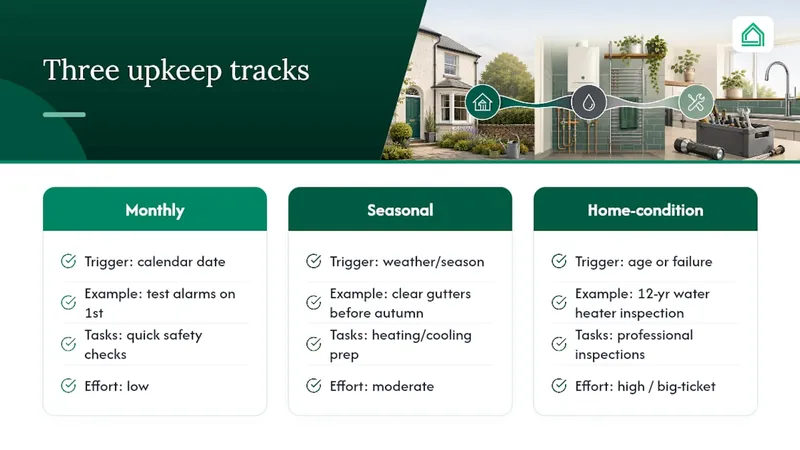
A home maintenance schedule is really three overlapping calendars stitched together. There's the monthly layer, made up of quick, low-effort safety and efficiency checks. There's the seasonal layer, which handles weather-driven jobs like gutter clearing or heating prep. And there's the annual (or multi-year) layer, reserved for professional inspections and big-ticket replacements. Most homeowners try to run all three as one messy list and end up doing none of them properly.
Think of it less as a chore chart and more as a home upkeep plan with built-in triggers. Some tasks are triggered by the calendar (test alarms on the first of the month). Others are triggered by the season (clear gutters before autumn leaf fall). And a few are triggered by the home itself (that 12-year-old water heater is due for a professional look, whatever month it is). Once you separate these three triggers, the whole system stops feeling like an endless list and starts feeling like something you can actually stick to.
The rest of this guide walks through each layer, with specific tasks, timing, and who should be doing the work.
Which monthly maintenance tasks matter most?
Monthly maintenance is where most of the real safety payoff sits, and it takes under thirty minutes if you batch it into one sitting.
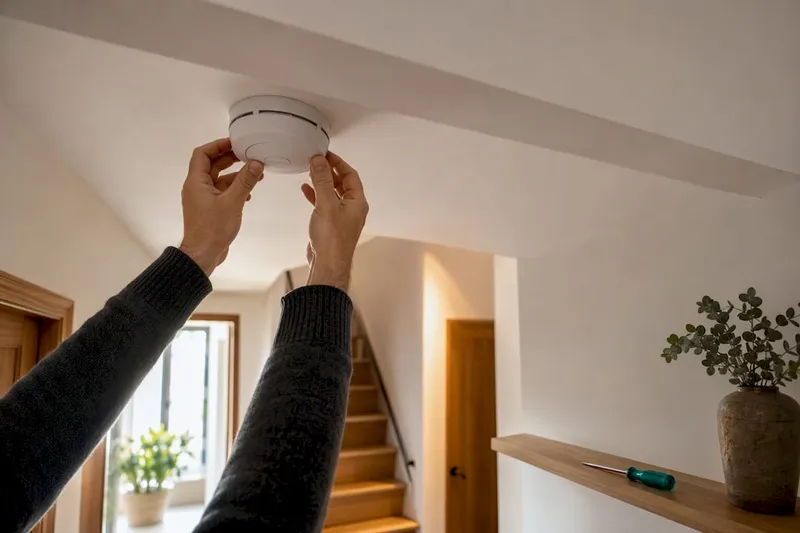
- Test every smoke and carbon monoxide alarm. The Consumer Product Safety Commission recommends monthly testing, annual battery replacement (unless the unit has a sealed 10 year battery), and full unit replacement after 10 years.
- Check your HVAC filter. Department of Energy guidance suggests inspecting filters monthly during peak heating or cooling season, and at least every three months the rest of the year. A clogged filter forces your system to work harder, which drives up energy use and shortens equipment life.
- Clear the dryer lint trap and vent duct. A blocked vent is one of the more overlooked fire risks in an ordinary home and takes two minutes to check.
- Run a rapid plumbing sweep. Look under sinks, around the water heater, and near the washing machine hose for damp patches, drips, or mineral staining.
- Check exterior vents and drains for blockages, especially after wind or heavy rain.
Write the date and what you found in a simple log, even a notes app entry works. If a filter looked greyer than usual or an alarm chirped weakly before you tested it, that note becomes useful evidence later, whether you're troubleshooting a recurring problem or proving to a buyer that the home was cared for.
Pro Tip: Pick one recurring date, like the first Saturday of the month, and pair it with something you already do, such as paying rent or a mortgage. Habit stacking like this is why the five-minute alarm test actually gets done, rather than sliding into "next weekend" forever.
What does a seasonal home maintenance schedule look like?
A seasonal home maintenance schedule is where the weather does the scheduling for you. Each season brings its own failure points, and tackling them in order, rather than reacting after something breaks, is what separates a well-kept home from a stressed one.
1. Spring: recovery and preparation
Spring is about assessing what winter did to your home and getting cooling systems ready before the heat arrives.
- Clean gutters and downspouts of winter debris; check that water flows away from the foundation, not toward it.
- Walk the roofline from the ground with binoculars, looking for missing or curling shingles.
- Inspect outdoor drainage and grading; standing water near the foundation is a warning sign, not a curiosity.
- Check window and door seals for winter cracking, and re-caulk where needed.
- Book a professional air conditioning inspection before the first hot week, rather than during it.
DIY handles the gutters, the visual roof scan, and the caulking. A qualified HVAC technician should handle the air conditioning service, ideally in early to mid spring before appointment books fill up. The NAHB's routine maintenance guidance treats gutter clearing and roof checks as two of the highest-value routine tasks for protecting a home's value.
2. Summer: exterior upkeep and pest control
Warm, dry weather is the best window for exterior jobs that would be miserable in winter.
- Touch up exterior paint and check caulking around windows, doors, and trim.
- Inspect for pest activity, especially termites and carpenter ants, around wood-to-soil contact points.
- Clean and inspect the deck or patio; check for loose boards, rot, or rusted fixings.
- Give the air conditioning filter a deeper clean or swap, on top of your monthly check.
Most of this is comfortably DIY. Call a licensed pest professional only if you spot actual activity, mud tubes, frass, or hollow-sounding wood, rather than as a routine precaution. Aim to get exterior painting and deck work done by mid-summer, before the year's hottest weeks make outdoor labour unpleasant.
3. Autumn: heating prep and leaf management
Autumn is the season where skipping a task actually costs you money through the winter.
- Schedule a professional furnace or boiler service before the heating season starts.
- Book a chimney sweep if you have a working fireplace or wood stove.
- Clear leaves from gutters again; a single autumn storm can undo a spring clean-up.
- Draught-proof windows, doors, and any loft hatches.
- Disconnect and drain outdoor hoses before the first frost.
The furnace service and chimney sweep are professional jobs, and both get booked solid as the weather turns, so aim for early autumn rather than waiting for the first cold snap. Energy Department guidance points to autumn furnace inspection and sealed ductwork as two of the more reliable ways to cut heating costs over winter.
4. Winter: protection and emergency readiness
Winter maintenance is mostly about damage prevention rather than active projects.
- Insulate exposed pipes in unheated spaces like garages, crawl spaces, and exterior walls.
- Know where your main water shut-off valve is, and check it turns freely, before you need it in an emergency.
- Clear snow and ice from walkways and roof valleys where ice dams tend to form.
- Keep an eye on indoor humidity; the EPA recommends keeping relative humidity between 30% and 50% to inhibit mould growth during the closed-up winter months.
If a pipe does burst or a roof leak appears, dry the affected materials within 24 to 48 hours. That window is genuinely the difference between a damp patch and a mould problem, according to the same EPA guidance. Anything involving frozen or burst pipes, gas smells, or ice dams thick enough to lift shingles is a call-a-professional situation, not a weekend project.
What annual inspections and budgeting rules matter?
Some jobs don't fit neatly into any single season. They happen once a year, or once every few years, and they tend to be the ones homeowners forget until something fails.
- Professional HVAC service, ideally twice yearly (spring for cooling, autumn for heating).
- Roof inspection by a qualified roofer every few years, per NAHB guidance, or sooner after major storms.
- Chimney sweep, annually if the fireplace or wood stove sees regular use.
- Water heater maintenance, including a flush to clear sediment buildup, roughly once a year.
- Electrical safety check, especially in homes over 20 years old or before any major renovation.
Some items run on longer cycles. Smoke alarms need full replacement at 10 years, not just new batteries, per CPSC guidance. Water heaters typically last 8 to 12 years, roofs 15 to 30 depending on material, and exterior paint 5 to 10 years depending on climate exposure.
Budgeting rule of thumb: many financial planners suggest setting aside somewhere between 1% and 4% of your home's value each year for maintenance and eventual repairs, scaling toward the higher end for older properties or homes with deferred work. A newer build in good condition sits closer to 1%, while a century-old house with an ageing roof and original wiring belongs nearer 4%.
Household spending data, such as the figures the Office for National Statistics tracks, gives useful context for how much households typically allocate to housing upkeep, but your own number should reflect your specific home's age, materials, and history far more than a national average.
How do you build your own maintenance calendar?
Building a personalised schedule is less about software and more about honestly mapping tasks to a calendar you'll actually check.
- Start with your local climate. If you get hard frosts, pipe insulation and shut-off valve checks move higher up your winter list. If you're in a humid region, the EPA's 30% to 50% humidity guidance becomes a year-round watch item, not just a winter one.
- Adjust for your home's age. A home under 10 years old can often stretch some inspection intervals; anything over 30 years benefits from tighter electrical and roofing checks.
- Slot monthly tasks into a recurring reminder on whatever calendar app you already use, rather than a separate system you'll forget to open.
- Book seasonal professional visits in the shoulder weeks before demand spikes, HVAC technicians and chimney sweeps get booked solid the moment the weather turns.
- Log everything: date, task, what you found, photos where relevant, and receipts for paid work. This record becomes invaluable both for tracking warranty coverage and for proving upkeep to a future buyer.
Red flags that skip the calendar entirely and warrant an immediate call include: any gas smell, a carbon monoxide alarm sounding, water actively pooling indoors, or visible structural cracking. Everything else can wait for its scheduled slot.
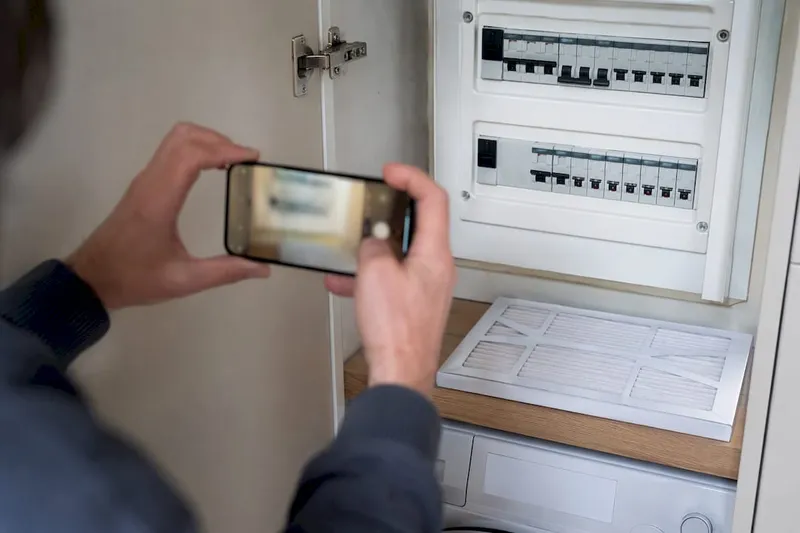
Pro Tip: Photograph the inside of your electrical panel, the model plate on your water heater, and your HVAC filter size once, then keep those photos in one folder. It saves a frustrating crawl-space trip every single time you need to reorder a part.
What tools and checklist formats actually work?
Three formats cover most needs: a monthly one-page checklist for the quick safety sweep, a seasonal planner with space for DIY and professional tasks side by side, and an annual inspection tracker for the bigger, less frequent jobs.
A compact toolkit handles almost everything above:
- A step ladder, for gutters, vents, and alarm testing.
- Basic hand tools: screwdrivers, an adjustable spanner, pliers.
- A moisture meter, to catch damp problems before they become visible.
- A torch and spare batteries, kept somewhere other than "wherever we left them last."
For tracking, a simple spreadsheet with columns for date, task, finding, and cost covers most homes. Others prefer calendar reminders alone, or a physical notebook kept in a kitchen drawer. What matters is consistency, not the tool.
How systematic planning protects your budget
Homes fail in predictable ways, and most of the cost comes from delay, not from the repair itself. A leak spotted early is a patch. A leak ignored for a season is a subfloor replacement.
House A‑Z was built around exactly that gap. The platform brings budget tracking, AI-driven design and planning insights, and contractor collaboration into one interface, replacing the usual scramble of spreadsheets and disconnected apps. Some users have reported catching significant planning errors before they became real costs, simply because the numbers and the timeline lived in one place instead of six.
That's the practical case for treating maintenance the same way you'd treat a build: with one coordinated view rather than scattered notes. A tool like House A‑Z can help track which contractor handled which job, when a filter was last changed, and what a repair actually cost, which matters as much for a maintenance calendar as it does for a full renovation.
If you're managing several trades across a maintenance year, from the roofer to the HVAC technician to the electrician, contractor invoicing tools like Bidware can help keep those costs organised alongside your schedule.
Ready to stop rebuilding your maintenance calendar from scratch every January? House A‑Z's plans range from a free tier for basic tracking up to Pro at €29 per month for full budget and design tools, with Enterprise available from €99 per month for contractors and property managers coordinating multiple homes.
What actually keeps a maintenance habit alive?
Batch your monthly tasks into one sitting, the alarms, the filter, the lint trap, so it becomes one fifteen-minute ritual instead of five separate interruptions. Book trade visits in the shoulder seasons, before the phones start ringing off the hook. Prioritise the safety items first: alarms and leaks beat cosmetic touch-ups every time. Keep a minimal toolkit within reach, not buried in a shed you have to unlock. And write things down as you go. A logged habit outlasts a good intention by years, and the record you build becomes the single most convincing document you'll ever hand a buyer or an insurer.
— Azai
Sources
- CPSC carbon monoxide and smoke alarm guidance
- DOE / HVAC filter guidance
- EPA brief guide to mould, moisture and your home
- NAHB routine home maintenance guidance
FAQ
What should a maintenance schedule include?
A solid schedule includes monthly safety checks (alarms, filters, dryer vent), seasonal tasks tied to weather (gutters, heating prep, drainage), and annual professional inspections (HVAC service, roof, chimney, water heater). It should also include a simple log of dates, findings, and costs.
How do you create a home maintenance schedule?
Start by mapping tasks to your climate and home's age, then slot monthly checks into a recurring calendar reminder and book seasonal professional visits during shoulder weeks before demand peaks. Keep a written record of every task, since that log becomes useful for both warranty claims and resale.
What are five items that regular maintenance checks cover?
The five recurring priorities are smoke and carbon monoxide alarms, HVAC filters, dryer lint and vents, gutters, and leak checks around plumbing fixtures. Each one carries either a direct safety risk or an outsized cost if ignored, which is why they anchor the monthly layer of the schedule.
What routine maintenance does a house typically need?
A house typically needs monthly alarm and filter checks, seasonal jobs like gutter clearing and heating prep, and annual professional services covering HVAC, roofing, and water heaters. Older homes usually need tighter inspection intervals for electrical and plumbing systems than newer builds.