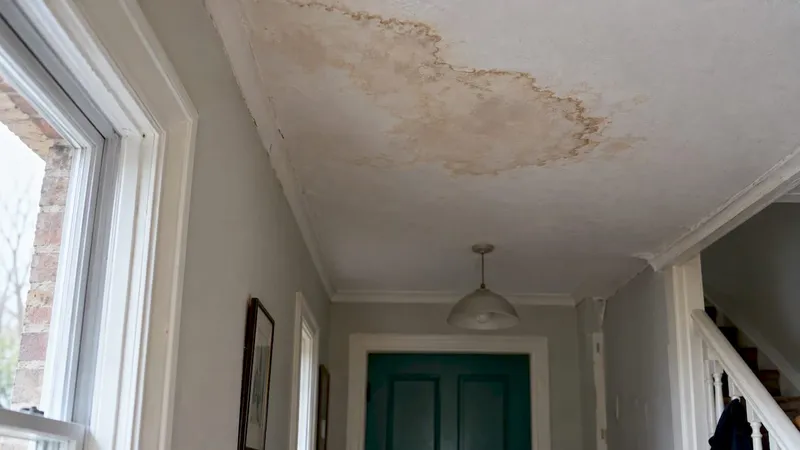
A warranty claim follows the same arc almost everywhere. You check what your warranty promises, report the fault in writing with solid evidence, the provider assesses it, and you get a repair, a replacement or a refund. If the answer is no, you can challenge it. The detail that decides the outcome is rarely the fault itself. It is how well you documented it and how closely you followed the stated procedure.
This guide walks through each stage, with a focus on homes: new builds, renovations and the appliances and fittings that go into them. Rules differ by country, so where a law or scheme is specific to one place, we say so.
TL;DR
- Read the warranty first: how to claim, how long it lasts, and whether it gives you a repair, replacement or refund.
- Report the fault in writing, quickly, with photos, dates and your proof of purchase or completion.
- Do not start repairs or accept a full replacement before the provider approves it, or the claim can be rejected.
- Simple claims often resolve within days, complex ones in weeks. Missing paperwork is the most common cause of delay.
- If you are refused, compare the reasons with your warranty wording, add evidence, use the formal appeal route, then go to a consumer body.
Table of Contents
- What a warranty claim is, and what to check before you start
- Step by step: how the claim process works
- How long does a warranty claim take?
- If your claim is approved: repair, replacement or refund
- If your claim is denied
- Can you claim after the warranty period ends?
- New homes and renovations: where claims get complicated
- Our perspective: claims are won before the fault appears
- Keeping your claim documents in one place
- Choosing contractors with claims in mind
- FAQ
- Sources
What a warranty claim is, and what to check before you start
A warranty claim is a formal request to the company that stands behind a product or piece of work: fix this, replace it or refund me, because it failed in the way the warranty covers. It is separate from your statutory consumer rights, which sit alongside the warranty rather than inside it.
Before you contact anyone, spend ten minutes with the paperwork. Citizens Advice says to look for three things: how to make a claim, how long the warranty lasts, and whether it entitles you to a refund, a repair or a replacement. Those three answers set the shape of everything that follows.
Then run through this short list:
- Who can claim. Only the person who bought the item can normally claim, unless the warranty includes third party rights. Check this if you bought second hand, were given the item, or bought a home from a previous owner. Citizens Advice makes the same point.
- Whether another cover already exists. If you paid by credit card, check whether the card extends warranty coverage. Canada's Office of Consumer Affairs notes that an extended warranty may add nothing if the card already does. Home insurance is worth checking too, a point Citizens Information in Ireland makes about optional extended warranties.
- Whether the terms are fair. Under EU law, warranty terms cannot be unfair or cut across statutory consumer rights, according to Citizens Information. A clause that tries to remove your legal rights is not the last word.
- Who you are dealing with. The US Federal Trade Commission suggests searching for complaints and reviews of a company before you rely on it.
Step by step: how the claim process works
1. Find the deadline and the claim route
Some warranties want a phone call first, some an online portal, some a letter. Use the route the document names. If the warranty gives a hotline for urgent requests, still follow up in writing. The FTC's guidance on new home warranties advises putting your repair request in writing, and says you may want to send it by certified mail with a return receipt, which is a US option. In the UK, an email with a read receipt or recorded delivery gives you a similar trail.
Time limits can be short. One manufacturer's help page asks for damaged-on-arrival equipment to be reported within 7 days of delivery, and missing parts ideally within 30 days. Your own warranty may be more generous or tighter, so read it.
2. Gather the evidence
A claim that arrives complete gets decided faster. Build a pack before you submit:
- Proof of purchase, completion certificate or handover paperwork
- The warranty document or policy number
- A clear description of the fault, when you first noticed it and what happened since
- Dated photos and short videos, including wide shots that show location and close-ups that show the defect
- Service or maintenance records where the warranty requires them
- Any earlier correspondence with the seller, builder or installer
What counts as good evidence depends on the product. A mattress maker, for example, asks for photos of the whole surface, the defect, the support base and the law tag. A repairer claiming on a customer's behalf may need to submit a detailed cost estimate, a diagnostic report, a failure description and photos or videos through the provider's portal. The principle is the same: let someone who has never seen your property understand the problem in one read.
3. Submit and keep proof
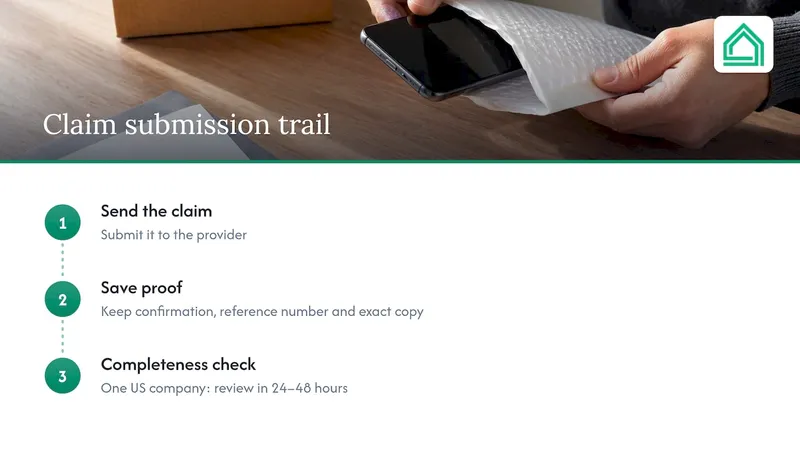
Send the claim, then save the confirmation, the reference number and a copy of exactly what you sent. Many providers acknowledge a claim and run a quick coverage check straight away. One US warranty company describes a specialist reviewing each submission in the first 24 to 48 hours for completeness and clear descriptions. Expect a similar first pass elsewhere, even if the timing differs.
4. Assessment and inspection
The provider reviews the claim against the terms. For building defects, that often means an inspection. Under BC Housing's home warranty process in Canada, the provider contacts you to review the claim, arranges an inspection with advance notice and reasonable access, and asks for any further information it needs. Be ready to give access and to answer follow-up questions promptly, because a missed call can quietly add a week.
5. Authorisation before work
This is where claims go wrong. Many schemes will only pay for work they have approved. One manufacturer's process states that repairs must not proceed without a Guarantee of Payment and that payment covers only accepted damage. Another says full unit replacements need pre-approval, and claims without it are rejected and must be resubmitted. Unless it is a genuine emergency, wait for the written go-ahead. If water is pouring through a ceiling, make the situation safe, photograph everything, tell the provider immediately and keep receipts.
6. Decision and resolution
You will get an approval, a denial or a request for more information. We cover each outcome below.
How long does a warranty claim take?
There is no universal figure, and anyone quoting one is generalising. A US warranty company's published guide suggests 3 to 5 business days for simple claims, 7 to 10 for standard ones and 10 to 21 for complex technical issues. Treat that as a rough picture of one market, not a promise from your provider. Your warranty document or the provider's own claims page is the place to find the real service targets.
What tends to slow a claim down, in our experience of how renovation projects run:
| Cause of delay | What you can do |
|---|---|
| Missing documents or unclear description | Submit a complete pack the first time |
| Specialist assessment needed | Offer inspection dates early and give access |
| Parts on back order or shipping | Ask for an estimated date in writing |
| Weather or labour availability on building repairs | Ask what is realistic and get it confirmed |
| Unanswered questions from the provider | Check your email and phone daily until it closes |
BC Housing notes that approved repairs must be done in a timely manner, but that weather, material availability and labour needs may affect timing. Ask for a target completion date and keep a record of it.
If your claim is approved: repair, replacement or refund
Approval does not tell you which remedy you get. According to one provider's explanation, repair is typical when it is cost-effective and parts are available. Replacement may follow if repair costs are high, the same problem keeps recurring or parts are unavailable. A refund may follow if no equivalent model exists. The same guide mentions repair costs of around 50 to 70 percent of a product's value as a common tipping point, though each warranty sets its own rules.
For building work, the repair is usually the remedy. Under BC Housing's scheme, work done under warranty is covered for defects in materials and labour until the later of one year after the repair or the end of the original coverage. Ask whether your warranty gives repaired work its own cover, and file that confirmation with your records.
If a roof, gutter or exterior repair is the subject of your claim, a roofing workmanship warranty guide explains how cover for faulty materials and workmanship is usually separated. That is useful when you need to work out whether a failure belongs to the product or to the installer.
If your claim is denied
A refusal is not always the end. Work through it in this order:
- Read the reasons against your warranty. Ask for them in writing if you have not been given them. Where a provider is regulated, it may have to give a written decision with reasons and dispute options. BC Housing, for instance, requires a written decision, reasons and dispute-resolution options for denials.
- Look for a misunderstanding. Wrong dates, a missed exclusion, or a photo that did not show the defect are all fixable.
- Add evidence. A report from an independent tradesperson, clearer photos or maintenance records can change a decision.
- Use the formal appeal. Providers usually have one, and it is stated in the terms.
- Escalate to a consumer body. Citizens Advice is the starting point in England, and similar bodies exist elsewhere.
The seller or builder may be entitled to try to put the problem right before a refund. The FTC says that a company may have the right to fix a product before refunding your money, and that if the seller does not resolve the problem you should write to the manufacturer. Keep every letter and every reply.
On statutory rights in Britain, the Consumer Rights Act 2015 gives you a legal route that does not depend on the warranty. Summaries of the Act describe a 30-day right to reject faulty goods and a refund, and repair or replacement after that. Check the current wording on GOV.UK or with Citizens Advice before you rely on a specific time limit.
Can you claim after the warranty period ends?
Often you can, if the defect was reported in time. The FTC states that if you report a defect during the warranty period and the product is not fixed properly, the company must correct the problem even if the warranty expires before the repair is done. That is a US rule. The principle, though, applies in practice: report early, in writing, and keep the date.
For a fault that appears after the warranty has finished, the warranty itself will not help, but statutory consumer rights may. These vary by country and depend on the item, the age of the problem and whether the defect was present from the start.
New homes and renovations: where claims get complicated
Home warranties differ from product warranties in one way that matters: several parties are involved. A new build in England and Wales is typically protected by a structural warranty. One new-build guide describes a builder warranty phase in the first two years, where the developer fixes defects, followed by structural insurance cover for years 3 to 10. Details differ by provider, so read yours.
For a renovation, the picture is different again. You may hold a contractor's workmanship guarantee, manufacturer warranties on each product, an insurance-backed guarantee on specific works and building control paperwork. Each has its own route and clock. Our article on how builder warranties work goes through the main types, and what building warranties protect you from shows how a defect is reported and moved through assessment.
A few habits make a big difference:
- Report defects as you find them, not in one bulk list at the end of the period.
- Quote the contract, the room, the date of completion and the exact wording of the warranty clause.
- Photograph defects before and after any temporary fix.
- Never let another contractor alter the defective area before the warranty provider has seen it, unless it is an emergency.
Evidence collected at the end of a build is much easier to produce than evidence reconstructed two years later. Our handover checklist for renovations lists the documents to ask for on the day, and the four-step folder system for warranty records shows how to file them so the right page is there when you need it. If inspections were part of your build, the guide to construction stage inspections explains which certificates and sign-offs to keep.
Our perspective: claims are won before the fault appears
Most people meet the warranty claim process at the worst moment: a damp patch, a failed boiler, a kitchen worktop that is lifting. By then the contract, the invoices and the handover pack are scattered across email, WhatsApp and a shoebox. That is the real cause of weak claims.
We built House A-Z for first-time builders and renovators who juggle spreadsheets and separate apps. The pattern we see is simple: the people who feel in control are those who recorded what was bought, who installed it and when, as the project went along. Budget lines, products, contractor details and project milestones sit in one place, so a claim pack becomes a matter of gathering, not hunting.
Our advice is practical:
- Treat every warranty as a deliverable of the project. Ask for it in writing before final payment.
- Note the claim deadline for each item the day it is installed.
- Keep a shared record with your partner and contractor, so nobody is guessing who holds the receipt.
- After handover, schedule maintenance. Many warranties expect it, and it is evidence if a claim is questioned. Our piece on post-renovation maintenance shows how.
No software can make a provider approve a claim. What good records do is remove the reasons for a provider to delay or refuse one.
— Azai
Keeping your claim documents in one place
If you are planning a build or renovation now, set up your records before the first invoice arrives. House A-Z brings budget tracking, product tracking, project management and contractor collaboration into one workspace. There is a Free plan to start with, Pro at €29 per month, and Enterprise from €99 per month for professionals and property businesses. See the plans and pricing to choose what suits your project, or start from the House A-Z home page.
Choosing contractors with claims in mind
A smooth claim starts with who you hire. Before signing, ask what warranty or guarantee comes with the work, who honours it, and how you report a defect. Verify references and confirm that the firm is still trading and insured. Our contractor onboarding checklist covers three references to verify. If your project involves permits, the permit inspection checklist can help you avoid avoidable reinspection delays, and our guide to owner-builder permit requirements explains the paperwork first-time builders need.
Also consider extended warranties with care. Canada's Office of Consumer Affairs suggests comparing an extended warranty's cost with typical repair costs, since repair or replacement may cost less. Citizens Information describes an extended warranty as optional and similar to an insurance policy.
FAQ
What is the warranty process?
It is the sequence from reporting a fault to getting a resolution. You check your warranty terms, submit a claim with evidence, the provider assesses it, and you receive a repair, a replacement, a refund or a refusal with reasons. Follow the provider's stated procedure at each step, because skipping one is a common reason for rejection.
Can I claim warranty after the warranty period?
Sometimes. If you reported the defect within the period and it was not fixed properly, the company may still have to put it right. The FTC describes this rule for the US. For faults that first appear after expiry, statutory consumer rights may apply instead, depending on where you live.
Who can make a warranty claim?
Usually the person who bought the item. Citizens Advice says others can claim only if the warranty includes third party rights, so check this for second-hand purchases and gifts.
What should I do if my claim is refused?
Ask for the reasons in writing and compare them with your warranty. Add evidence, use the provider's appeal process, and then contact a consumer protection body. Keep copies of everything you send and receive.
Sources
- Claim using a warranty or guarantee, Citizens Advice
- Warranties, Office of Consumer Affairs (Canada)
- Guarantees and warranties, Citizens Information (Ireland)
- Warranties, Consumer Advice (US FTC)
- Warranties for New Homes, Consumer Advice (US FTC)
- How do I file a warranty claim?
- How to file a warranty claim for my product
- Example warranty claims process (repair flowchart)
- Home Warranty Insurance Claims, BC Housing
- Home Comfort Claims user guide
- What happens after you submit a warranty claim
- Consumer Rights Act 2015 explained
- New Build Warranties Explained