Most homeowners have a list of renovations they want to tackle. The problem is that the list grows faster than the budget. When you are trying to prioritise home renovation projects, every decision feels high-stakes. Do you fix the roof first or update the kitchen? Sort out the electrics or replace the windows? Getting the order wrong does not just cost money. It can mean redoing work you have already paid for. This guide gives you a clear, practical framework for planning your renovations by urgency, budget, timeline, and long-term value, so every pound you spend works as hard as possible.
Table of Contents
- Key takeaways
- Prioritise home renovation projects: protect structure and fix what is broken
- Planning by budget, timeline, and project order
- Balancing personal needs with long-term value
- Managing multiple projects at once
- Timing your renovations by season
- My perspective on getting renovation priorities right
- Plan smarter with House A-Z
- FAQ
Key takeaways
| Point | Details |
|---|---|
| Protect structure first | Address roof, foundation, plumbing, and electrical issues before any cosmetic work. |
| Sequence projects carefully | Replace windows before siding and complete roofing before installing new windows to avoid rework. |
| Budget with contingency | Add 10–20% above your estimated project cost to absorb unexpected findings. |
| Balance lifestyle and value | Choose improvements that suit your current needs but do not reduce future resale appeal. |
| Phase large projects | Breaking renovations into planned phases reduces financial pressure and improves decision-making. |
Prioritise home renovation projects: protect structure and fix what is broken
The most common mistake homeowners make is starting with the rooms they see every day. Kitchens get new countertops while the roof quietly deteriorates. A coat of fresh paint goes up while plumbing corrosion goes unaddressed. The result is expensive and predictable.
Fixing roof, foundation, plumbing, and electrical systems first protects your home's value and safety. These are not exciting upgrades, but they are the foundation every other improvement depends on. Delay them and you risk much larger repair bills later, often because water ingress, structural movement, or electrical faults have quietly worsened.
Here is how to identify what counts as urgent:
| Project type | Signs of urgency | Typical cost range | Impact if delayed |
|---|---|---|---|
| Roof repair or replacement | Missing tiles, water stains on ceilings | £5,000–£15,000 | Structural damage, mould |
| Foundation repair | Cracks in walls, sticking doors | £3,000–£20,000+ | Severe structural failure |
| Plumbing replacement | Low pressure, rust in water, leaks | £2,000–£10,000 | Water damage, health risks |
| Electrical rewiring | Flickering lights, old fuse board | £3,500–£9,000 | Fire hazard |
| HVAC replacement | No heat or cooling, high bills | £2,500–£8,000 | Comfort and health risk |
Your best starting point is a professional home inspection report. An inspector will identify defects you cannot see from the surface, including issues within the roof void, under the floor, or inside the walls. This report gives you an objective, prioritised renovation project checklist rather than a list driven by aesthetics or frustration.
Pro Tip: If you are buying a property and planning to renovate, commission a full structural survey before exchanging contracts. The cost is modest compared to discovering a failed drainage system after you move in.
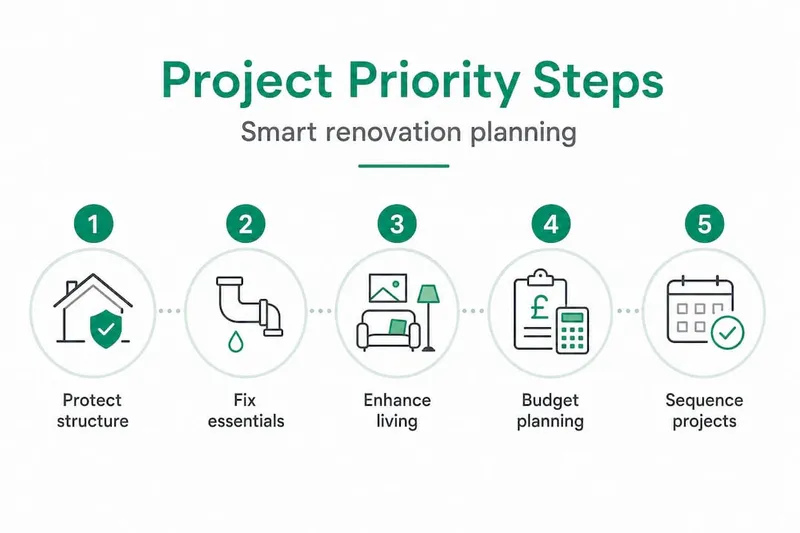
Think of home renovation priorities as a hierarchy: protect the structure, then fix what is broken, then improve livability, and finally address aesthetics. This order is not arbitrary. It reflects how problems compound. A leaking roof that damages newly installed plasterwork means you pay twice.

Planning by budget, timeline, and project order
Once urgent repairs are accounted for, the next step is organising the remaining projects by what you can realistically afford, how long each will take, and which must come before others.
Setting your budget
Start with what you have available and divide it into committed spend (urgent repairs), planned spend (high-priority improvements), and reserved spend (contingency). Most building professionals recommend setting aside 10% to 20% above your estimated project cost as a contingency fund. Walls often contain surprises. Old houses especially tend to reveal additional problems once work begins.
Longer-term financing arrangements, such as a home improvement loan or a remortgage with released equity, allow you to plan larger projects properly rather than making compromised decisions based on short-term cash flow. Early contractor quotes are valuable here. Getting multiple quotes before you finalise your budget gives you real figures to plan around rather than guesses.
Understanding project timelines
Timelines affect everything from when you can occupy a space to when subsequent projects can begin. Some delays are outside your control. For example, planning permission approvals typically take 8 to 12 weeks through local authorities. If your project requires consent, factor this wait into your schedule from the outset.
| Project | Typical duration | Permissions needed? |
|---|---|---|
| Roof replacement | 1–2 weeks | Rarely |
| Full rewire | 5–10 days | Sometimes (listed buildings) |
| Kitchen renovation | 3–6 weeks | Sometimes (structural changes) |
| Extension or loft conversion | 3–6 months | Almost always |
| Window replacement | 1–3 days | Not usually |
| Bathroom renovation | 2–4 weeks | Rarely |
Sequencing your projects correctly
Project order matters as much as project selection. Windows should be replaced before siding because correct flashing and sealing around the window frame requires the cladding to be fitted afterwards. Doing this in the wrong order means removing and replacing exterior materials you have already paid for.
Equally, roofing comes before windows. A failing roof that allows water ingress can damage brand-new window frames within a single winter. Phasing your renovation means completing the weathertight shell first, then moving to internal fit-out, then finishes and furnishings.
Pro Tip: Ask every contractor you approach for a rough quote and an honest opinion on sequencing. Tradespeople often have practical knowledge about dependencies that does not appear in any planning guide.
Balancing personal needs with long-term value
How you use your home today should shape your renovation choices, but not completely override long-term financial considerations. This balance is where many homeowners lose money.
72% of younger homeowners prioritise personalisation when renovating, while older homeowners tend to focus on bathrooms and comfort-related improvements. Neither approach is wrong. The risk is overpersonalisation that makes your home harder to sell.
The classic example is removing bedrooms for oversized specialty areas. A homeowner might convert a fourth bedroom into a walk-in wardrobe or a home cinema. To them, the trade-off makes sense. To future buyers, the reduced bedroom count lowers the property's market value and appeal, sometimes significantly.
When thinking about which renovations add value, focus on the spaces that buyers weigh most heavily. Kitchens and bathrooms deliver consistent returns. A functional, clean, well-lit kitchen in a neutral finish will appeal to a broad audience. A highly stylised kitchen in bold colours and bespoke fittings may not. Good home staging principles apply equally to renovation planning: keep choices broad enough that the property works for multiple types of buyers.
For high-ROI projects beyond kitchens and bathrooms, consider these:
- Steel front door replacement. According to the 2025 Remodeling Impact Report, steel front door replacements offer 100% cost recovery on resale. This is one of the few home improvements that effectively pays for itself.
- Landscaping cleanup. Modest landscaping work costing between £400 and £2,500 can increase perceived home value by 5% to 12%. Kerb appeal matters more than many owners realise.
- Loft and storage improvements. Buyers consistently value functional storage, particularly in smaller properties.
- Energy efficiency upgrades. Cavity wall insulation, double or triple glazing, and heat pump installations improve Energy Performance Certificate ratings, which increasingly affect mortgage eligibility and buyer appeal.
Common mistakes to avoid when thinking about home project prioritisation:
- Removing a bedroom to create a non-essential specialty room
- Choosing highly personalised tile patterns or fixtures in bathrooms and kitchens
- Over-investing in a single room relative to the rest of the property
- Skipping structural work in favour of cosmetic updates
- Spending above the value ceiling for your street (improvements cannot lift a property above the local ceiling regardless of quality)
Managing multiple projects at once
When you have several projects running or planned, the risk is losing track of costs, timelines, and dependencies. A few clear habits prevent this from becoming chaotic.
Start by separating your projects into two distinct lists. The first is your "must-do" list. These are urgent repairs, safety-related work, and anything affecting your home's weathertight integrity. The second is your "want-to-do" list. These are improvements you desire but that carry no structural urgency.
Phased renovation approaches help you manage finances and reduce overwhelm. Rather than attempting everything at once, assign each project to a phase with a realistic budget and timeline. Phase one might be the roof and electrics. Phase two, six months later, might be the kitchen. This approach keeps spending controlled and lets you learn from earlier phases before committing to the next.
Practical habits for staying on track:
- Keep a single, shared document or platform for all project costs, quotes, and communications
- Review your progress and budget monthly rather than waiting for problems to surface
- Build in review points between phases to assess whether priorities have shifted
- Communicate changes to your contractor or project manager in writing
Pro Tip: When juggling multiple trades, stagger their start dates rather than starting everyone at once. Plumbers cannot finish until plasterers are done, and electricians need to be ahead of tilers. A clear sequence avoids contractors waiting on each other at your expense.
Avoid the trap of making decisions on the fly. Rushed choices mid-project, particularly around materials or finishes, almost always cost more than planned decisions made in advance.
Timing your renovations by season
Knowing when to schedule certain projects saves money and improves outcomes. Materials, labour availability, and conditions all vary by season.
Projects best suited to the warmer months (late spring through summer):
- External rendering and masonry work. Mortar and render need temperatures above 5°C to cure correctly.
- Patios, driveways, and landscaping. Ground conditions are more stable and materials perform better.
- Roof replacement. Dry weather reduces risk of water ingress during the works.
- Exterior painting and cladding. Paint adhesion and drying times are significantly better in warm, dry conditions.
Projects that work well in cooler or indoor months:
- Internal decorating and painting. No temperature constraints apply.
- Flooring installation and refinishing. Hardwood flooring is best installed when indoor humidity is stable, typically autumn through spring.
- Kitchen and bathroom renovations. Entirely indoor work with no seasonal dependency.
- Planning, design, and tendering. Winter months, when tradespeople are often less busy, can yield better quotes and faster responses.
Booking contractors for summer exterior work in winter or early spring gives you more choice and often better pricing. Last-minute bookings in peak season frequently cost more and attract less experienced tradespeople.
My perspective on getting renovation priorities right
I have seen hundreds of homeowners make the same mistake. They let enthusiasm drive the plan. They walk through the door, picture a new kitchen, and start getting quotes before the surveyor has even looked at the roof. Six months later, they are diverting the kitchen budget to fix a drainage problem nobody knew about.
The uncomfortable truth about renovation planning is that the most important decisions are made before any work starts. Getting an independent structural survey, building a realistic phased plan, and accepting that the unglamorous work comes first. These choices determine whether the project goes well or becomes a financial burden.
What I have found consistently is that homeowners who invest time in early planning spend significantly less overall. They avoid rework, they make better material decisions, and they have the mental clarity to handle surprises when they arise. Avoiding the "aesthetic trap" by delaying cosmetic changes until the structure is stable is not a compromise. It is what protects everything you subsequently invest.
The best renovation plan is one you can honestly afford, staged across realistic timeframes, with structure first and finishes last.
— Azai
FAQ
What should I renovate first in my home?
Start with structural and safety repairs: roof, foundation, plumbing, and electrical systems. These protect your home's value and prevent more expensive problems developing in renovated areas.
Which home improvements add the most value?
Steel front door replacements offer 100% cost recovery at resale. Kitchen and bathroom updates, energy efficiency upgrades, and kerb appeal improvements such as landscaping also deliver strong returns.
How do I manage a renovation on a tight budget?
Separate projects into urgent and non-urgent categories, then phase your work over time. Getting quotes early and building a contingency fund of 10% to 20% above your estimated spend helps you avoid running short mid-project.
How long does home renovation planning permission take?
Local authority approvals typically take 8 to 12 weeks. Factor this wait into your timeline before committing to start dates with contractors.
Can I renovate my home in stages?
Yes, and for most homeowners this is the recommended approach. Phased renovation lets you manage spending, learn from earlier work, and adjust priorities based on what each stage reveals.