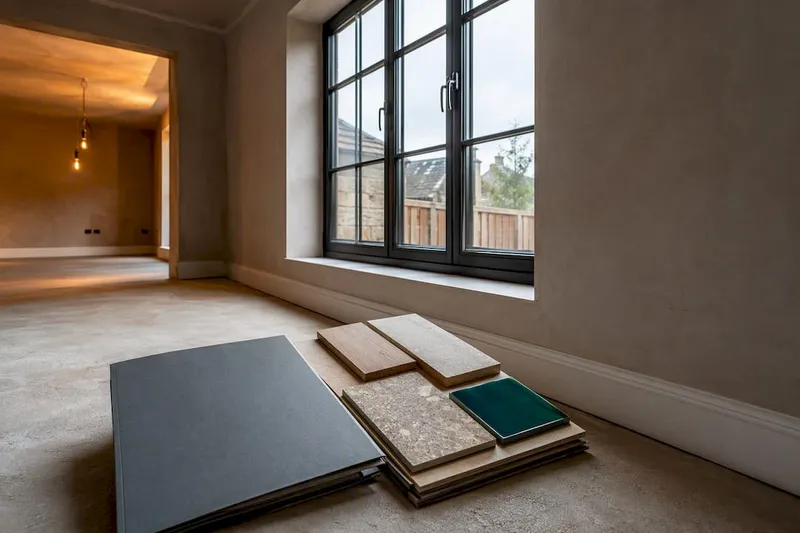
Home renovation return on investment (ROI) is defined as the percentage of your renovation cost you recover through increased property value at resale. Not every room delivers equal returns. Minor kitchen remodels return 85–96% of costs, while exterior projects like garage door replacements can exceed 190% ROI. Understanding renovation ROI examples by room gives you a clear framework for deciding where to spend, where to hold back, and how to avoid costly over-capitalisation before you commit a single pound.
1. Renovation ROI examples by room: which rooms perform best
The highest-returning renovations in 2026 are not always the most dramatic. According to the Cost vs. Value Report 2026, exterior cosmetic improvements lead all categories, with garage door replacements averaging 194% ROI at roughly £3,400 in cost. Manufactured stone veneer returns 153% ROI at approximately £8,700. These figures mean you recover far more than you spend, which is rare in renovation.
Interior rooms follow a clear hierarchy. Minor kitchen remodels, typically costing £20,000 to £24,000, return 85–96% of costs. Midrange bathroom remodels return approximately 70%. Interior painting and hardwood floor refinishing yield 100–107% ROI at just £2,400 to £4,000 per project, making them the most cost-effective improvements available to any homeowner.

Here is a summary comparison of renovation ROI by room type:
| Room or project | Typical cost | Estimated ROI |
|---|---|---|
| Garage door replacement | ~£3,400 | ~194% |
| Manufactured stone veneer | ~£8,700 | ~153% |
| Interior painting | ~£2,400–£4,000 | ~100–107% |
| Hardwood floor refinishing | ~£2,400–£4,000 | ~100–107% |
| Minor kitchen remodel | ~£20,000–£24,000 | ~85–96% |
| Midrange bathroom remodel | ~£15,000–£20,000 | ~70% |
| Basement finishing | ~£16,000–£40,000 | ~70% |
| Major kitchen remodel | ~£67,000–£125,000 | ~40–56% |
| Upscale bathroom remodel | ~£35,000+ | ~40% |
| Swimming pool | ~£35,000–£70,000 | ~24–40% |
The pattern is clear: lower-cost, cosmetic, and curb appeal projects consistently outperform large structural renovations. This is the single most important insight for any homeowner planning a renovation with resale in mind.
2. Why minor renovations outperform major ones in ROI terms
The difference between a minor and major kitchen remodel is not just cost. It is risk. A major kitchen remodel costing £67,000 to £125,000 returns only 40–56% of costs, compared to 85–96% for a minor remodel at a fraction of the price. The reason is over-capitalisation: when renovation costs exceed what the local property market can absorb, you cannot recover the spend at resale.
Over-capitalisation is defined as spending more on a renovation than the neighbourhood price ceiling allows you to recoup. A £80,000 chef's kitchen in a £240,000 neighbourhood is a textbook example. Buyers in that price bracket will not pay a premium for luxury finishes that exceed the area's typical property values, regardless of the quality of the work.
The optimal renovation spend sits at 5–10% of your home's current value per room. For a £350,000 home, that means capping a bathroom remodel at £17,500 to £35,000. Exceeding this range significantly increases the risk of poor returns.
Here are the key principles for matching renovation scale to ROI:
- Assess your home's current market value before setting a renovation budget. Use a local estate agent's valuation, not an online estimate.
- Research comparable sales in your street and postcode. If no comparable property has sold above a certain price, your renovation ceiling is set.
- Prioritise cosmetic updates over structural changes. New cabinet doors, worktops, and taps in a kitchen cost a fraction of a full remodel and deliver similar buyer appeal.
- Avoid bespoke or niche finishes that appeal to a narrow buyer pool. Neutral colours, standard layouts, and quality mid-range materials sell fastest.
- Account for regional cost variation. Labour and materials costs in coastal urban markets are often 1.5 times higher than in rural areas, which compresses ROI if you are not careful.
Pro Tip: Before committing to a major kitchen or bathroom renovation, get three contractor quotes and compare the total spend against recent sold prices for similar properties in your postcode. If the numbers do not stack up, scale back the scope.
3. Rooms with moderate to low ROI: what to expect
Not every renovation is about maximising resale value. Some projects add liveable space, comfort, or energy savings that justify the cost even when the financial ROI is modest. Understanding where these projects sit helps you make honest decisions about your priorities.
- Master suite additions return approximately 40–60% of costs. Adding a bedroom and en suite is expensive due to structural work, plumbing, and electrical requirements. The return is moderate, but the lifestyle benefit is significant for growing families.
- Basement finishing costs £16,000 to £40,000 and returns roughly 70% ROI. It is particularly valued in colder climates where additional heated living space is a genuine selling point. Including a bathroom and proper egress windows increases the return.
- Attic conversions to bedrooms follow a similar pattern to basements, with moderate ROI that depends heavily on ceiling height, access, and local planning permissions.
- Outdoor living spaces and decking show varied returns depending on climate and buyer expectations. In regions where outdoor living is a priority, a well-built deck can return 60–75% of costs.
- Landscaping improves kerb appeal and buyer first impressions but rarely delivers a measurable ROI beyond 50–60% unless it is part of a broader exterior refresh.
- Swimming pools are the clearest example of personal value over financial return. Pool ROI sits at 24–40%, well below most interior remodels. If you are installing a pool for enjoyment, that is a perfectly valid reason. If you are doing it to increase resale value, the data does not support it.
| Project type | Typical ROI | Key consideration |
|---|---|---|
| Master suite addition | 40–60% | High cost, strong lifestyle benefit |
| Basement finishing | ~70% | Best in cold climates with egress |
| Outdoor deck | 60–75% | Climate-dependent returns |
| Landscaping | 50–60% | Supports kerb appeal, not standalone |
| Swimming pool | 24–40% | Personal value over resale return |
Energy efficiency upgrades sit in a different category. HVAC replacements return 60–70% of costs and reduce running expenses, which buyers increasingly factor into purchase decisions. Solar panels can add £12,000 to £20,000 in value after tax credits, making them one of the few utility-focused upgrades that genuinely move the needle on resale price.
4. How to calculate renovation ROI for your home
The standard renovation ROI formula is straightforward: subtract your renovation cost from the value added, divide by the renovation cost, and multiply by 100 to get a percentage. For example, a £20,000 minor kitchen remodel that adds £18,000 to your property's value delivers a 90% ROI.
Calculating this accurately requires two things: a reliable estimate of value added and an honest total cost figure. Many homeowners underestimate total costs by forgetting project management fees, temporary accommodation, and hidden contingency items. A 10–15% contingency buffer is standard practice in any well-run renovation budget.
Here is a practical step-by-step approach to calculating renovation ROI:
- Get a pre-renovation valuation from a local estate agent. This is your baseline.
- Obtain detailed contractor quotes for the full scope of work, including all finishes, fixtures, and project management.
- Add a 10–15% contingency to your total cost estimate.
- Research post-renovation comparables. Find recently sold properties in your area that have the feature you are adding. The price difference between comparable properties with and without the feature is your estimated value added.
- Apply the formula: (Value added ÷ Total renovation cost) × 100 = ROI%.
- Adjust for market timing. A rising market amplifies ROI; a flat or falling market compresses it. Matching renovation scope to local market expectations is the single most reliable way to protect your return.
Pro Tip: Financial ROI is only one part of the equation. If you plan to live in the property for five or more years, personal use value matters as much as resale return. A bathroom you love using every day has real value even if it only returns 70% at sale.
It is also worth noting that deferred maintenance and cosmetic refreshes consistently outperform aggressive customised luxury renovations in ROI terms. Fixing what is broken and refreshing what looks dated will almost always deliver better returns than adding premium features buyers did not expect.
For kitchen renovation timelines and scope planning, understanding how long a project takes also affects your total cost calculation, since longer projects mean more disruption and potentially higher labour costs.
Key takeaways
The highest renovation ROI comes from low-cost cosmetic updates and exterior improvements, not large structural remodels.
| Point | Details |
|---|---|
| Exterior projects lead on ROI | Garage door replacements and stone veneer return 153–194%, outperforming all interior rooms. |
| Minor beats major in kitchens | Minor kitchen remodels return 85–96%; major remodels return only 40–56% at far greater cost. |
| Spend 5–10% of home value per room | Exceeding this threshold significantly increases the risk of over-capitalisation and poor returns. |
| Pools and luxury suites are lifestyle choices | Swimming pools return 24–40% at resale; install them for personal enjoyment, not financial gain. |
| Calculate ROI before you commit | Use pre-renovation valuations, full cost estimates, and local comparables to verify the numbers first. |
Why I prioritise kerb appeal and cosmetic updates above everything else
After working through renovation planning with hundreds of homeowners, the pattern I see most often is this: people spend the most money on the rooms they use the most, and they get the worst returns. A £90,000 kitchen extension in a street where nothing sells above £400,000 is a decision made with the heart, not the spreadsheet.
My honest view is that the Cost vs. Value Report data should be the first thing any homeowner reads before planning a renovation. The fact that a £3,400 garage door replacement can return 194% while a £125,000 kitchen remodel returns 40–56% is not intuitive. Most people assume bigger spend equals bigger return. It rarely does.
What I tell homeowners consistently is this: start outside. Fresh exterior paint, a new front door, tidy landscaping, and a garage door upgrade will do more for your sale price and buyer interest than any internal remodel at the same budget. Buyers form their opinion of a property before they walk through the door.
I also caution strongly against renovating to personal taste when the goal is resale. Bespoke finishes, unusual colour choices, and niche layouts narrow your buyer pool. The renovation projects that recoup best are the ones that appeal to the broadest range of buyers in your local market. Neutral, functional, and well-maintained will always beat bold, expensive, and personalised.
Use ROI data as a guide, not a guarantee. Market conditions, timing, and local demand all shift the numbers. But the hierarchy of returns by room type has remained remarkably consistent across multiple years of industry data. That consistency is worth paying attention to.
— Azai
FAQ
What does renovation ROI mean?
Renovation ROI (return on investment) measures the percentage of your renovation cost you recover through increased property value at resale. It is calculated by dividing the value added by the total renovation cost and multiplying by 100.
Which room has the highest renovation ROI?
Exterior projects deliver the highest returns. Garage door replacements average 194% ROI and manufactured stone veneer returns 153%, both outperforming any interior room renovation according to the 2026 Cost vs. Value Report.
Is a kitchen remodel worth it for resale value?
A minor kitchen remodel returning 85–96% of costs is worth it. A major kitchen remodel costing £67,000 to £125,000 returns only 40–56%, making it a poor financial decision unless your home's value and local market can support the spend.
How much should I spend on a bathroom renovation for good ROI?
The optimal spend is 5–10% of your home's current value. A midrange bathroom remodel returns approximately 70%, while an upscale remodel returns only around 40%, so keeping costs proportionate to your property's value is the key factor.
Do swimming pools add value to a home?
Swimming pools typically return only 24–40% of their cost at resale, making them a poor investment if your primary goal is increasing property value. They are best justified by personal lifestyle value rather than financial return.