
A soft furnishings plan is a deliberate design strategy for all textile interior elements, covering everything from rugs and curtains to cushions, throws, and upholstery. In professional interior design, this approach is also called a textile specification or soft goods scheme. A well-built plan does far more than make a room look attractive. It addresses acoustic comfort, heat retention, and light control, turning textiles into functional tools rather than afterthoughts. Whether you are a first-time homeowner or an experienced interior designer, understanding what is a soft furnishings plan gives you a clear framework for making confident, cost-effective decisions.
What are the main elements included in a soft furnishings plan?
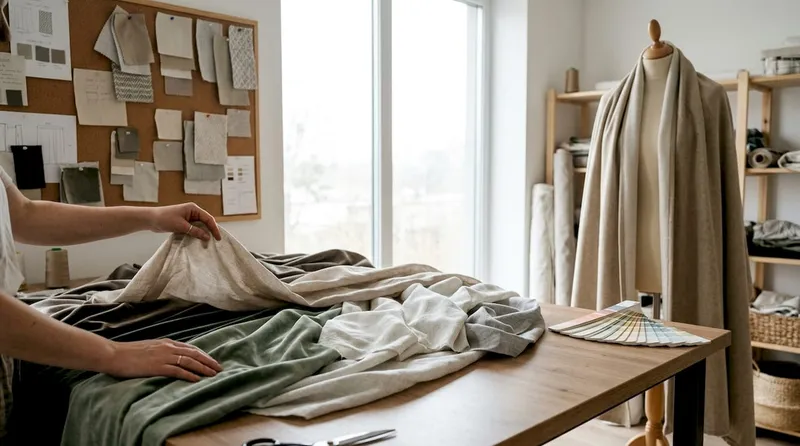
Soft furnishings include rugs, curtains, cushions, throws, upholstery, bedding, and wall hangings. Each item is a flexible textile element, distinct from furniture frames or structural components. That distinction matters because textiles are the easiest and most affordable parts of a room to update.
Each element carries a specific functional role:
- Rugs define zones within open-plan spaces and absorb sound from hard floors. A large rug under a seating group anchors the entire arrangement visually.
- Curtains and window treatments control natural light, provide privacy, and reduce heat loss through glazing. Lined curtains in particular add a measurable layer of thermal insulation. You can read more about how window treatments affect light and privacy in different room types.
- Cushions and throws introduce colour, pattern, and texture at low cost. They are the most replaceable items in any scheme, which makes them ideal for seasonal updates.
- Upholstery covers sofas, armchairs, and dining chairs. Because upholstered pieces are expensive to re-cover, fabric choice here carries the highest long-term consequence.
- Bedding sets the dominant tone in a bedroom. Thread count, weave, and fabric weight all affect both appearance and sleep comfort.
- Wall hangings and fabric panels reduce echo in rooms with hard surfaces, adding acoustic softness alongside visual interest.
Fabric performance matters as much as appearance. A linen curtain may look beautiful but fade quickly in direct sunlight. A velvet sofa reads as luxurious but requires careful maintenance in a family home. Selecting materials that match your lifestyle prevents costly replacements later.
How to create a balanced plan using the 60-30-10 textile ratio
The 60-30-10 rule is the most reliable principle for achieving visual balance in a soft furnishings scheme. Designers recommend starting with an anchor piece and applying this ratio to prevent visual chaos. The numbers refer to the proportion of each fabric's visual presence in the room.
- 60% dominant fabric. This is your anchor textile. In a living room, it is typically the sofa fabric, the main rug, or floor-length curtains. The dominant fabric sets the room's base tone and should be the most neutral or restrained choice. Avoid bold patterns here; they will exhaust the eye quickly.
- 30% secondary textures. These fabrics layer over the dominant anchor and introduce visual interest. Think armchair upholstery in a complementary weave, a textured throw draped over the sofa, or a patterned roman blind. The 30% layer is where you can introduce a second colour or a subtle print.
- 10% statement accents. Accent pieces are the smallest in quantity but the highest in impact. Scatter cushions in a contrasting colour, a small decorative rug, or a bold wall hanging all fall into this category. Because they cover only 10% of the visual space, they can carry strong pattern or colour without overwhelming the scheme.
Applying this ratio in a bedroom works just as well. The bedding set forms the 60%, a textured throw and curtains make up the 30%, and decorative cushions plus a bedside rug complete the 10%.
Pro Tip: Photograph your room in natural light and overlay your fabric samples digitally before ordering. This reveals proportion imbalances that are hard to spot when samples are laid flat on a table.
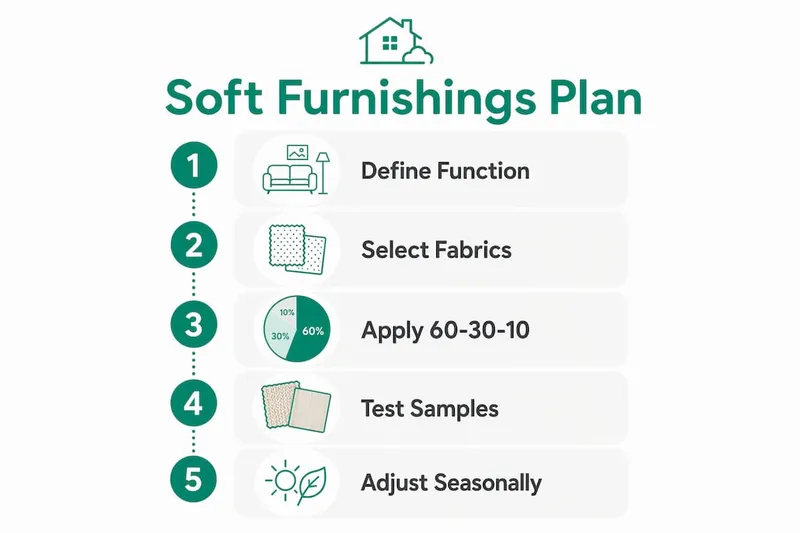
The 60-30-10 textile ratio prevents visual overload and maintains balance, guiding both professional designers and homeowners through decisions that would otherwise feel arbitrary.
Common pitfalls when mixing patterns, textures, and colours
Pattern mixing is where most homeowners make their biggest mistakes. The most common error is combining multiple prints at the same scale. When every pattern in a room reads at the same visual size, the eye has nowhere to rest.
Mixing patterns requires varying scales to avoid chaos. The optimal approach uses one large-scale pattern, one medium-scale pattern, and one small-scale pattern. The largest pattern acts as the dominant anchor, such as a wide-stripe curtain or a bold geometric rug. The smallest pattern reads almost as a solid texture from a normal viewing distance, which is why tiny prints work well on scatter cushions.
Avoid these frequent mistakes:
- Matching colours too precisely. Perfectly matched fabrics look flat and manufactured. Colours that are close but not identical create depth.
- Ignoring texture contrast. Over-coordinating soft furnishings by matching colours without texture contrast produces sterile interiors. Pairing a smooth linen with a chunky boucle, or a matte cotton with a sheen velvet, adds the tactile richness that makes a room feel considered.
- Skipping the sample phase. Poor material selection due to lack of sampling causes the majority of design dissatisfaction. Order samples and live with them in the room for at least 48 hours before committing.
- Testing fabrics only in artificial light. A fabric that looks warm and inviting under a showroom spotlight can appear cold and grey in north-facing daylight. Professionals test samples in natural room light across the day to avoid unwanted surprises.
Pro Tip: Swap out cushions and throws seasonally to refresh a room without touching the anchor pieces. Warm wool and velvet textures suit autumn and winter; linen and cotton weaves work well in spring and summer.
How soft furnishings improve comfort and functionality
Soft furnishings solve environmental problems like echo control and heat loss before they address aesthetics. This is the principle that separates a professional textile scheme from a purely decorative one.
| Functional benefit | Relevant soft furnishings | How it works |
|---|---|---|
| Sound absorption | Rugs, curtains, upholstery, wall hangings | Textile fibres trap sound waves, reducing echo and reverberation |
| Heat retention | Lined curtains, heavy rugs, upholstered seating | Fabric layers slow heat transfer through floors, windows, and walls |
| Light control | Curtains, blinds, sheer panels | Fabric weight and weave density determine how much light passes through |
| Privacy | Full-length curtains, layered sheers | Opaque or densely woven fabrics block sightlines without blocking light entirely |
| Tactile comfort | Cushions, throws, bedding, upholstery | Soft textures reduce the sensory harshness of hard surfaces |
Thermal benefits are particularly significant. Lined curtains reduce heat loss through windows, which complements broader energy efficiency upgrades in a home. A thick rug over a hard floor adds insulation underfoot and reduces the energy needed to heat a room. These are not minor gains; they affect both comfort and running costs.
Room function should always guide fabric selection. A home office needs textiles that reduce echo and support concentration. A family kitchen-diner needs wipe-clean or washable fabrics that survive daily use. A bedroom prioritises thermal comfort and light control above all else.
Step-by-step approach to developing your soft furnishings plan
A clear sequence prevents the most common planning errors, including buying accent pieces before the anchor fabric is confirmed.
- Define the room's function and mood. A calm, restful bedroom calls for different textures and weights than a sociable, high-traffic living room. Write down three words that describe the feeling you want the room to create.
- Select the anchor piece first. Choose the dominant textile that will cover 60% of the visual space. This is usually the sofa fabric, the main rug, or the curtains. Confirm this choice before buying anything else.
- Layer in secondary fabrics. Working from the anchor outward, select the 30% layer. These fabrics should complement the anchor in colour family but differ in texture or weave. Refer to your renovation budgeting plan at this stage to keep spending on track.
- Add accent pieces last. The 10% accent layer is chosen after the anchor and secondary fabrics are confirmed. This prevents the common mistake of buying bold cushions first and then struggling to build a coherent scheme around them.
- Order and test fabric samples in situ. Place samples in the room and observe them at different times of day. Check how they read in morning light, afternoon sun, and artificial evening light.
- Plan for flexibility. Treat cushions, throws, and small rugs as replaceable items. These are the pieces you will swap seasonally, so avoid over-investing in them at the expense of the anchor pieces.
A soft furnishings plan works best as a living document, with stable anchor pieces complemented by flexible accents that allow seasonal updates without full overhauls.
Key takeaways
A soft furnishings plan is the most cost-effective way to improve a room's comfort, acoustics, and visual balance without structural changes.
| Point | Details |
|---|---|
| Define function before aesthetics | Identify the room's practical needs before selecting any fabrics or colours. |
| Anchor piece comes first | Confirm the dominant 60% textile before purchasing secondary or accent items. |
| Apply the 60-30-10 ratio | Use this rule to distribute fabric weight and prevent visual overload in any room. |
| Test samples in real conditions | Observe fabric samples in the room across different light conditions before committing. |
| Plan for seasonal flexibility | Keep anchor pieces stable and rotate cushions and throws to refresh the scheme affordably. |
Why texture contrast matters more than colour matching
Most homeowners approach soft furnishings by matching colours. That instinct is understandable, but it produces the flattest results. Colour harmony is a starting point, not a finishing line.
What actually makes a room feel considered is texture contrast. A room where every fabric shares the same weave and weight feels monotonous, regardless of how well the colours coordinate. Place a smooth linen cushion next to a chunky knit throw, or a matte cotton blind next to a sheen velvet sofa, and the room immediately reads as richer and more deliberate.
The second thing I have learned from working through many textile schemes is that the sample phase is non-negotiable. Skipping it to save time is the single most reliable way to end up with fabrics that disappoint in the actual room. The showroom is not your room. The light is different, the scale is different, and the surrounding colours are different.
Treating the plan as a living document rather than a finished product is the third shift that changes everything. Anchor pieces should be chosen for longevity and quality. Accent pieces should be chosen for flexibility and low cost. When you separate those two categories clearly, the plan becomes much easier to manage and much cheaper to refresh over time.
— Azai
FAQ
What is a soft furnishings plan in interior design?
A soft furnishings plan is a structured strategy for selecting and arranging all textile elements in a room, including rugs, curtains, cushions, throws, upholstery, and bedding. It addresses both aesthetic and functional goals such as sound absorption, heat retention, and light control.
What does the 60-30-10 rule mean for soft furnishings?
The 60-30-10 rule divides a room's textile presence into 60% dominant anchor fabric, 30% secondary layering textures, and 10% statement accent pieces. This ratio prevents visual overload and creates a balanced, cohesive scheme.
Why should I test fabric samples before buying?
Fabrics look different under showroom lighting than in your own home. Testing samples in the actual room across morning, afternoon, and evening light reveals colour shifts and texture clashes that are impossible to spot in a shop.
How do soft furnishings improve a room's comfort?
Soft furnishings reduce echo, slow heat loss through floors and windows, and control natural light. Lined curtains, thick rugs, and upholstered seating all contribute to a warmer, quieter, and more comfortable environment.
How often should I update my soft furnishings?
Anchor pieces such as sofas and main rugs should last many years. Accent items like cushions and throws can be rotated seasonally, which keeps the room feeling refreshed without the cost or waste of a full redesign.