Construction cost overruns are defined as the difference between the approved project budget and the final amount spent, and nearly 90% of builds experience them. The industry average overrun sits between 28% and 33%, meaning a £300,000 home build could easily cost £390,000 or more by handover. Understanding why builds go over budget is not just reassuring. It is the first step toward doing something about it before you break ground.
Why do builds go over budget in the first place?
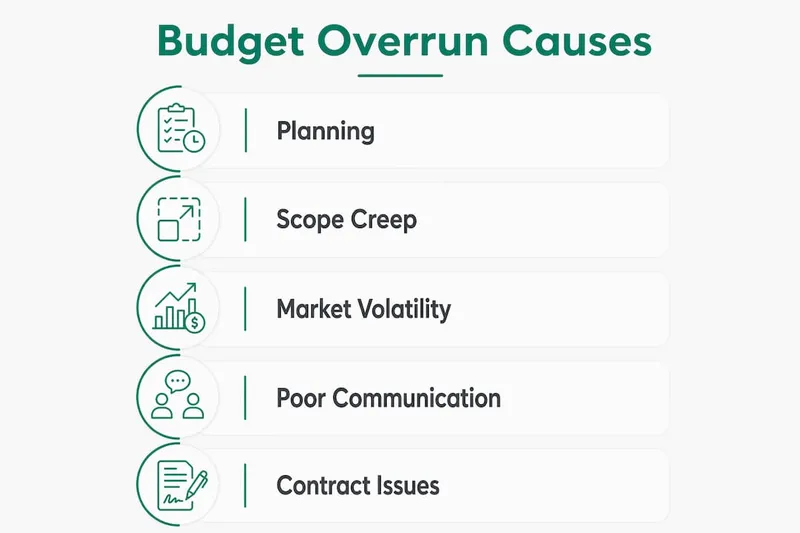
The root cause of most construction cost overruns is not bad luck or rising prices. It is decisions made, or not made, during pre-construction planning. Most cost overruns begin during the planning phase, long before a single foundation is poured. Two factors drive the majority of cases: inaccurate initial estimates and scope creep. Inaccurate estimates cause budget issues in roughly 70% of building projects, while scope creep leads to cost increases in 52% of projects. Together, they account for the bulk of budget excess across residential and commercial builds alike.
The planning phase is where your financial fate is largely decided. A budget built on assumptions, outdated benchmarks, or incomplete site data creates what quantity surveyors call a "phantom budget." It looks credible on paper but does not reflect what the project will actually cost. By the time reality catches up, you are already committed to contracts, suppliers, and a design you cannot easily reverse.
How does poor cost planning cause budget overruns?
Pre-construction budgets fail for several predictable reasons, and recognising them early gives you a real chance to avoid them.
- Outdated benchmarks. Budgets based on historic cost-per-square-metre figures ignore site-specific conditions such as soil type, access constraints, and local labour rates. Pre-construction budgets based on outdated benchmarks create phantom budgets that are structurally doomed to overrun.
- Insufficient contingency. Most first-time builders allocate 5% as a contingency allowance. Quantity surveyors typically recommend 10% to 15% for new builds, and more for complex or heritage sites.
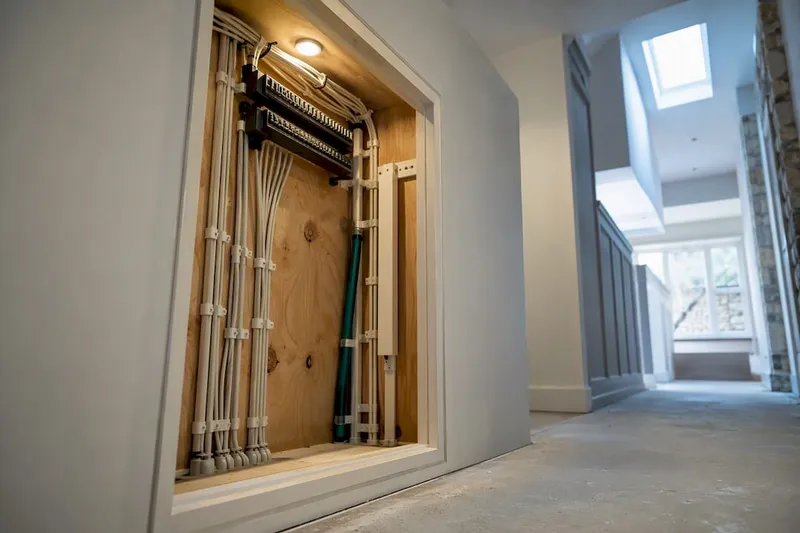
- Spreadsheet errors. 88 to 90% of spreadsheets contain errors, and formula mistakes or data entry slip-ups can hide overruns until it is too late to correct them cheaply. A single mislinked cell in a cost plan can misrepresent your MEP rough-in (mechanical, electrical, and plumbing work) budget by tens of thousands.
- Missing line items. First-time builders routinely omit costs such as council fees, site connection charges, landscaping, and temporary fencing. These are not optional extras. They are fixed project costs.
The complete home building timeline shows how each phase carries its own cost risks, many of which only become visible once you have committed to the phase before.
Pro Tip: Commission a quantity surveyor to produce an elemental cost plan before you finalise your design. This breaks the budget into specific building elements (structure, roof, finishes, services) and reveals where your estimates are weakest.

How does scope creep drive up construction costs?
Scope creep is rarely caused by one large, obvious change. It is mostly the result of cumulative minor additions, each of which seems reasonable in isolation. Experts describe this as "death by a thousand cuts." A wider driveway here, upgraded kitchen tiles there, an extra power point in the study. None of these feels significant. Together, they can add 10% to 20% to your final cost.
Design deficiencies contribute to 38% of construction disputes and are closely linked to cost overruns and delays. When drawings are incomplete or ambiguous, contractors submit variation claims to cover work that was always implied but never priced. This is not fraud. It is the natural consequence of an under-specified design.
To manage scope creep effectively, follow this process for every change request:
- Document the change in writing before any work begins. Verbal agreements are unenforceable and almost always misremembered.
- Get a written cost estimate from your contractor before approving the change. Do not assume a small change has a small cost.
- Update your running budget immediately. Track cumulative change order costs as a separate line item so you can see the total impact at a glance.
- Set a change order threshold. Agree with your contractor that any variation above a set amount (for example, £500) requires written sign-off from you before proceeding.
The guide to managing change orders covers the full process in detail, including what to include in a change order document and how to handle disputes.
Pro Tip: Freeze your design before construction starts. Every week of design changes after contracts are signed costs more than the same change made during the drawing stage, because contractors must price in disruption, rescheduling, and material waste.
What role does market volatility play in budget overruns?
Material prices are not stable. Construction materials can fluctuate 25 to 40% over a period of a few years, and projects lasting 12 to 18 months face significant price risk if purchases are not timed carefully. Timber, steel, and concrete have all seen sharp price movements in recent years, and a budget locked in at tender can be undermined by the time materials are actually ordered.
The procurement decisions you make, or delegate to your contractor, have a direct impact on your final cost. Consider the following comparison:
| Procurement approach | Risk level | Typical outcome |
|---|---|---|
| Fixed-price contract, materials included | Low | Contractor absorbs price risk; may inflate tender price |
| Provisional sums for materials | High | Final cost unknown until materials are purchased |
| Early procurement of key materials | Medium | Locks in price but requires storage and cash flow |
| Market-tracked purchasing with alerts | Low to medium | Captures price dips; requires active monitoring |
Most buyers compare very few suppliers when sourcing materials, which means they miss savings that are readily available. Strategically timing material purchases and tracking market trends are among the most effective ways to preserve your budget against inflation. Automated procurement tools and supplier comparison platforms reduce the manual effort involved.
Hidden home building costs such as price escalation clauses buried in contracts are a common source of budget excess that buyers only discover after signing.
How do project management and communication affect your budget?
Poor communication between owners, designers, and contractors is one of the most underestimated causes of budget overruns. Poor communication and inexperienced teams increase mistakes and rework, contributing significantly to final costs. Rework is expensive not just because of the materials and labour involved, but because it disrupts the programme (the project schedule), which delays subsequent trades and compounds costs across the build.
The following project management failures consistently appear in post-project reviews of overrun builds:
- No real-time cost tracking. Most companies detect budget deviations too late, after spending at the wrong rate for weeks. By the time the overrun is visible, corrective action is limited and expensive.
- Unclear roles and responsibilities. When it is not clear who approves variations, who orders materials, or who signs off on completed work, decisions are delayed or duplicated.
- Skipping quality inspections. Defects caught at the framing stage cost a fraction of what they cost to fix after plastering and finishing are complete. Regular inspections by an independent building inspector are not an optional extra.
- Inexperienced contractor selection. A lower tender price from an inexperienced framing contractor or subcontractor often results in rework costs that exceed the initial saving.
Improving communication between you and your contractor from day one is one of the highest-return investments you can make. The guide to setting expectations with contractors outlines practical communication protocols that reduce costly misunderstandings.
Pro Tip: Schedule a weekly site meeting with your builder and keep written minutes. A 30-minute meeting each week catches problems before they become expensive. Verbal updates are not enough.
Key takeaways
Budget overruns in home building are almost always preventable when you address the root causes during pre-construction planning rather than reacting to them on site.
| Point | Details |
|---|---|
| Overruns start in planning | Most cost overruns originate during pre-construction, not on site, making early budgeting the highest-priority task. |
| Inaccurate estimates are the leading cause | Roughly 70% of builds face budget issues due to estimates built on assumptions rather than site-specific data. |
| Scope creep accumulates silently | Minor untracked changes cause the majority of scope-related overruns; a written change order process is non-negotiable. |
| Market volatility requires active management | Material prices can shift 25 to 40% over a project's life; fixed-price contracts or early procurement reduce this risk. |
| Real-time monitoring prevents late surprises | Detecting budget deviations early, while corrective action is still affordable, is the single most effective cost control habit. |
The decisions that matter most happen before you break ground
From working with first-time builders, the pattern is consistent. The clients who stay on budget are not the ones who spend the most on contingency. They are the ones who invest the most time in pre-construction clarity. They commission proper cost plans, freeze their designs before signing contracts, and set up a simple but disciplined change order process from day one.
The most common misconception I encounter is that budget overruns are caused by contractors. Some are. But the majority trace back to decisions the owner made, or deferred, during planning. An incomplete brief produces an incomplete design. An incomplete design produces variation claims. Variation claims produce budget excess. The chain is predictable and preventable.
Owners also tend to confuse planning variances with operational variances. A planning variance is a gap between your original estimate and what the work actually costs. An operational variance is a gap caused by inefficiency or error during execution. They require different responses. Treating a planning variance as a contractor problem, when it was actually a budgeting problem from the start, leads to conflict and delays rather than solutions.
My honest recommendation: do not start detailed design until you have a realistic elemental cost plan in hand. And do not start construction until your design is complete enough that your contractor can price it without provisional sums covering more than 10% of the total. Those two disciplines alone will put you ahead of the majority of first-time builders.
— Azai
FAQ
What is the most common reason builds go over budget?
Inaccurate initial estimates are the leading cause, contributing to budget issues in roughly 70% of building projects. Budgets built on assumptions or outdated benchmarks rather than site-specific data consistently underestimate true costs.
How much contingency should I allow for a home build?
Quantity surveyors recommend a contingency of 10% to 15% for new residential builds. The standard 5% allowance is rarely sufficient to cover unforeseen site conditions, design changes, or material price movements.
What is scope creep in construction?
Scope creep is the gradual expansion of a project's requirements through minor, often untracked additions. Each change seems small, but cumulatively they can add 10% to 20% to your final cost, which is why a written change order process is critical.
How can I detect a budget overrun early?
Real-time cost monitoring against your approved budget is the most reliable method. Most overruns go undetected because spending is reviewed too infrequently. Weekly cost reviews, supported by a cost overrun prevention guide, allow you to act while corrective options are still affordable.
Do fixed-price contracts protect me from budget overruns?
A fixed-price contract transfers material price risk to the contractor but does not protect you from scope creep, design changes, or provisional sums. Review your contract carefully for escalation clauses and ensure provisional sums are minimised before signing.