Kitchen renovation costs are high because cabinetry, skilled labour, and appliances each carry substantial price tags on their own. Combine all three with layout complexity, building permits, and regional market conditions, and the total climbs fast. The national median cost for a midrange kitchen remodel sits between $48,000 and $55,000, with labour and materials rising 6–9% since 2024. Understanding why kitchens are expensive to renovate gives you the clearest possible starting point for budgeting wisely and avoiding the mistakes that push projects over budget.
Why does cabinetry cost so much in a kitchen renovation?
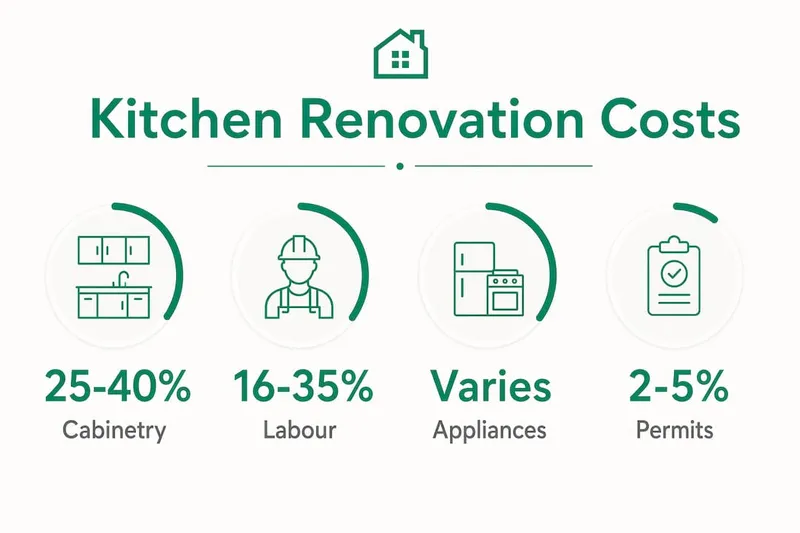
Cabinetry is the single largest expense in most kitchen projects. Cabinets consume 25–40% of the total renovation budget. That figure alone explains why so many homeowners are caught off guard when they receive their first quote.
The material you choose drives the price significantly. Plywood carcasses hold screws better and resist moisture more reliably than MDF, but they cost more. Solid hardwood doors add further expense. Stock cabinets from a home improvement retailer sit at the affordable end, while semi-custom units offer more sizing flexibility at a moderate premium. Fully custom cabinetry, built to your exact dimensions and specification, can cost three to five times more than stock options.
Finishes add another layer of cost. Luxury custom cabinetry and specialised finishes often come from a limited pool of European suppliers, which creates longer lead times and higher prices. Matte-textured laminates and certain hardwood finishes are currently in high demand, meaning both price and wait time are elevated.
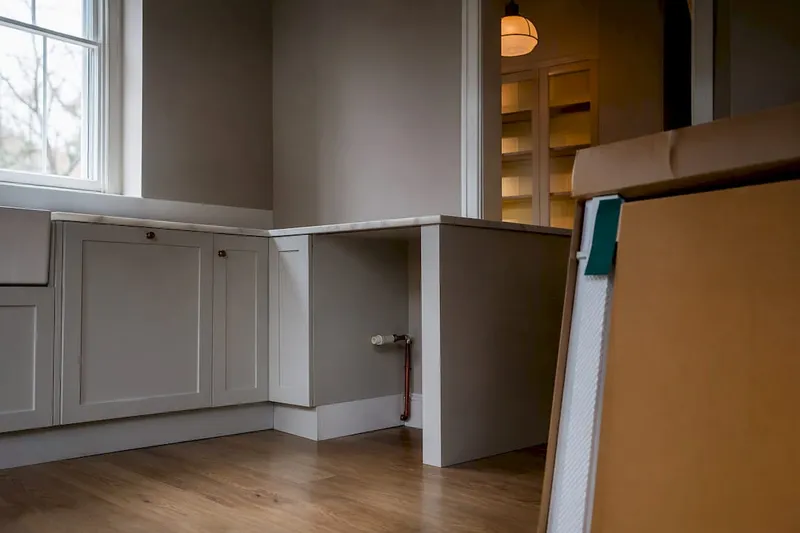
Cabinet installation requires skilled carpenters. Fitting units plumb and level in an older property with uneven walls takes considerably more time than a straightforward new-build installation. That additional labour time shows up directly on your invoice.
- Stock cabinets: Most affordable, limited sizing, fastest availability
- Semi-custom cabinets: Mid-range price, more sizing options, 4–8 week lead time
- Custom cabinets: Highest cost, built to specification, 10–16 week lead time
- Refacing existing cabinets: Replaces doors and veneers only, significantly cheaper than full replacement
Pro Tip: If your existing cabinet boxes are structurally sound, refacing the doors and drawer fronts can deliver a near-new appearance at a fraction of the cost of full replacement.
How does skilled labour affect kitchen renovation budgets?
Labour is the second largest cost factor in any kitchen remodel. Labour typically accounts for 16–35% of the total budget, with the range varying by region and project complexity. That is a wide band, and where you land within it depends heavily on where you live and who you hire.

Metropolitan areas carry the highest rates. Urban labour costs run 30–60% higher than those in smaller towns or rural areas. A plumber in central London charges considerably more per day than one working in a market town, even for identical work. This regional gap is one of the most underestimated cost factors in kitchen upgrades.
A kitchen remodel typically involves multiple trades. Electricians, plumbers, carpenters, and tilers each charge separately. Electrician, plumber, and tile setter fees typically range between £600 and £1,200 each, and a general contractor adds a 15–25% markup on top of subcontractor costs. When you add those layers together, labour costs accumulate quickly.
Choosing the cheapest quote carries real risk. Hiring based on the lowest bid often results in unforeseen costs through change orders, unreliable scheduling, and the need for expensive future repairs due to poor quality. A low bid frequently means the contractor plans to use the cheapest available crew or has underpriced the job and will recover the shortfall through extras.
- Always request three written quotes before committing to any contractor
- Check references and completed projects from the past 12 months specifically
- Confirm all trades hold current licences and relevant insurance
- Agree a fixed-price contract where possible to limit exposure to cost overruns
- Build a 10–15% contingency into your labour budget for unexpected complications
Pro Tip: Ask each contractor to itemise their quote by trade and task. This makes it far easier to compare bids fairly and spot where one quote is cutting corners.
Do premium appliances and fixtures push up renovation costs?
Appliances represent a significant and often underestimated portion of kitchen renovation costs. Appliance prices have risen 20–30% since 2022, and premium lead times remain extended at 14–20 weeks. Ordering late or changing your appliance selection mid-project can delay the entire build.
The choice of appliances shapes the design around them. An integrated fridge-freezer requires specific cabinet dimensions. A range cooker needs a particular flue and gas connection. These requirements create a cascade of additional costs in cabinetry, ventilation, and MEP rough-in work. Selecting appliances early in the planning process prevents expensive redesigns later.
Lighting adds further cost that many homeowners overlook. Lighting can represent around 8% of the total kitchen budget, with custom fixtures priced between £400 and £4,000 each. Recessed downlights, under-cabinet LED strips, and pendant lighting above an island each require their own electrical circuits and installation time.
Smart technology adds a further premium. Induction hobs with Wi-Fi connectivity, boiling water taps, and integrated extraction systems all carry higher purchase prices and more complex installation requirements than their standard equivalents. These are genuine quality-of-life upgrades, but they belong in the "nice-to-have" column unless your budget comfortably accommodates them.
- Order appliances before cabinetry is finalised to avoid costly redesigns
- Factor in installation costs separately from the appliance purchase price
- Check delivery lead times before committing to a project start date
- Consider mid-range appliances from established brands for reliability without the luxury premium
Why do layout changes and permits escalate renovation costs?
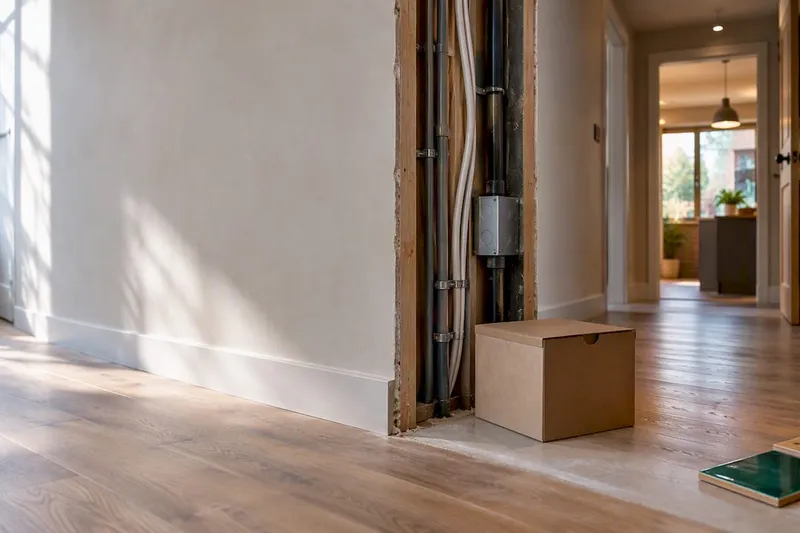
Changing your kitchen layout is one of the fastest ways to push a renovation over budget. Moving plumbing or electrical systems can add £3,000–£15,000 or more to a project, depending on the extent of the work and the structural changes required. That figure covers new pipe runs, electrical rough-in work, wall modifications, and the inspections that follow.
Building permits are a non-negotiable cost for structural or significant MEP work. Permit and design fees represent 2–5% of the total project budget. On a £40,000 renovation, that is £800–£2,000 before a single tile is laid. Understanding when permits are required for your specific project prevents costly compliance failures later.
The table below shows how layout decisions affect total cost:
| Layout decision | Estimated additional cost | Key reason |
|---|---|---|
| Keeping existing plumbing locations | £0 | No pipe relocation required |
| Moving a sink within the same wall | £500–£2,000 | Short pipe extension, minor work |
| Relocating sink to opposite wall | £3,000–£8,000 | Full re-run, structural access needed |
| Removing a non-load-bearing wall | £1,500–£4,000 | Structural assessment, replastering |
| Removing a load-bearing wall | £5,000–£15,000+ | Steel beam, structural engineer required |
The most cost-effective approach is to retain your existing layout wherever possible. Keep the sink, range, and fridge in their current positions. Redesign the cabinetry, surfaces, and finishes around the existing infrastructure. This single decision can save more money than any other choice you make during the planning phase.
- Confirm which walls are load-bearing before planning any structural changes
- Obtain written quotes for all plumbing and electrical relocation before committing
- Apply for permits early, as approval timelines vary significantly by local authority
- Budget for inspection fees as a separate line item, not an afterthought
How can you manage and reduce kitchen renovation costs?
Controlling kitchen renovation costs starts with a clear list of priorities before you speak to any contractor. Prioritising must-haves over nice-to-haves is the most consistently recommended approach from design professionals. Scope creep, where small additions accumulate throughout the project, is one of the primary causes of budget overruns.
The most impactful cost-saving decisions are structural. Avoiding relocation of plumbing systems or major electrical layout changes saves thousands and reduces project disruption. Pair that with choosing stock or ready-to-assemble cabinets over custom units, and you can redirect significant budget towards quality worktops or appliances where the investment is more visible.
Working with a designer or experienced project manager early pays for itself. Working with designers early helps accurately price materials and labour before work begins. This prevents the common situation where a homeowner approves a quote based on vague specifications, only to face a series of costly variations once the project is underway.
- Cabinet refacing instead of full replacement: saves 40–50% on cabinetry costs
- Stock or ready-to-assemble cabinets: significantly cheaper than semi-custom or custom
- Retain existing layout: the single biggest cost-saving decision available
- Phase the renovation: complete the structural work now and upgrade appliances or lighting later
- DIY painting and decorating: safe to self-manage, unlike electrical or plumbing work
- Get three quotes minimum: creates genuine competition and reveals market rates
Pro Tip: Write your must-have list before your first contractor meeting. Share it at the start of every conversation. Contractors who understand your priorities will design their proposals around your budget, not their preferred specification.
Key takeaways
Kitchen renovations are expensive because cabinetry, skilled labour, appliances, layout changes, and permits each carry substantial costs that compound quickly when combined.
| Point | Details |
|---|---|
| Cabinetry dominates the budget | Cabinets consume 25–40% of total renovation costs; custom options multiply that figure significantly. |
| Labour varies sharply by region | Metropolitan labour costs run 30–60% higher than rural rates; always get three written quotes. |
| Appliance prices have risen sharply | Prices are up 20–30% since 2022; order early to avoid delays and cost surges. |
| Layout changes are the biggest risk | Moving plumbing or electrics adds £3,000–£15,000; retaining the existing layout saves the most money. |
| Planning early prevents overspend | Working with a designer before work starts produces accurate pricing and prevents scope creep. |
The real cost of kitchen renovations: what I have learned
The number that surprises most homeowners is not the total project cost. It is how much of that total is already committed before a single decision feels "big." By the time you have chosen your layout, your cabinet style, and your appliance tier, roughly 70–80% of your budget is already allocated. The remaining decisions, tiles, taps, lighting, handles, feel significant but move the needle far less than people expect.
Cabinetry is where I see the most consistent underestimation. Homeowners often treat it as a commodity purchase when it is actually the functional backbone of the entire kitchen. Cheap cabinet boxes flex, sag, and fail within a decade. Spending appropriately on cabinetry and saving elsewhere, on lighting or worktop material, produces a better long-term result than the reverse.
The other pattern I see repeatedly is the instinct to accept the lowest bid. I understand the appeal. Kitchen renovation costs are high, and a quote that comes in 20% below the others feels like a win. It rarely is. Low bids either exclude scope that will be added back as variations, or they reflect a crew that will cut corners on the work you cannot easily inspect, such as electrical rough-ins or waterproofing behind tiles.
My consistent advice is to spend the most on what you cannot easily change later: layout, cabinetry structure, and plumbing. Spend less on what you can update affordably in five years: handles, taps, lighting, and paint. That hierarchy keeps the renovation functional and durable without requiring you to do it all again in a decade.
— Azai
FAQ
What is the biggest cost in a kitchen renovation?
Cabinetry is the largest single expense, consuming 25–40% of the total kitchen renovation budget. Labour is the second largest, typically accounting for 16–35% of total costs.
Why are kitchen remodels so much more expensive than other rooms?
Kitchens combine multiple specialist trades, including plumbers, electricians, and carpenters, with high-cost materials and appliances. No other room in a home requires that level of coordinated, skilled work simultaneously.
How much does moving plumbing add to a kitchen renovation?
Relocating plumbing during a kitchen remodel can add £3,000–£15,000 or more to the total cost. Keeping your sink and appliances in their existing positions is the most effective way to control costs.
Do I need a permit for a kitchen renovation?
Permits are required for structural changes, electrical upgrades, and plumbing relocation in most local authority areas. Permit and design fees typically represent 2–5% of the total project budget. Check the building permit guide for your specific project type.
How can I reduce kitchen renovation costs without compromising quality?
Retain your existing layout, choose stock or semi-custom cabinets over custom units, and order appliances early to avoid price increases and delays. Prioritising must-haves over nice-to-haves before work begins prevents scope creep and keeps the budget on track.