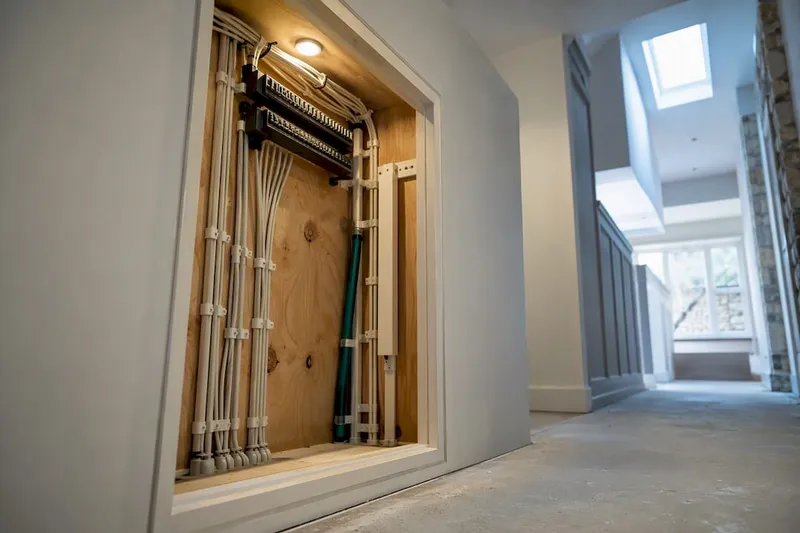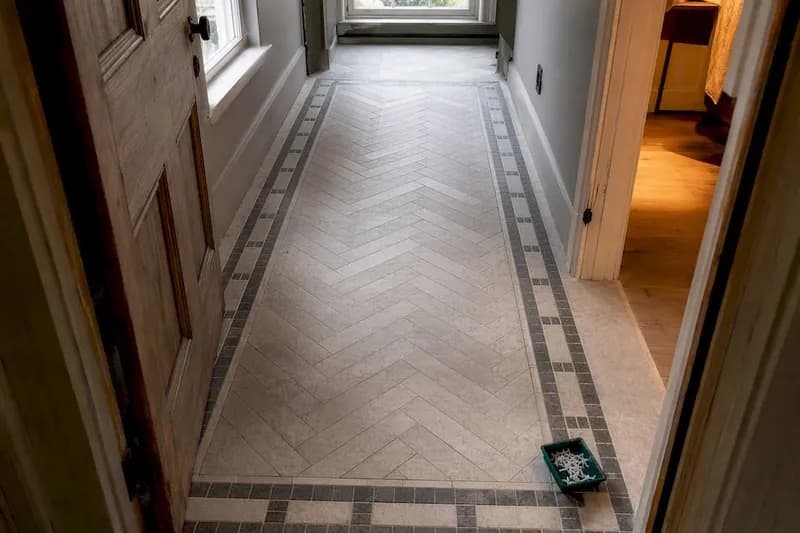
Renovation budget failure is defined as the point where actual project costs exceed the original planned spend, and it happens far more often than most homeowners expect. According to a 2025 Houzz study, only 35% of renovations came in on target, while 37% exceeded their budget entirely. The top causes of overruns are unexpected product or service costs (52%), selecting higher-end materials (35%), and project scope expansions (31%). These are not random misfortunes. They are predictable, preventable patterns that repeat across thousands of projects every year.
Why renovation budgets fail: the contingency problem
The single most common reason renovation budgets fail is that homeowners either set no contingency at all or treat it as an afterthought. In construction, a contingency is a dedicated financial reserve built into the budget to absorb costs that were not foreseeable at the time of estimating. It is not leftover money. It is risk management.
Industry guides recommend a contingency of 10 to 20% for renovation projects, which is higher than the 5 to 10% typically applied to new builds. The reason is straightforward: renovations involve existing structures with unknown conditions. Once walls are opened, you may find outdated wiring, corroded pipes, asbestos, or structural deficiencies that were invisible before work began. Each of these discoveries carries a cost, and none of them appear in a builder's initial quote.
A common misconception is that a detailed quote from a reputable contractor eliminates the need for contingency. It does not. Even the most thorough pre-construction inspection cannot account for every hidden condition. Contingency should be quantified early and treated as a dedicated reserve, separate from your main budget, with a clear protocol for when and how it can be drawn upon.
Here is what a realistic contingency plan covers:
- Structural surprises: Rotted framing, inadequate footings, or non-compliant load-bearing walls discovered during demolition
- Services and MEP rough-in issues: Outdated electrical panels, lead pipes, or undersized drainage that must be upgraded to meet current code
- Hazardous materials: Asbestos insulation or lead paint removal, which require licensed contractors and add significant cost
- Scope adjustments: Minor additions to the original scope that are genuinely necessary once the site is exposed
Pro Tip: Set your contingency as a separate line item in your budget from day one. If you are renovating a property built before 1980, lean towards 20% rather than 10%. Older homes carry more unknowns, and the cost of discovering them mid-project is always higher than planning for them upfront.
How mid-project changes derail your renovation spend
Changes made after construction begins are one of the most reliable ways to push a renovation over budget. The industry term for these is change orders, and they are far more expensive than the same decision made during the design phase. Once a contractor has priced, scheduled, and mobilised for a specific scope of work, any deviation from that scope triggers rework, re-ordering, and schedule disruption.

Decisions made after demolition starts cost significantly more due to rework and schedule impacts. A tile selection changed after the waterproofing membrane is laid, or a wall repositioned after framing is complete, can multiply the original cost of that element two to three times over. The financial damage is not just the new material. It includes the labour to undo completed work, the delay to other trades waiting on that element, and any associated re-inspection fees.
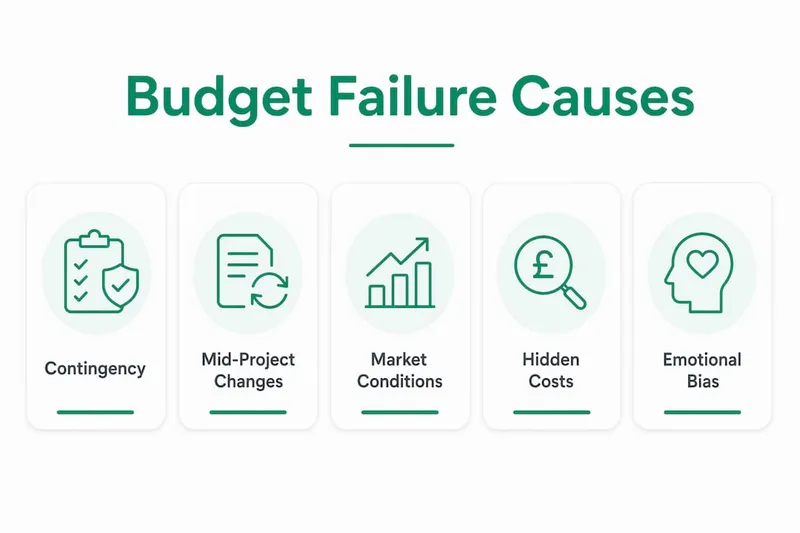
Scope creep is a related but distinct problem. It describes the gradual accumulation of small additions to the project, each of which seems minor in isolation. Adding a second bathroom exhaust fan, upgrading the kitchen splashback, extending the deck by one metre: individually these feel insignificant. Collectively, they can add 10 to 15% to your final cost without you ever making a single large decision.
To manage mid-project scope changes effectively, follow this sequence before approving any change order:
- Get the full cost in writing before approving any change. This includes labour, materials, and any impact on other trades or the programme.
- Assess the contingency impact. Determine whether the change draws from your contingency reserve or requires a formal budget increase.
- Evaluate timing. Ask your contractor whether the change can be deferred to a later phase or a future project at lower cost.
- Document everything. Every approved change order should be signed by both parties and filed with your project records.
- Pause discretionary upgrades. If you are considering an upgrade that is not structurally or functionally necessary, defer it until after practical completion when you know your final position.
Pro Tip: Lock in all material and finish selections before your contractor begins on-site. Tile, tapware, cabinetry, and appliances should all be specified and ideally ordered before demolition starts. Late selections are one of the most avoidable causes of cost overruns.
How market conditions drive renovation cost overruns
Even a well-planned budget with a solid contingency can be undermined by external forces. Material price volatility and labour availability are two of the most significant, and both have become harder to predict in recent years.
Supply chain disruptions cause cost increases and project delays that directly impact budgets. When a specified product is unavailable, contractors must either wait (extending the programme and increasing preliminaries) or substitute an alternative product, which may carry a different price point. Either outcome costs money. Labour availability follows a similar pattern: when skilled tradespeople are in high demand, rates rise and scheduling becomes less predictable.
The table below illustrates how market-driven factors translate into real budget impacts:
| Market factor | Typical impact on budget |
|---|---|
| Material price increase between quote and procurement | 5 to 15% cost increase on affected items |
| Long lead times on specified products | Extended programme, higher preliminary costs |
| Labour shortages in key trades | Rate increases of 10 to 20% or schedule delays |
| Supply substitutions for unavailable materials | Price variance, potential redesign costs |
Credible cost estimates must incorporate supply constraints, bidder competition, and scheduling assumptions. An estimate produced six months before tendering may be materially inaccurate by the time you receive contractor quotes, particularly in periods of high construction activity. Building in a market-timing assumption and reviewing your estimate closer to tender is a practical way to reduce this gap.
What homeowners forget to budget for
Builders often underestimate non-construction costs such as permits, approvals, overhead, and holding costs, which leads to budget shortfalls. This is one of the most consistent patterns in renovation project planning mistakes: the builder's quote covers construction, but the total project cost includes much more.
The costs most commonly omitted from early renovation budgets include:
- Council permits and development approvals: Fees vary by council and project type, but can range from a few hundred to several thousand pounds or euros depending on the scope.
- Structural and engineering reports: Required for load-bearing changes, extensions, or any work affecting the building envelope.
- Asbestos or hazardous material testing and removal: Mandatory in many jurisdictions for pre-1990 properties before demolition work begins.
- Temporary accommodation or storage: If the renovation makes the property uninhabitable, you need to budget for alternative living arrangements.
- Utility connections and disconnections: Temporary power, water, and waste management during construction carry real costs.
- Landscaping and external works: Often excluded from the main contract but necessary to complete the project.
- Furniture, fittings, and equipment: Appliances, blinds, and light fittings are frequently not included in a builder's scope.
Treating a builder's quote as the total project cost is one of the most common renovation project planning mistakes. A realistic feasibility budget accounts for all of these categories from the outset. You can find a detailed breakdown of hidden renovation costs and how to account for them in your planning.
How to build a renovation budget that holds up
Budgets fail not because homeowners budget poorly, but because initial plans do not flexibly accommodate real-world variability. The solution is not a more detailed spreadsheet. It is a budgeting approach that treats the plan as a living document, updated regularly as conditions change.
A renovation budget that holds up in practice is built on these principles:
- Start with a feasibility budget, not a builder's quote. Include all cost categories before you approach contractors.
- Set contingency as a fixed percentage of total project cost, not as a vague allowance. For older properties, 20% is appropriate.
- Review your budget at each project milestone. After design completion, after demolition, and after rough-in are the three most important review points.
- Track expenditure weekly against your budget. Waiting until the end of a phase to reconcile costs means surprises arrive too late to manage.
- Communicate budget limits clearly to your contractor. A contractor who knows your ceiling can flag risks before they become overruns.
When it comes to planning your renovation timeline and budget together, the two are inseparable. Delays extend the programme, and an extended programme increases costs. Treating schedule and budget as a single integrated plan is one of the most effective ways to stay on track.
Pro Tip: When you receive your first contractor quote, add all non-construction costs on top before comparing it to your budget. If the total exceeds your feasibility figure, that is the moment to adjust scope, not after construction begins.
Key takeaways
Renovation budgets fail most reliably when contingency is underestimated, changes are made after construction starts, and non-construction costs are excluded from the total project figure.
| Point | Details |
|---|---|
| Contingency is non-negotiable | Set 10 to 20% of total project cost as a dedicated reserve before construction begins. |
| Change orders are expensive | Decisions made after demolition starts cost significantly more due to rework and schedule disruption. |
| Market conditions affect estimates | Material price volatility and labour shortages can add 5 to 20% to costs between quote and procurement. |
| Builder quotes are not total costs | Permits, approvals, hazardous material removal, and temporary accommodation are frequently excluded. |
| Budgets must be living documents | Review and update your budget at every major project milestone, not just at the start. |
What I have learned about renovation budgets after years of watching them fail
The data on renovation budget failure is consistent, and the patterns are not surprising to anyone who has worked closely with homeowners through a construction project. What does surprise me is how often the same mistakes repeat, even among people who have renovated before.
The emotional side of budgeting is rarely discussed, but it matters. Homeowners often set a budget based on what they want to spend, not what the project actually costs. That distinction sounds obvious, but in practice it leads to undercooked feasibility figures, optimistic contingency allowances, and a reluctance to confront the real numbers early enough to do something about them.
The homeowners I have seen navigate renovations successfully share one habit: they treat the budget as a project management tool, not a wish list. They update it regularly, they ask hard questions of their contractors, and they make decisions early. They also plan apartment renovations or house projects with the same discipline they would apply to any significant financial commitment.
My honest observation is that most budget overruns are not caused by bad luck. They are caused by decisions deferred too long, contingencies set too low, and non-construction costs ignored until the invoice arrives. The good news is that all three of these are within your control, provided you address them before the first wall comes down.
— Azai
FAQ
What is the most common reason renovation budgets fail?
Unexpected costs are cited by 52% of homeowners as the primary cause of budget overruns, followed by selecting higher-end materials (35%) and scope expansions (31%).
How much contingency should I set for a renovation?
Industry guidance recommends 10 to 20% of total project cost as a contingency for renovations, with older properties requiring the higher end of that range due to greater unknowns in existing conditions.
Why do renovation costs exceed the builder's quote?
Builder quotes typically cover construction only. Non-construction costs such as permits, engineering reports, hazardous material removal, and temporary accommodation are frequently excluded and must be added to reach the true project cost.
Can I avoid budget overruns by locking in a fixed-price contract?
A fixed-price contract reduces exposure to labour and material cost increases, but it does not protect against scope changes, hidden site conditions, or costs outside the builder's contract. Contingency and early decision-making remain necessary regardless of contract type.
How do supply chain issues affect my renovation budget?
Material lead-time volatility can force substitutions or programme extensions, both of which increase costs. Building a market-timing assumption into your estimate and reviewing it close to tender reduces this risk.