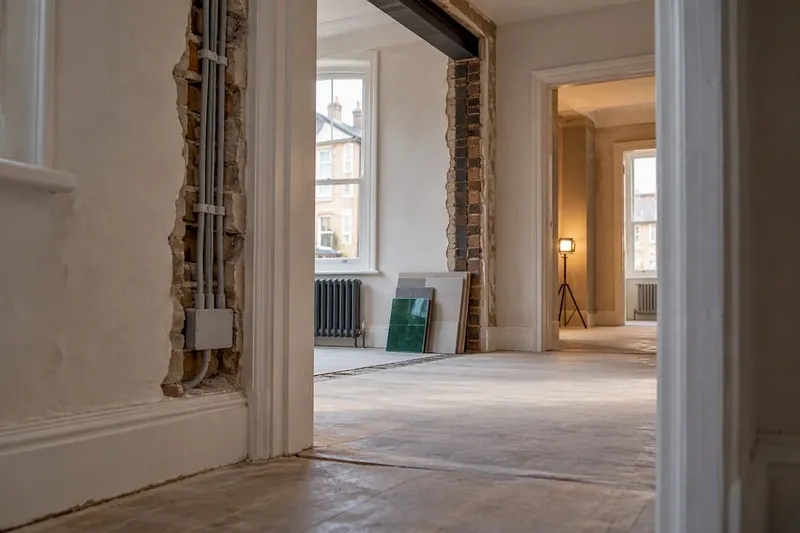
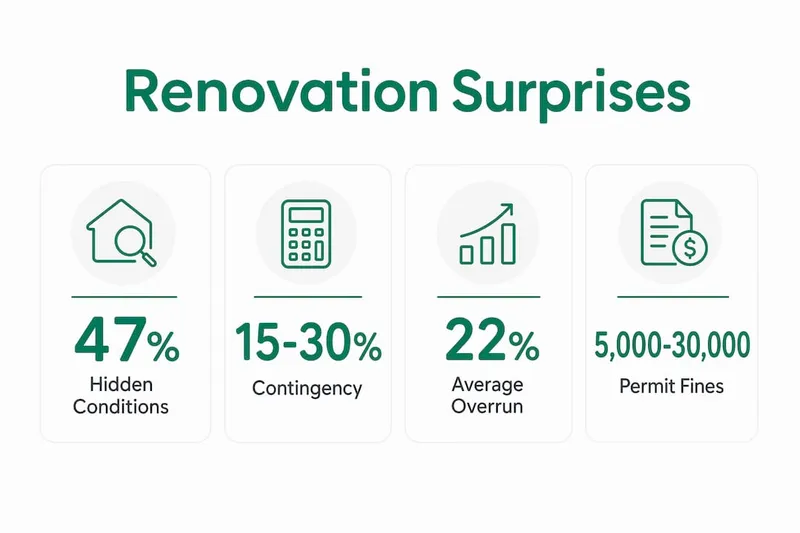
Renovation budget overruns are defined as the gap between a contractor's initial quote and the final amount you actually pay, and that gap is far more common than most homeowners expect. The 2026 Home Improvement Cost Report found that hidden conditions drive overruns in 47% of major projects, with average cost increases reaching 22%. Experts at Better Builders and Finly Insights consistently point to the same root causes: vague scope definitions, unseen structural problems, and contractor pricing assumptions that favour best-case scenarios. Understanding why renovation costs exceed quotes before you sign anything is the single most effective way to protect your budget.
Why do renovation costs exceed quotes so often?
The short answer is that most quotes are built on assumptions, not certainties. A contractor visits your property for an hour or two, makes educated guesses about what lies behind your walls, and prices accordingly. When those guesses prove wrong, the cost lands with you.
Remodelling costs reflect substantial overheads including planning, inspections, and managing existing home complexities that go well beyond materials and labour. Low initial bids often cut corners on these overheads, causing delays and rework that push the final bill far higher than the original figure. The quote you receive is a starting point, not a guarantee.

What hidden costs cause renovation budgets to increase?
Hidden conditions are the single biggest driver of unexpected renovation expenses. Older properties in particular carry problems that are invisible until demolition begins.
Common hidden issues include:
- Water damage and rot behind tiles, under floors, or inside wall cavities
- Outdated wiring that fails to meet current regulations, requiring a full rewire
- Lead or asbestos in older plasterwork, insulation, or floor adhesives
- Structural movement in lintels, joists, or load-bearing walls
- Corroded or undersized pipework that cannot support modern fixtures
The 2026 Home Improvement Cost Report confirms that these hidden conditions affect 47% of major renovation projects. That figure means nearly one in two homeowners will encounter something their contractor did not price for.
Older homes frequently require code-compliance upgrades to electrical, plumbing, or structural systems that are excluded from initial quotes unless specifically listed. A cosmetic kitchen refit, for example, can trigger a requirement to upgrade the consumer unit to current Part P standards. That upgrade alone can add several thousand pounds to a project that was quoted purely on cabinetry and worktops.
| Hidden Cost Type | Typical Trigger | Potential Impact |
|---|---|---|
| Outdated wiring | Opening walls or adding circuits | Full rewire required |
| Water damage | Removing tiles or flooring | Structural timber replacement |
| Asbestos removal | Disturbing pre-2000 materials | Specialist contractor needed |
| Code-compliance upgrades | Electrical or plumbing changes | Permit and inspection fees |
| Structural repairs | Removing load-bearing elements | Engineer sign-off required |
Pro Tip: Before accepting any quote, ask your contractor to specify what assumptions they have made about the condition of existing structures. A written list of assumptions gives you a clear basis for any future cost variation.
You should set aside a contingency buffer of 15%–30% of your quoted renovation cost specifically to cover these discoveries. For a £50,000 project, that means holding £7,500–£15,000 in reserve before you start. Read more about structuring that reserve in this guide to renovation budgeting and contingency.
How do contractor quotes differ and why does it matter?
Wide price gaps between renovation quotes reflect differences in scope definitions, labour calculations, and project management rather than simple pricing differences. Two contractors quoting the same bathroom refit can produce figures that differ by 30% or more, yet neither quote is necessarily wrong. They are simply pricing different things.
Vague or incomplete project briefs cause contractors to guess at scope, resulting in widely varying quotes with hidden cost risks. When you provide a detailed brief with drawings, material specifications, and a clear scope of works, the pricing gaps narrow considerably and the risk of surprises drops.
What are allowances and why are they risky?
Allowances, also called provisional sums, are placeholder figures within a quote for items not yet fully specified. A contractor might include a £500 allowance for bathroom taps, assuming you will choose a mid-range product. If you select a designer fitting at £1,200, the difference comes straight out of your pocket on top of the quoted total.
Contractor allowances must be carefully vetted to confirm they align with your actual material and finish selections. Assuming entry-level pricing in allowances causes immediate budget gaps the moment you make real product choices. Always ask your contractor to list every allowance in the quote and confirm the assumed specification for each one.
What do some quotes leave out entirely?
Contractors include or exclude items like permits, clean-up, and premium materials differently, making simple price comparisons misleading. A quote that looks £5,000 cheaper may simply have omitted:
- Building regulations fees and inspections
- Skip hire and waste disposal
- Temporary works such as scaffolding or propping
- Project management time
- VAT (particularly relevant if the contractor is not VAT-registered)
When comparing quotes, look at the structure of each document rather than the bottom-line figure. Ask each contractor to confirm in writing what is and is not included. This single step resolves the majority of why renovation quotes are inaccurate before work begins.
Pro Tip: Ask every contractor to walk you through their quote line by line. Any contractor who cannot explain their pricing in plain terms is a contractor worth approaching with caution.
Why do mid-project changes drive costs up?
Scope creep is the term used in construction project management for the gradual expansion of a project beyond its original brief. It is one of the most predictable causes of renovation budget overruns, yet it catches homeowners off guard repeatedly.
Changing plans mid-project increases renovation costs by 15%–25%, because completed work often requires demolition to accommodate the change. Moving a doorway after framing is complete, for instance, means paying to remove the frame, reposition it, and make good the surrounding structure. You pay twice for the same work. Material price fluctuations and permit requirement changes during execution also contribute to cost overruns, particularly on projects that run longer than planned.
Good upfront planning is the most reliable way to limit these increases. Follow these steps before work starts:
- Finalise your design completely before inviting contractors to quote. Decisions made on paper cost nothing. Decisions made on site cost significantly more.
- Specify every material and fitting in advance. Confirm product codes, lead times, and costs before the quote is submitted.
- Agree a formal change order process with your contractor. Any variation to the agreed scope should be priced and signed off in writing before work proceeds. Read more about managing this in the change orders guide.
- Build a realistic timeline that accounts for material delivery delays and inspection wait times.
- Resist the urge to upgrade mid-project. Seeing your renovation take shape often triggers the desire to improve finishes. Budget for upgrades deliberately before work starts, not during it.
Pro Tip: Treat your original brief as a contract with yourself. Every change you make mid-project is a cost you are choosing to add. Keeping a running tally of variation costs in real time prevents end-of-project shock.
What role does contractor selection play in budget overruns?
Choosing the wrong contractor is one of the most expensive mistakes a homeowner can make. Hiring an underqualified contractor leads to cost overruns of 20%–40% compared to reliable firms, driven by low initial bids, poor workmanship, and a steady stream of change orders. That saving on the original quote evaporates quickly.
Skipping building permits can result in fines of £5,000–£30,000 or costly rework when a sale or insurance claim later requires proof of compliant work. Some contractors suggest omitting permits to reduce upfront costs. This is a risk that sits entirely with you as the homeowner, not with the contractor.
Traits that distinguish reliable contractors include:
- Verifiable references from completed projects of similar scope and value
- Full insurance including public liability and employer's liability
- Transparent pricing with itemised quotes and clearly listed allowances
- Registered trade memberships such as NICEIC for electricians or Gas Safe for gas engineers
- Clear communication with a named point of contact throughout the project
Effective project management reduces surprises and keeps costs within agreed budgets. On larger projects, consider appointing an independent project manager or quantity surveyor to review quotes, monitor progress, and approve payment stages. Their fee is typically recovered many times over in avoided overruns. For guidance on setting clear expectations from the start, the contractor communication guide covers the key conversations to have before work begins.
Skilled labour and project management improve quote accuracy and reduce surprises throughout a project. The cost of quality at the start is almost always lower than the cost of fixing problems at the end.
Key takeaways
Renovation costs exceed initial quotes primarily because quotes are built on assumptions, and those assumptions break down the moment hidden conditions, scope changes, or underqualified contractors enter the picture.
| Point | Details |
|---|---|
| Budget for hidden conditions | Set aside a contingency of 15%–30% of your quoted cost before work starts. |
| Compare quote structure, not price | Check what each quote includes and excludes before choosing a contractor. |
| Finalise scope before signing | Every mid-project change adds 15%–25% to costs through demolition and rework. |
| Vet every allowance | Confirm that provisional sums match your actual material and finish choices. |
| Choose qualified contractors | Underqualified contractors cause 20%–40% overruns through poor work and change orders. |
The uncomfortable truth about renovation budgets
I have seen the same pattern repeat itself across hundreds of renovation projects. Homeowners arrive at the planning stage with a figure in mind, find a quote that matches it, and feel relieved. That relief is the most dangerous moment in the entire process.
The quote that matches your budget is not confirmation that your budget is right. It is often confirmation that the contractor has told you what you want to hear. Detailed, thorough quotes from experienced contractors almost always come in higher than a homeowner's initial expectation, because they account for the things that actually happen on site.
My honest observation is that most renovation budget overruns are not caused by dishonest contractors or bad luck. They are caused by homeowners who did not ask enough questions at the start. Asking a contractor to explain every assumption in their quote, to list every allowance, and to confirm what is excluded takes perhaps an extra hour of your time. That hour is worth more than any contingency fund.
The other thing I would tell any homeowner is this: breaking your budget into discrete categories before you start gives you control that a single lump-sum figure never can. When you know exactly how much you have allocated to structural work, to finishes, and to contingency, you make better decisions throughout the project. You also spot overruns earlier, when they are still manageable.
Renovation projects are not unpredictable by nature. They are unpredictable when they are underprepared.
— Azai
FAQ
What is the average renovation cost overrun percentage?
Hidden conditions cause average overruns of 22% across major renovation projects. Setting aside a contingency of 15%–30% of your quoted cost is the standard recommendation from industry reports.
Why are renovation quotes so different between contractors?
Quote differences reflect scope definitions, labour calculations, and project management assumptions rather than raw pricing alone. A cheaper quote often simply excludes items the more expensive quote has included.
What are provisional sums in a renovation quote?
Provisional sums are placeholder figures for items not yet fully specified, such as tiles or fittings. If you choose products above the assumed price point, the difference is added to your final bill.
How do i avoid unexpected renovation expenses?
Finalise your design and material choices before inviting quotes, ask contractors to list every assumption and exclusion in writing, and hold a contingency reserve of at least 15% of the total quoted cost.
Can skipping permits really increase renovation costs?
Yes. Skipping permits can result in fines of £5,000–£30,000 and may require costly rework if the unpermitted work is discovered during a property sale or insurance claim.