Appliance arrivals belong to your finish trades, not your shopping calendar: schedule delivery to land after rough-in inspections pass and after your cabinet or countertop date is confirmed, never before. Specify every appliance model at the design stage so cutouts and fuel lines are fixed early. If site readiness is even slightly uncertain, arrange secure staging rather than accepting delivery straight to an unfinished site. Tools like House A-Z can help you map these milestones against your wider build.
TL;DR:
- Schedule appliance delivery only after passing rough-in inspections and confirming cabinet or countertop installation dates to prevent damage or storage issues.
- Specify appliance models, fuel types, and cutout dimensions early in the design process to ensure cabinetry and plumbing are accurately prepared beforehand.
- Track lead times from vendors and convert them into fixed milestones on your schedule, reviewing progress weekly to avoid delays.
- Confirm all trades, including electricians and plumbers, sign off on readiness for delivery at least one week before to prevent last-minute schedule conflicts.
- Use a centralized project management tool to coordinate appliance milestones with trades and inspections, reducing the risk of late or incorrect deliveries.
Table of Contents
- Building your appliance delivery schedule around real milestones
- What should your delivery-day checklist cover?
- How do you get electricians, plumbers and cabinet installers aligned?
- Where do you store appliances if the site isn't ready?
- How House A-Z keeps appliance milestones from slipping
- Why the biggest delivery mistakes happen months before delivery day
- Try House A-Z for your build's delivery milestones
- Sources
- FAQ
Building your appliance delivery schedule around real milestones
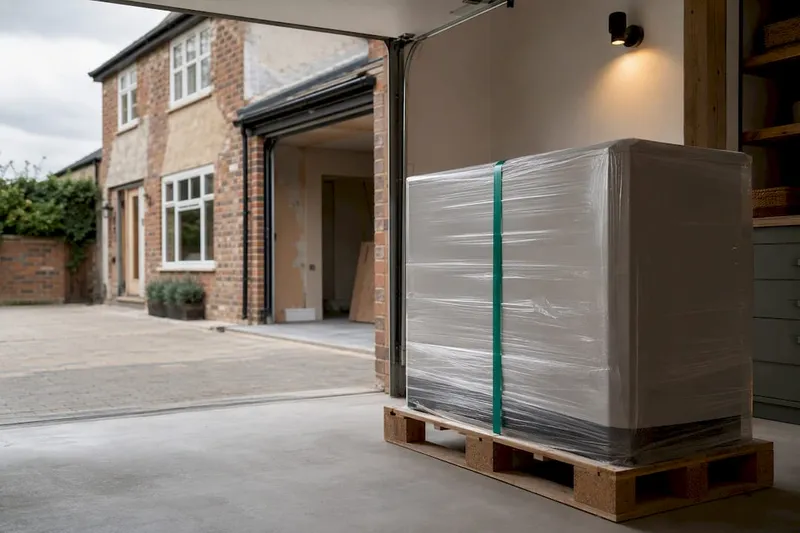
Get the sequencing wrong and a beautiful new range cooker sits shrink-wrapped in a garage for six weeks, gathering dust and blocking the one parking spot your tiler needs. The fix starts long before delivery day, back at the design table.
Specify every appliance, model number, fuel type and cutout dimension, while cabinets are still being drawn. Cabinetmakers and countertop fabricators work from your appliance specifications, not the other way round. Change your mind about a slide-in range after cabinets are ordered, and you are looking at a change order, not a quick fix.
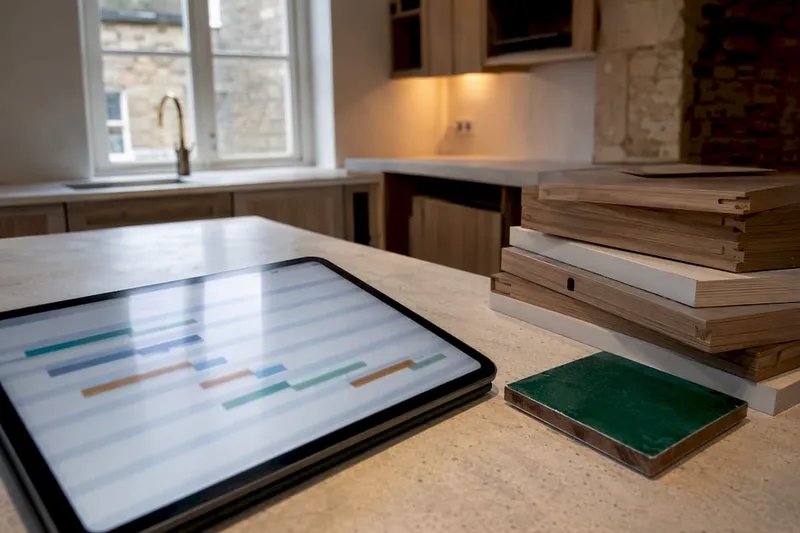
Once specifications are locked, order appliances early and immediately translate each vendor's quoted lead time into a firm milestone on your master schedule. This is where most first-time builders lose weeks without noticing: a lead time sitting in a supplier email is not a schedule milestone until you have converted it into a date and checked it against everything else moving around it. A rolling look-ahead covering the next three to eight weeks, reviewed weekly against supplier confirmations and trade progress, catches slippage while there is still time to react.
Physical delivery to site should track two triggers, whichever comes later:
- Rough-in inspections passed (electrical, plumbing, gas)
- A confirmed cabinet installation or countertop fabrication date
Sequencing references that map construction phases typically place appliance delivery late in the finish sequence, often after countertop installation is complete, because cabinets are the long-lead item driving everything downstream. Receiving a dishwasher or range before rough-in inspections pass means storing a heavy, boxed appliance on an active site with exposed wiring and unfinished floors. That is a damage claim waiting to happen, not a convenience.
What should your delivery-day checklist cover?
Delivery day rewards preparation. Miss one item on this list and the crew either can't get the unit inside or can't hand it off to you at all.
- Clear the path. Delivery teams generally require an unobstructed path of at least 3 feet wide, with an unloading or parking zone within roughly 30 feet of the entrance. If a lift or stairwell is involved, confirm access in advance.
- Have an authorised adult present. Someone 18 or older must be on site for the entire delivery window; delivery teams will not release an appliance to a contractor or neighbour without prior written authorisation.
- Verify the unit before it comes off the truck. Check model number, colour and fuel type against your order confirmation. Retail checklists flag model mismatches as one of the most common causes of failed deliveries.
- Confirm connection readiness. Check the electrical outlet type matches the appliance, that gas and water shut-offs are accessible, and whether new connection parts are needed. Big-box delivery checklists note that connection kits, gas flex lines and dishwasher hookups are usually required and rarely supplied by the delivery crew.
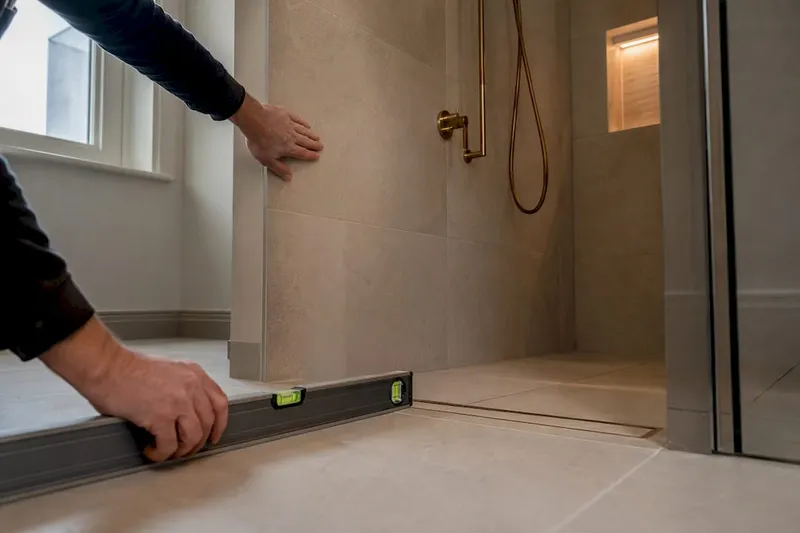
- Inspect, test, sign. Before sign-off, the delivery team should measure the opening, level the unit and run a basic operational test with you present.
Pro Tip: Photograph every appliance from all four sides the moment it clears the truck, before anyone unwraps it. If damage surfaces later, you'll want a timestamped record of its condition on arrival, not just your memory of it.
Manufacturer guidance is consistent on scope: delivery teams inspect access, measure clearances, test operation and document plumbing and electrical services, but they will not perform licensed trade work. If a connection needs a certified electrician or plumber, that work happens before the truck arrives, not after.
How do you get electricians, plumbers and cabinet installers aligned?
Every trade touching the appliance install needs a specific, written answer before delivery week begins, not a general assurance that "it'll be ready."
Ask your electrician to confirm the exact outlet location and voltage against the appliance spec sheet, and to sign off that the circuit is live and tested. Ask your plumber to confirm the gas shut-off or water line is capped, accessible and pressure-tested where relevant. Home Depot's delivery guidance makes the scope boundary explicit: delivery agents are not licensed trades and cannot complete gas or electrical connection work themselves.
Your cabinet installer carries a separate but equally critical checklist:
- Verified rough opening dimensions against the actual appliance, not the spec sheet estimate
- Panel-ready fronts fitted to the correct dimensions if you are running integrated appliances
- Fillers and end panels placed so nothing blocks the appliance's final slide-in position
Last-minute model swaps are where schedules unravel fastest. Build a change-order policy into your contract before it happens: any appliance substitution after cabinet release triggers a documented change order with a revised delivery date, not a verbal "we'll sort it on site." Keep a short contingency list of commonly missing parts, such as water line connectors and dishwasher junction boxes, so a trade visit isn't wasted waiting on a fitting that should have arrived with the unit.
Pro Tip: Write appliance delivery into your contractor's payment milestones, the same way you would a rough-in or drywall milestone. A trade paid on milestone completion has every reason to confirm rough openings and connections are genuinely ready before the truck is booked, not after.
Where do you store appliances if the site isn't ready?
Three routes exist when your cabinets or countertop date slips but the appliance has already shipped, and each carries a different cost and risk profile.
- Vendor hold. The retailer or manufacturer holds the unit at their warehouse until you confirm a new date. Get the hold window and any fees in writing, and ask specifically what happens if the hold period lapses.
- Third-party logistics (3PL). A dedicated storage provider holds inventory off-site for a fee, useful for larger builds juggling multiple appliance sets or delayed trades across several rooms.
- Secured on-site staging. Only viable once the space is weatherproof, lockable and free of dust-generating work. Track every staged item against your inventory list so nothing gets installed early by mistake or goes missing before the final fit.
Vendor holds and 3PL storage both trade a modest storage cost for meaningfully lower risk to the appliance and to your schedule. Confirming insurance coverage during the hold matters just as much as confirming the fee.
How House A-Z keeps appliance milestones from slipping
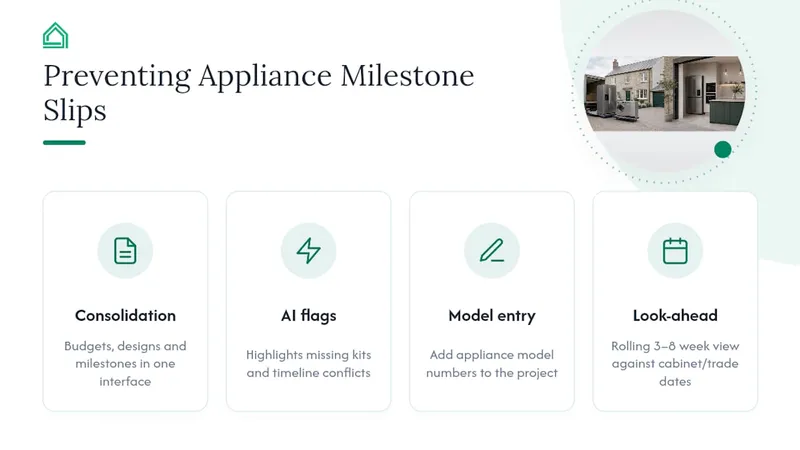
Coordinating appliance timing against cabinets, trades and inspections usually means juggling a spreadsheet, a supplier email chain and a text thread with your contractor, all slightly out of sync with each other. House A-Z consolidates budget tracking, design decisions and project milestones into one interface, so appliance delivery windows sit alongside cabinet and countertop dates rather than in a separate file. Its AI agents flag missing connection kits and timeline conflicts before they become a delivery-day problem, helping users avoid costly on-site mistakes. Add your appliance model numbers to your project and build a rolling three to eight week look-ahead against your cabinet and trade dates.
Why the biggest delivery mistakes happen months before delivery day
The worst appliance delays rarely trace back to delivery day itself. They trace back to a specification decided too late, after cabinets were already ordered against guesswork dimensions, or to a homeowner accepting delivery early simply because the truck happened to be available that week. Both mistakes come from treating appliance procurement as a shopping errand rather than a trade milestone with its own dependencies.
The single habit worth adopting is a short weekly look-ahead meeting with your suppliers and trades, covering the next three to eight weeks of commitments against actual site progress. Specify early. Deliver late, unless you can stage securely.
— Azai
Sources
For specifics beyond this guide, manufacturer delivery instructions and installation guidelines cover site access and inspection standards. The Home Depot delivery checklist details connection-part requirements, and Super Arbor's sequencing guide explains cabinet and countertop lead-time dependencies in more depth.
- Delivery instructions | Samsung Appliances
- Samsung delivery and installation guidelines (specbook excerpt)
- Home Depot appliance delivery checklist
FAQ
When should I schedule appliance delivery during a renovation?
Schedule physical delivery only after rough-in inspections have passed and your cabinet or countertop installation date is confirmed. Specify appliance models early at the design stage so cabinet makers and fabricators can work from accurate dimensions.
How do I change an appliance delivery date without disrupting my schedule?
Contact your supplier as soon as a trade or inspection date shifts, and confirm the new delivery window in writing before adjusting anything else. Building a rolling three to eight week look-ahead makes date changes visible early, rather than discovered the week a truck is due.
What is the standard delivery time window for appliances?
Retail delivery checklists typically quote a projected four-hour delivery window rather than an exact time, so plan to have someone on site for the full window. An authorised adult aged 18 or over must be present throughout.
How can I track appliance delivery alongside my construction schedule?
Most vendors offer carrier tracking for individual shipments, but tracking each appliance against your cabinet, countertop and trade dates needs a project-wide view. House A-Z lets you log appliance milestones next to your budget and trade schedule in one place, rather than cross-checking separate tracking emails against a paper calendar.
What should I check before accepting appliance delivery?
Verify the model number, colour and fuel type against your order, confirm the delivery team can test the unit's basic functions, and inspect the exterior for damage before signing. Report any damage within the vendor's stated notification window, since delayed reports are often harder to claim against.