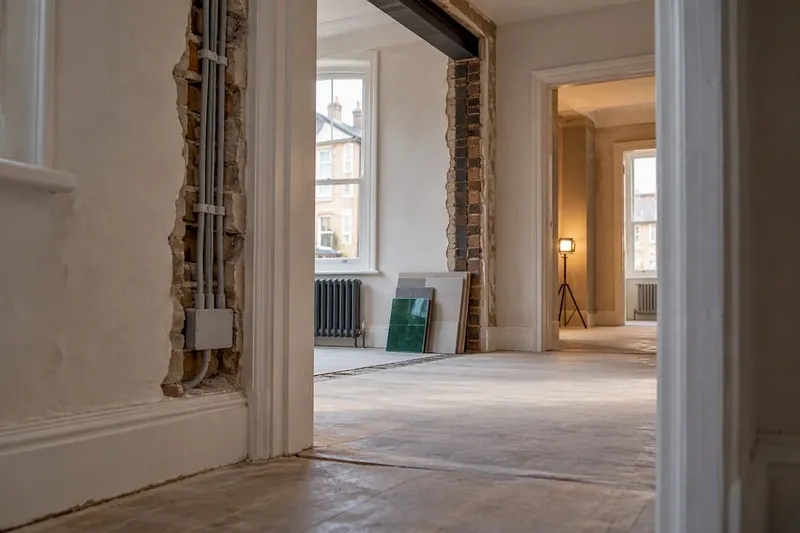
A renovation spending priorities list is a structured plan that ranks projects from critical structural repairs through to cosmetic finishes, directing your budget where it creates the most value. The 30% rule caps total renovation spending at 30% of your home's current market value to prevent over-improving. Beyond that cap, you need a contingency fund of 10–20% for existing homes, because overruns average 15–20% above initial estimates. Getting this framework right before a single wall comes down is the difference between a renovation that builds equity and one that drains it.
1. What is a renovation spending priorities list?
A renovation spending priorities list is the industry term for a phased project ranking system, sometimes called a renovation priority framework. It organises every planned project into tiers based on urgency, safety, and financial return. Without one, homeowners routinely spend on cosmetic upgrades while deferred structural issues quietly compound in cost. The list forces you to confront what the building actually needs before you decide what you want.
The framework follows an outside-in, bottom-up logic. You address the envelope of the building first, then the systems running through it, then the rooms people use daily, and finally the finishes that make it feel like home. This sequence is not arbitrary. Appraisers penalise deferred maintenance regardless of how polished the cosmetic work looks, so structural gaps undermine every pound spent on aesthetics.

2. The four-tier priority structure explained
The four-tier model is the standard framework used by professional renovation planners and quantity surveyors.
| Tier | Category | Typical tasks | Approximate spend |
|---|---|---|---|
| 1 | Safety and structure | Foundation repairs, roof replacement, damp-proofing, load-bearing walls | 30–40% of budget |
| 2 | Major systems | Electrical rewiring, plumbing, heating, HVAC, insulation | 25–30% of budget |
| 3 | Functional rooms | Kitchen fit-out, bathroom installation, windows, doors | 20–25% of budget |
| 4 | Comfort and cosmetics | Flooring, painting, landscaping, decorative fixtures | 10–15% of budget |
Tier 1 covers anything that affects the safety or physical integrity of the building. A failing roof or unstable foundation will damage every subsequent improvement you make. Tier 2 addresses the systems that run invisibly through walls and floors. These must be completed before walls are closed, because running utility rough-ins during open-wall structural phases saves 60–70% compared to retrofitting later. Tier 3 covers the rooms where daily life happens. Tier 4 is everything that makes a house feel finished.
Phasing renovations across multiple years adds 5–15% in costs but can save 30–50% in financing interest compared to funding everything through one large loan. That trade-off makes phasing the financially sound choice for most homeowners.
Pro Tip: Complete all Tier 2 rough-ins, including plumbing, electrical, and HVAC, before closing any walls. Retrofitting these systems later costs significantly more and requires demolishing finished work.
3. How to allocate your home improvement budget across priority areas
Budget allocation across tiers should reflect the four-tier proportions above, but the percentages shift based on your home's age and condition. An older property in need of rewiring and re-plumbing will demand more from Tier 2. A newer build may allow more flexibility in Tier 3 and 4.
Every budget must account for two categories of cost that homeowners frequently underestimate:
- Hard costs: Direct construction expenses including materials, labour, and equipment hire.
- Soft costs: Permits, architectural drawings, structural engineering reports, and design fees. Soft costs add 10–20% to total project costs and are distinct from construction spend.
- Contingency fund: A non-negotiable reserve of 15–20% for existing homes. This money is not available for aesthetic upgrades. It exists solely to absorb the unexpected.
- Financing costs: Interest charges if you are borrowing. Factor these into your total outlay from the start.
The most common budget failure is not poor planning in general. Most renovation budget failures stem from starting with a target number before any detailed scope or contractor bids exist. You cannot build a realistic budget from a round number. You build it from verified quotes, a defined scope, and honest cost categories.
Pro Tip: Build your budget from the bottom up. Get at least three contractor quotes for each tier before committing to any spend. Update your totals after each quote round, not before.
4. Which renovation projects yield the highest return on investment?
Return on investment (ROI) measures how much of your renovation spend you recover in added property value. Not all projects return equally, and the gap between high and low ROI work is significant.
High-ROI projects to prioritise:
- Minor kitchen remodels (cabinet refacing, new hardware, updated worktops) yield approximately 96% ROI. This is the strongest return available in interior renovation.
- Garage door replacement tops exterior ROI at approximately 194%. The cost is relatively low and the kerb appeal impact is immediate.
- Major kitchen remodels (full layout changes, structural alterations) return only 38–59% ROI. The additional spend rarely translates into proportional value.
- Professional home staging costs £750–£2,800 and can increase sale price by 5–13%. For homeowners selling after renovation, staging amplifies the return on cosmetic work already completed.
The pattern here is clear. Targeted, well-chosen improvements in high-traffic areas outperform large-scale overhauls. A minor kitchen refresh delivers nearly double the ROI of a full kitchen rebuild. The priority renovation areas with the strongest returns are those that improve function and appearance without altering the building's structure.
Cosmetic finishes do matter, but only after structural and systems work is complete. An appraiser assessing a beautifully staged home with outdated wiring or a leaking roof will still reflect those deficiencies in the valuation.
5. Practical tips for managing your renovation spending priorities
Discipline in sequencing and budgeting separates renovations that finish on time and on budget from those that do not.
- Define scope before setting a budget. A budget built around a vague wish list will always be wrong. Write down every project, get professional assessments for structural and systems work, and price each item before you commit to a total.
- Get multiple contractor bids. Verified project plans and multiple bids are the foundation of a realistic budget. A single quote gives you one data point. Three quotes give you a market rate.
- Complete all rough-ins before closing walls. Plumbing, electrical, and HVAC rough-ins must run through open walls during Tier 1 and Tier 2 work. Failing to do so means expensive wall removal later. You can read more about how these hidden costs emerge in practice.
- Treat your contingency as untouchable. The contingency fund is not a budget line for upgrades you could not afford in the original plan. Reserve it for genuine overruns, unexpected structural findings, and price increases.
- Install flooring last. Flooring should be the final renovation priority to prevent damage from subsequent trades. Tradespeople working on plumbing, electrical, or plastering will inadvertently damage new floors if they are installed too early.
- Track soft costs separately. Permits, design fees, and engineering reports belong in their own budget line. Mixing them with hard construction costs obscures where money is going and makes tracking overruns harder.
- Review your renovation cost categories before finalising any phase. Understanding the distinction between hard and soft costs prevents the most common form of budget shortfall.
"The single most reliable way to control renovation costs is to complete your scope and get real bids before you decide what you can afford. Homeowners who reverse that order almost always overspend."
Pro Tip: When comparing contractor quotes, ask each contractor to itemise labour and materials separately. This makes it far easier to identify where quotes diverge and where costs can be managed.
Key takeaways
A renovation spending priorities list built on the four-tier framework, with realistic contingency and phased sequencing, is the most reliable method for controlling costs and maximising property value.
| Point | Details |
|---|---|
| Use the four-tier framework | Prioritise safety and structure first, then systems, functional rooms, and cosmetics last. |
| Apply the 30% rule | Cap total renovation spend at 30% of your home's current market value to avoid over-improving. |
| Reserve a contingency fund | Set aside 15–20% of your budget for existing homes and treat it as non-negotiable. |
| Complete rough-ins before closing walls | Running utility rough-ins during open-wall phases saves 60–70% compared to later retrofits. |
| Install flooring last | Flooring installed before other trades finish will likely need repair or replacement. |
Why I think most homeowners get their priorities backwards
By Azai
The pattern I see repeatedly is this: homeowners walk into a renovation with a clear picture of what they want the finished space to look like, and they build their budget around that image. The kitchen they have always wanted. The bathroom that finally feels right. The open-plan living space. These are legitimate goals. The problem is that they become the starting point rather than the destination.
Structural and systems work is invisible once it is done. Nobody photographs the new consumer unit or the re-routed soil pipe. But those investments are what make every visible improvement safe, durable, and worth what you paid for it. I have seen homeowners spend heavily on a beautiful kitchen fit-out, only to face a rewiring job two years later that required pulling out cabinetry they had just installed. The rework cost more than the original electrical job would have.
The emotional case for getting the sequence right is just as strong as the financial one. Renovations are stressful. Budget surprises are the primary source of that stress. A clear, tiered priority list does not just protect your money. It gives you a rational framework to return to when decisions get difficult, costs creep up, or contractors suggest changes mid-project. That clarity is genuinely calming in a process that can otherwise feel chaotic.
My honest advice: write your priority list before you look at a single tile or tap. The aesthetics will still be there when you reach Tier 4. The structural problems will only get worse if you skip past them.
— Azai
FAQ
What is the 30% rule in renovation budgeting?
The 30% rule caps total renovation spending at 30% of your home's current market value. Spending beyond this threshold risks over-improving relative to the neighbourhood, which limits your ability to recover costs at resale.
How much contingency should I include in my renovation budget?
Set aside 15–20% for existing homes and 10–15% for new construction. Renovation overruns average 15–20% above initial estimates, so a contingency fund is a financial necessity rather than an optional buffer.
Which renovation projects have the best return on investment?
Minor kitchen remodels return approximately 96% ROI, and garage door replacements return approximately 194%. Major structural kitchen overhauls return only 38–59%, making targeted improvements the stronger financial choice.
Why should flooring be installed last?
Flooring installed before other trades finish is routinely damaged by plumbing, electrical, and plastering work. Installing it last avoids costly repairs or full replacements caused by subsequent tradespeople working in the same space.
What are soft costs in a renovation budget?
Soft costs are expenses outside direct construction, including building permits, architectural drawings, structural engineering reports, and design fees. These add 10–20% to total project costs and must be included in your budget from the outset.