Moving into a new build and spotting a crack above the door frame is alarming. The good news is that it is almost certainly normal. New homes settle as a natural consequence of the building drying out and adjusting to its environment after construction, a process that typically lasts 12–24 months according to UK developer Redrow. During this period, you can expect:
- Minor hairline cracks in plaster or around door frames
- Doors or windows that stick or bind slightly
- Small gaps appearing between skirting boards and walls
- Occasional creaking sounds as materials expand and contract
- Nail pops in plasterboard as the timber frame dries
The National House Building Council (NHQB) is clear that these symptoms during the first year do not indicate poor workmanship or a structural defect. Understanding that distinction saves a great deal of unnecessary worry.
Why new homes settle: the main causes explained
Settlement and shrinkage are the two processes driving most of what you see in a new build's first couple of years. They are related but distinct, and the causes behind each are worth knowing.
Soil and foundation movement is the primary driver of true structural settlement. When vertical loads from the building exceed the bearing capacity of the soil beneath the foundation, the structure moves downward. Key soil-related causes include:
- Poorly compacted earth left during site preparation
- Variations in soil bearing capacity across the plot
- Decomposing organic matter beneath the foundation, which compresses over time
- Clay soils that shrink and swell with moisture changes, as documented by the British Geological Survey
Material drying and shrinkage accounts for the majority of what new homeowners actually experience. Modern construction uses timber that still contains significant moisture at the point of installation. As it dries, it contracts. Fast-grown timber used in many new builds contains more spring wood, making it particularly sensitive to moisture changes and prone to shrinkage cracks during drying.
The sequence of events typically runs as follows:
- The structure is built using materials with residual moisture content.
- Central heating is switched on, accelerating the drying process indoors.
- Timber joists, wall plates, and stud work contract as moisture leaves.
- Plaster applied over these frames cracks as the substrate moves beneath it.
- Gaps open around trims, skirting boards, and window reveals.
- The process slows significantly after the first full heating season.
Environmental factors compound this. Seasonal temperature and humidity swings cause ongoing expansion and contraction in both timber and masonry, which is why some symptoms appear or worsen in winter when heating is running constantly.
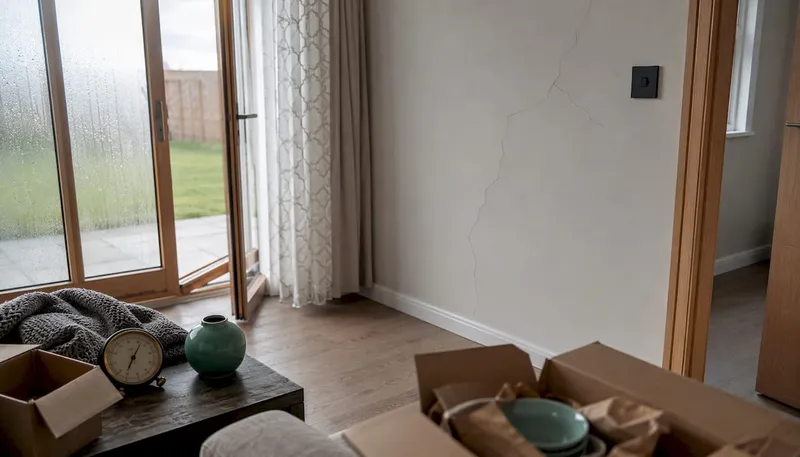
Common signs of a new home settling
Knowing what to look for helps you separate the routine from the genuinely concerning. The following are all considered normal during the settling-in period:
- Hairline cracks in plaster: Fine cracks thinner than a £1 coin are cosmetic. The NHQB snagging guide uses this coin-thickness benchmark as the standard criterion for assessing crack severity.
- Nail pops: Small circular bumps in plasterboard occur when nail heads push through as the timber frame behind them shrinks. They look alarming but are straightforward to fill.
- Sticking doors and windows: Frames shift slightly as the structure dries. In most cases this resolves on its own once the timber stabilises.
- Gaps around sealant and trims: Shrinkage pulls materials apart at joints. A bead of flexible decorator's caulk is the standard fix once the home has dried out.
- Creaks and pops: Thermal movement in floors and roof timbers produces sounds, particularly at night when temperatures drop. This is normal material behaviour, not a sign of structural weakness.
Pro Tip: Keep a simple log with photos of any cracks you notice, noting the date and approximate size. This record is far more useful to a builder or surveyor than a description from memory.

When should you be worried about settling?
Most settlement symptoms are cosmetic, but some warrant professional attention. The NHBC guidance on cracking sets out clear thresholds for when to seek advice:
- Cracks wider than 2mm, or any crack that is visibly growing over weeks or months
- Horizontal cracks in brickwork or blockwork, which can indicate lateral pressure on walls
- Diagonal or stair-step cracks running through mortar joints, particularly if they appear suddenly
- Doors or windows that jam persistently and show no sign of improvement after the first heating season
- Sloping or uneven floors that were not present at handover
- Walls that appear to bow or lean when viewed from a distance
Pro Tip: The presence of a crack matters less than whether it is stable or growing. Mark the ends of any crack with a pencil and the date, then check it again after six to eight weeks. A crack that has not extended is almost always cosmetic.
Structural settlement, as opposed to routine shrinkage, results primarily from engineering or site preparation failures rather than the normal drying process. If you suspect differential settlement, where one part of the house moves more than another, contact your developer and a structural engineer promptly. Understanding your rights in this situation starts with knowing how builder warranties work and what they cover.
Settlement vs shrinkage: what is actually the difference?
These two terms are frequently used interchangeably, but they describe different physical processes with different implications for your home.
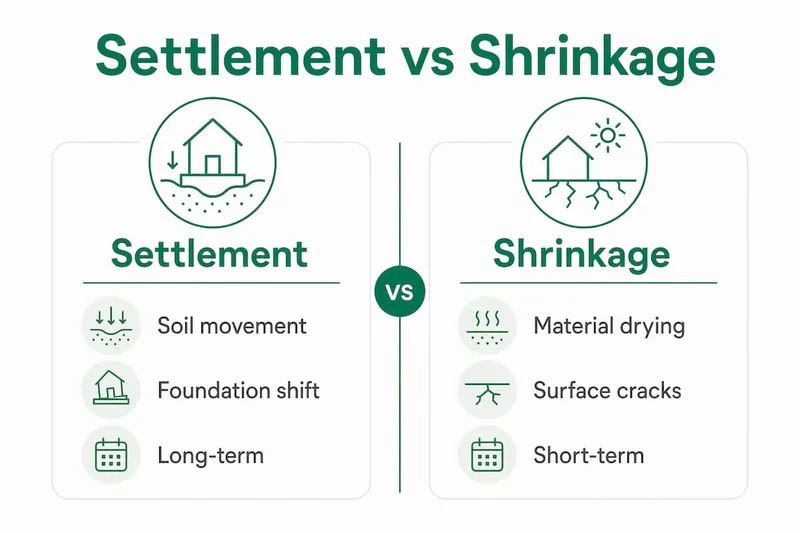
Settlement is the downward or uneven movement of the soil and foundation beneath a building. It occurs when the load of the structure exceeds what the ground beneath can support. Differential settlement, where movement is uneven across the footprint, is the type most likely to cause structural concern. The NHBC technical guidance distinguishes clearly between this and the far more common shrinkage process.
Shrinkage is moisture loss from building materials, primarily timber and plaster. It causes cosmetic cracking and minor movement but does not involve the foundation or soil at all. The cracks it produces are typically fine, follow the line of joints or plasterboard edges, and do not widen progressively.
Key distinctions at a glance:
- Settlement involves the ground moving; shrinkage involves the materials drying
- Shrinkage cracks are usually cosmetic; settlement cracks can be structural
- Shrinkage is almost universal in new builds; true structural settlement is comparatively rare
- Shrinkage resolves as materials dry; settlement requires investigation if it continues
Most of what new homeowners experience and worry about is shrinkage. Misattributing it to settlement is understandable, but it leads to unnecessary anxiety. The foundation type beneath your home also influences how much movement you might notice and where.
UK expert guidance for managing the settling-in period
The NHQB and Redrow both advise a measured approach during the first year, and their guidance is consistent on several practical points.
Wait before decorating. The NHBC advises waiting at least 12 months before applying paint or wallpaper to newly plastered walls. Decorating too early traps moisture and leads to peeling, bubbling, and cracking that is entirely avoidable.
Manage your heating gradually. Running the heating at a consistently high temperature accelerates drying and increases the rate of shrinkage. Bring the temperature up gradually over the first winter rather than running it at full output from day one.
Use your snagging period wisely. Most UK new build developers offer a snagging inspection period, typically in the first few months after handover. Report cracks that exceed the £1 coin thickness benchmark to your developer during this window. Cosmetic cracks within normal limits are generally your responsibility to fill once the home has dried.
Monitor, do not panic. The settling-in period for a UK new build runs through at least one full annual cycle of seasons. Many symptoms that appear in the first winter resolve naturally by the following spring as humidity levels rise and materials stabilise.
The typical settling-in period for a UK new build is 12–24 months, covering at least one full heating season before the structure reaches equilibrium.
Report any crack that widens beyond 2mm, any door or window that remains persistently jammed after the first year, or any sign of uneven floor levels to your developer and, if needed, to a chartered structural engineer.
Key takeaways
New homes settle because soil compresses, materials dry, and structures adjust to their environment over a period of 12–24 months, with the vast majority of symptoms being cosmetic rather than structural.
| Point | Details |
|---|---|
| Normal settling timeline | UK new builds typically take 12–24 months to dry out and stabilise fully. |
| Shrinkage vs settlement | Shrinkage is material drying; settlement is foundation movement. Most symptoms are shrinkage. |
| Crack size benchmark | Cracks thinner than a £1 coin are generally cosmetic; wider than 2mm warrants developer contact. |
| Decorating advice | Wait at least 12 months before decorating to avoid damage from ongoing drying and shrinkage. |
| When to act | Cracks that grow over time, sloping floors, or persistent door issues need professional assessment. |

Planning a new build or renovation and want to stay on top of every stage, from foundations to finishing? House A-Z brings your budget, timeline, and project management into one place, so nothing slips through the cracks. Start planning with House A-Z and build with confidence from day one.