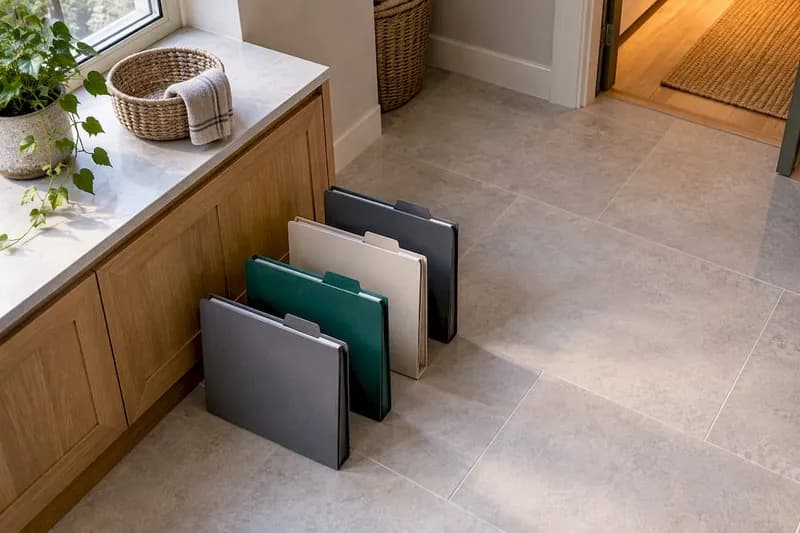
Post renovation maintenance is a planned set of recurring and seasonal tasks you schedule, budget and document in your project app, and the single most effective way to preserve warranties while cutting future repair costs. Start today: set aside a focused 2 to 4 hour session, list your monthly, seasonal and annual tasks, and enter them as recurring items with reminders so nothing slips through the cracks.
TL;DR:
- Regularly schedule professional HVAC tune-ups each spring and autumn, and change filters monthly to improve efficiency and extend system lifespan.
- Photograph hidden work and log all maintenance documents early in the warranty period to facilitate timely claims and prevent voiding coverage.
- Keep indoor humidity between 30% and 50% and clean gutters twice a year to reduce moisture-related issues and pest attraction risks.
- Record all repair work, invoices, and serial numbers in organized folders by system to enable quick access during warranty and future inspections.
- Seal gaps around pipes and vents post-renovation and inspect for pests seasonally to prevent damage and costly pest infestations early.
Table of Contents
- Your quick maintenance schedule for the app
- The first 30 to 90 days: documentation that protects your warranty
- HVAC and moisture control: the numbers worth scheduling
- Turning checklists into recurring app workflows
- Recordkeeping that anyone can search in seconds
- Safety checks and the biannual audit
- A simple budgeting framework for maintenance
- Landscaping and exterior upkeep after renovation
- Cleaning and care of new or replaced surfaces
- Pest prevention after renovation
- Why disciplined maintenance saves real money
- How House A-Z helps you keep it all in one place
- FAQ
- Sources
Your quick maintenance schedule for the app
Once your renovation settles into daily life, the real work is building a rhythm you can trust. A good schedule reads like a seasonal story: small monthly tasks that keep systems breathing, and bigger seasonal jobs that catch problems before they bloom into repairs.
Enter these as recurring tasks the moment your project wraps:
- Monthly: check HVAC filters, test smoke and carbon monoxide alarms, inspect visible seals around windows and doors, clean the range hood filter if fitted.
- Spring: clear gutters, book a cooling system tune-up ahead of warm weather, inspect the roofline and flashing for winter damage.
- Autumn: book a heating system check before the cold arrives, clean gutters again, inspect exterior caulking and weatherstripping.
- Annually: schedule a professional HVAC service, a full roof inspection, a chimney sweep if you have a working fireplace, and a complete household safety audit.
Some of these jobs are strictly DIY (filter checks, alarm tests), while others deserve a qualified contractor, particularly anything involving gas lines, electrical panels or roof access. A seasonal checklist compiled by a municipal home maintenance guide condenses these jobs neatly by time of year, which makes it easy to copy straight into recurring app tasks. For first-time renovators, a short adaptable maintenance schedule gives you a starting template rather than a blank page.
The first 30 to 90 days: documentation that protects your warranty
The weeks right after handover carry outsized importance. This is when hidden work gets covered up, settlement cracks start appearing, and the paper trail you build now becomes the evidence you lean on later.
- Photograph hidden work before walls close over it, labelling and dating each image, then attach them to your project folder in the app.
- Gather every document: contracts, handover paperwork, warranty certificates and compliance certificates, all stored in one place.
- Log snags and defects as they appear, along with every message exchanged with your builder, timestamped automatically by the app.
- Run one concentrated planning session in the first fortnight rather than letting the task drift, since deferral is the main reason homeowners never finish their maintenance setup.
A handover checklist built for renovation projects walks through exactly which documents to collect at completion. Warranty terms vary, but failing to notify your builder within the stated window, or skipping routine maintenance altogether, can quietly void a claim before you ever need it, according to New Home Warranty Program guidance.
Pro Tip: Photograph hairline cracks in caulk or paint during the first few months, dated and labelled, so you can later prove they were early settlement rather than a defect that appeared out of nowhere.
HVAC and moisture control: the numbers worth scheduling
Your heating and cooling system rewards discipline. Pair a professional tune-up each spring for cooling and each autumn for heating, and the system runs quieter, lasts longer and costs less to operate, according to ENERGY STAR's maintenance checklist.
- Inspect or change filters monthly, more often if you have pets or allergy sufferers in the household.
- Keep indoor relative humidity between 30% and 50%, a range the U.S. EPA's moisture control guidance ties directly to reduced mould risk.
- Clean gutters and downspouts twice a year to keep moisture away from the foundation and roofline.
- Check the condensate drain line on your cooling system each season, and file any professional service reports in the app the day they arrive.
Clean or replace HVAC filters monthly is one of the most consistent recommendations across maintenance guidance, directly tied to energy efficiency and equipment longevity. Attach the receipt and a photo of the installed filter to the recurring task so there is no guessing later about when it last happened.
Turning checklists into recurring app workflows
A checklist on paper fades. A checklist inside your project app, with reminders, attachments and owners assigned, actually gets done.
- Build each task as a recurring entry, set who is responsible, and attach the relevant photo or receipt directly to that event.
- Create budget envelopes for monthly consumables, seasonal contractor visits and a longer-term reserve fund, then track actual spend against the plan.
- Add contractor contacts, scopes of work and invoices to each task, so every completed job carries its own proof and cost history.
- Lean on AI agents to suggest realistic timelines and cost estimates for upcoming work, and to flag tasks that, if skipped, could put a warranty at risk.
Pro Tip: Treat every completed maintenance task as a small insurance policy: the photo, the invoice and the date together are what a warranty reviewer actually wants to see.
A procurement log template built for renovation projects adapts well here, since it already separates contractor details from cost tracking in a way that mirrors ongoing maintenance records.
Recordkeeping that anyone can search in seconds
Good records only help if you can find them quickly, whether that is you, a future buyer, or a warranty assessor.
- Name folders by system, such as "HVAC", "Roof", "Plumbing" and "Electrical", rather than by date alone.
- Name files consistently, for example "20260314_bathroom_regrout_smithplumbing", so the date, area, task and contractor are all visible at a glance.
- Keep invoices, serial numbers, installation dates and before and after photos together with any inspection reports.
- Export a PDF packet of the relevant folder whenever you file a warranty claim, rather than forwarding loose attachments.
Most records are worth keeping for the life of the warranty at minimum, and major systems like roofing or HVAC are worth holding onto for as long as you own the property. A four step folder system built specifically for warranty records gives a ready-made structure if you would rather not design your own from scratch.
Safety checks and the biannual audit
Safety tasks are the ones most likely to be forgotten precisely because nothing seems wrong, until something is.
- Test smoke and carbon monoxide alarms monthly, and replace batteries annually, following the manufacturer's own guidance.
- Test GFCI outlets, inspect visible cords for wear, and test your garage door's auto-reverse safety feature monthly or at least twice a year.
- Schedule a full household safety audit twice yearly, a cadence recommended in home safety inspection guidance from local safety authorities.
- Call a contractor immediately if you notice scorch marks near outlets, a persistent burning smell, or an alarm that fails its monthly test.
A simple budgeting framework for maintenance
Split your maintenance budget into three envelopes rather than one vague pot: routine monthly costs, seasonal contractor visits, and a longer-term reserve for the big, infrequent jobs like roof replacement.
- Set a monthly automatic transfer based on your known recurring costs plus a rough annual estimate for seasonal work.
- Keep the reserve envelope separate so a single unexpected repair never derails your routine budget.
- After the first full year, use your app's spend tracking to see which envelope ran short and adjust the transfer amounts.
Landscaping and exterior upkeep after renovation
Construction work is hard on a garden. Compacted soil, disturbed drainage and bruised turf are the quiet legacy of skips, scaffolding and foot traffic, and the exterior often gets the least attention once the interior looks finished.
Start with drainage. Walk the perimeter after heavy rain and note where water pools near the foundation, since renovation work can shift grading without anyone noticing until the next storm. Reseed or re-turf areas damaged by equipment, and give new plantings a full season before judging whether they have taken.
Schedule these as recurring seasonal tasks rather than one-off jobs:
- Trim trees and shrubs away from the exterior walls and roofline each spring and autumn.
- Reseal or restain decking and fencing on a two to three year cycle, sooner in harsher climates.
- Check that downpipes direct water at least a metre away from the foundation.
A seasonal property checklist covering yard cleanups, bed maintenance and concrete sealing is a useful companion here if you want a ready reference for the outdoor side of the schedule. Add each task to your app with a photo of the finished work, since exterior drainage problems often build slowly enough that a dated record is the only way to prove when something changed.
Cleaning and care of new or replaced surfaces
New materials often come with their own care instructions, and ignoring them is one of the fastest ways to void a product warranty without realising it.
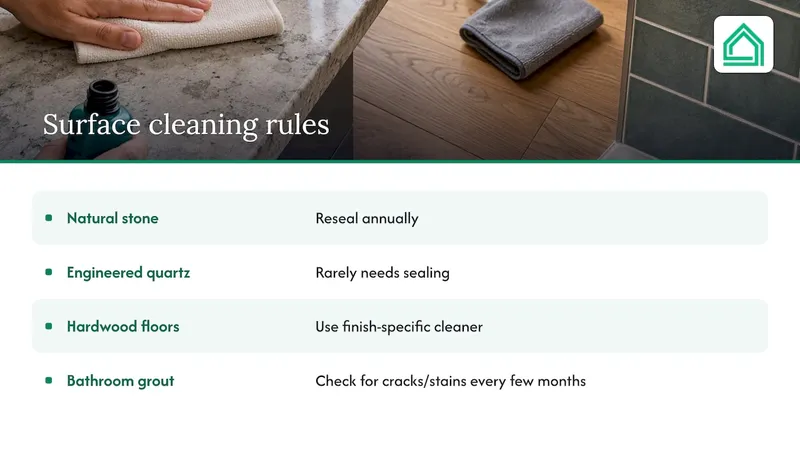
Natural stone countertops typically need resealing annually, while engineered quartz rarely needs sealing at all, so check which you have before reaching for the wrong product. Hardwood floors benefit from a cleaner formulated for their specific finish, since generic household cleaners can dull a factory finish over time. Tile grout, particularly in bathrooms, should be checked for cracking or staining every few months, since moisture finds its way into the smallest gap.
Keep manufacturer care instructions on file in the app alongside the installation date for each surface, since preventative maintenance guidance from agricultural extension services specifically recommends filing product instructions with your other maintenance records rather than letting them disappear into a drawer.
A simple rule works well: log the installation date, the recommended cleaning product, and the resealing or refinishing interval as a recurring task the day the surface goes in. That single entry saves you from guessing, months later, whether the countertop needs sealing this year or next.
Pest prevention after renovation
Construction disturbs soil, opens small gaps around new pipework, and leaves behind debris that can attract pests before you have even unpacked the last box. Fresh timber, new insulation and gaps around service penetrations are exactly the entry points pests look for.
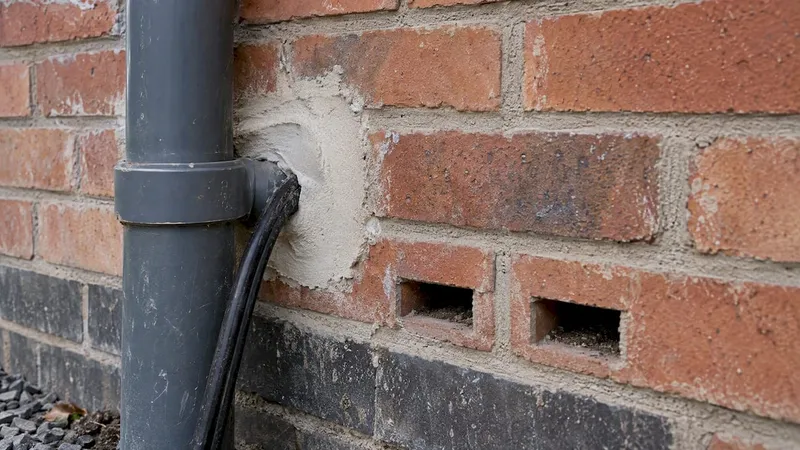
Walk the exterior once the dust settles and seal any visible gaps where pipes, cables or vents pass through the wall. Check that weep holes in brickwork remain clear rather than sealed over by accident during finishing work, since blocked weep holes trap moisture that attracts both pests and rot.
Add a recurring seasonal task to inspect for early signs: discarded wings near windows, small holes in timber, or droppings in roof spaces or under sinks. Store any leftover construction materials, particularly timber, away from the house rather than stacked against an exterior wall, since woodpiles close to the foundation are a well-known invitation for termites and other wood-boring pests.
Catching pest activity early, while it is still a minor nuisance rather than a structural problem, is far cheaper than treating an established infestation, and logging each inspection in your app means you will notice a pattern before it becomes a costly one.
Why disciplined maintenance saves real money
Having guided my own renovation through its first messy year, I learned that the documents I almost did not bother keeping, a filter receipt here, a damp patch photo there, were exactly what settled a warranty question later without a single argument.
Start your planning session today. Future you will thank present you for every dated photo.
— Azai
FAQ
How often should I service my HVAC system after a renovation?
Book a professional tune-up each spring before cooling season and each autumn before heating season, which ENERGY STAR's maintenance guidance recommends as the baseline cadence. Check or replace filters monthly between those visits, more often with pets or heavy use.
What should I photograph before walls are closed up?
Photograph any plumbing, wiring or structural work that will be hidden behind drywall or flooring, labelling and dating each image before it disappears from view. Store these in your project app's folder for that room so you have proof of what lies behind every finished surface.
What humidity level should I maintain in a renovated home?
Keep indoor relative humidity between 30% and 50%, a range EPA moisture control guidance ties to lower mould risk. Readings consistently above that range are worth investigating with a dehumidifier or a ventilation check.
How do I avoid voiding my renovation warranty?
Follow the manufacturer and builder maintenance schedule, keep dated records of every service and repair, and notify your builder in writing within the timelines set out in your warranty documents. Skipping routine maintenance or missing a notification window is one of the most common reasons a warranty claim gets denied.
Can an app really replace a paper maintenance binder?
Yes, provided it lets you attach photos and receipts directly to recurring tasks rather than storing them separately from the schedule itself. A binder cannot send you a reminder before a filter is due or a warranty window closes, which is the main advantage a project app offers.
Sources
- Maintenance Checklist | ENERGY STAR
- Preventative home maintenance | NC State Extension Publications
- New Home Warranty Program homeowners booklet
- Home safety inspection checklist | Croton on Hudson