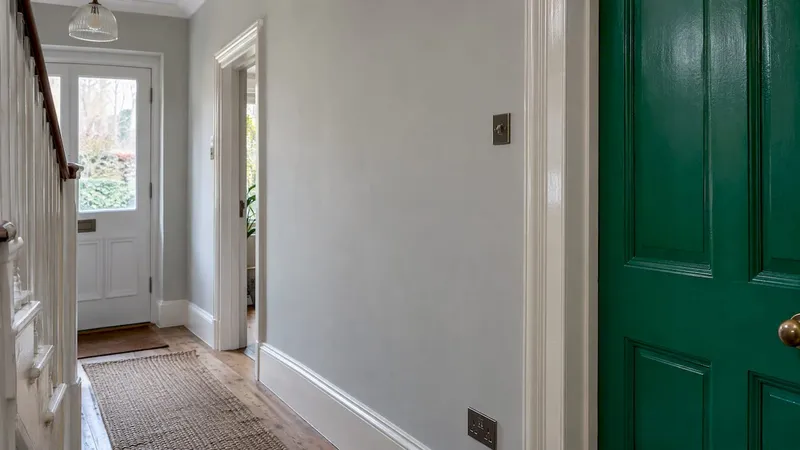
Paint finish is simply how shiny the dried paint is, and it decides three things: how light plays across your walls, how well the surface survives scrubbing, and how many bumps and patches show. In short, go matt on ceilings and calm walls, eggshell or silk where life gets busy, and satin, semi-gloss or gloss on woodwork. Then write the choice down once, room by room, so it is priced and ordered correctly before the first tin is opened. In House A-Z we plan renovations this way: finishes sit in the same plan as the budget, so a sheen decision never turns into a surprise on the invoice.
TL;DR
- Finishes run on one scale from flat (almost no shine) to high gloss (mirror-like). The shinier the paint, the tougher and easier to wipe, and the more it shows every flaw in the surface.
- Ceilings and low-traffic walls suit flat or matt. Hallways, kids' rooms and family spaces suit eggshell or silk. Kitchens and bathrooms suit satin or semi-gloss. Doors, skirting and cabinets suit satin through gloss.
- Eggshell vs satin: satin reflects more light, wipes more easily and is a touch harder-wearing. Eggshell hides wall flaws better.
- Sheen percentages differ between brands, so judge a sample on your own wall in your own light.
- Record the finish for every surface in a finish schedule before ordering, so you buy the right quantity of the right paint.
Table of Contents
- What paint finish actually means
- The main paint finish types, from flat to gloss
- Eggshell vs satin
- Matt vs semi-gloss
- Best paint finish for walls, room by room
- How to choose your finishes in five steps
- Budget and health: the details around sheen
- Heritage and specialist finishes
- Where House A-Z fits in
- Our view on paint finishes
- FAQ
- Sources
What paint finish actually means
Sheen measures how much light bounces off a painted surface. A flat finish scatters light in all directions, so it looks soft and chalky. A gloss finish reflects light in a more mirror-like way, so it looks sleek and bright.
The difference comes from what is in the tin. Sherwin-Williams explains that high levels of resin (the binder that holds the paint together) create smooth, durable, high-sheen films, while high levels of coarse pigment make duller, rougher, less resilient ones. That is why a glossy paint wipes clean and a very flat one can mark when scrubbed.
Sheen also changes colour. Higher-sheen paint reflects more light and can look lighter, while low-sheen paint absorbs light and can look slightly darker, as Sherwin-Williams colour expert Sue Wadden and Benjamin Moore's David Underwood describe. So the same colour card can feel different in matt and in satin. If you are still choosing colours, our guide to how colour palettes work in homes is a good companion.
The main paint finish types, from flat to gloss
British shops use slightly different names from American ones, and brands draw the lines in different places. As a working guide, Tikkurila UK gives these gloss ranges: matt 5 to 10%, semi-matt (also called eggshell) 11 to 35%, semi-gloss 35 to 60% and gloss 61 to 80%. Homes and Gardens splits the scale more finely: flat 0 to 3%, matt 3 to 10%, eggshell 10 to 25%, satin 25 to 35%, semi-gloss 35 to 60% and gloss 60 to 85%.
| Finish | Typical sheen | Look | Best for |
|---|---|---|---|
| Flat / matt | Under about 10% | Chalky, soft, no glare | Ceilings, bedrooms, living rooms, uneven walls |
| Eggshell / silk | About 10 to 35% | Gentle, low sheen | Hallways, family rooms, kids' bedrooms |
| Satin | About 25 to 40% | Smooth, slightly glossy | Kitchens, bathrooms, busy walls, trim |
| Semi-gloss | About 35 to 60% | Clearly shiny | Woodwork, doors, bathrooms |
| Gloss | 60% and above | Hard, reflective | Doors, cabinets, banisters, statement pieces |
The percentages overlap because there is no universal standard. The Better Homes & Gardens guide points out that sheens vary by brand and manufacturers use their own names, so treat the table as a map, not a specification.
Flat and matt
Matt is the classic wall finish. It absorbs light, which is why it hides small dents, roller marks and patched plaster so well. Tikkurila notes that matt hides flaws while gloss highlights every one.
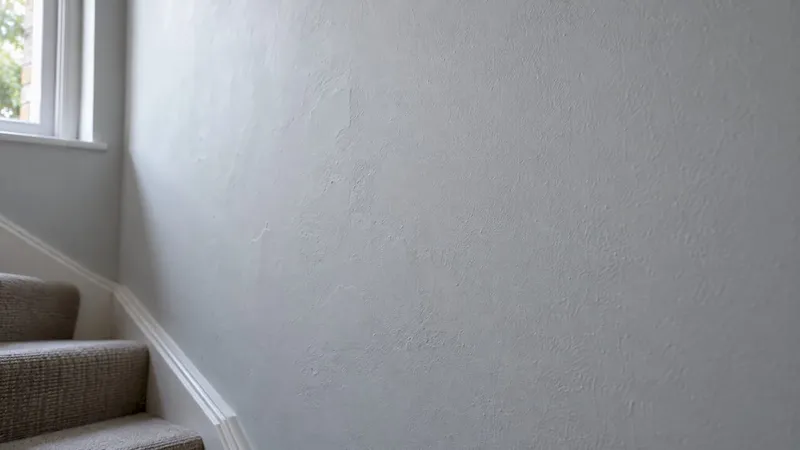
The trade-off is cleaning. Toolstation's guide says regular matt can wipe off when cleaned, although scrubbable versions exist. If you love a matt look in a busy room, choose a washable matt rather than a standard one.
Eggshell and silk
Eggshell has a soft, low sheen, a little like the shell it is named after. It is more durable and wipe-clean than matt, though Toolstation adds that it is harder to touch up. In the UK, silk is the common wall equivalent: Crown's senior designer Justyna Korczynska says it has a slight sheen and is wipeable.
Satin
Satin sits between eggshell and semi-gloss. It has a smooth, velvety look and wipes clean well, which makes it popular for kitchens, bathrooms and trim. In the UK, satinwood is the woodwork version. House & Garden puts satin or satinwood at around 40% sheen, a little below semi-gloss at typically 60%, which shows again how much brands differ.

Semi-gloss and gloss
Semi-gloss is the workhorse for surfaces that get touched, splashed and scrubbed. Consumer Reports says it is toughest against wear and tear, typically resists stains better than the other finishes and is easy to clean. Gloss goes further: it suits doors, cabinets and banisters, and Toolstation warns it needs thorough priming and preparation because imperfections show clearly.
Eggshell vs satin
This is the pair people search for most, and the difference is small but real.
- Light reflection: Sue Wadden of Sherwin-Williams says eggshell reflects roughly 10 to 25% of light and satin about 25 to 35%, so satin looks smoother and glossier.
- Durability: Consumer Reports finds satin a little more hard-wearing than eggshell. The Spruce explains that satin contains more binder, which adds durability, elasticity and scuff resistance.
- Flaws: both show imperfections more than matt, but eggshell is the more forgiving of the two. Its lower reflectivity hides wall flaws better, and The Spruce adds that it is generally too dull for trim, doors and cabinets.
Rule of thumb: eggshell for bedrooms, living rooms and hallways with reasonably smooth walls, satin for kitchens, bathrooms, children's rooms and woodwork.
Matt vs semi-gloss
These sit at opposite ends of the interior range, so they rarely compete for the same surface. CHOICE's buying guide describes matt as good at hiding minor imperfections and suited to interior walls, while semi-gloss is more stain- and moisture-resistant, easier to clean, and recommended for hallways, kitchens, bathrooms, doors and trim.
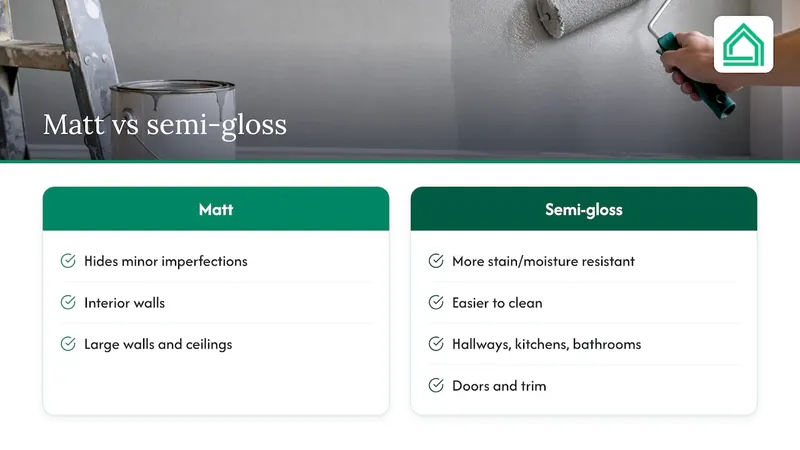
The practical split in most homes: matt on the big wall and ceiling areas, semi-gloss on the parts that are touched, knocked or steamed. A semi-gloss window frame against a matt wall also gives a room a crisp, finished edge.
Best paint finish for walls, room by room
There is no single best finish, only the best one for how a room is used and what condition the wall is in. Guides broadly agree. This Old House suggests flat for ceilings, matt and eggshell for walls, satin and semi-gloss for trim and gloss for accent pieces.
- Ceilings: flat or matt. They hide imperfections and avoid glare from overhead light.
- Living rooms and bedrooms: matt or eggshell. Crown's Justyna Korczynska recommends matt and silk for walls, matt for a chalkier look and silk for a wipeable slight sheen.
- Hallways, stairs and kids' rooms: eggshell, silk or satin. These walls get scuffed by bags, hands and furniture.
- Kitchens: satin or a washable low-sheen. Dulux's guidance is to choose by foot traffic and wear, which in a kitchen means grease and frequent cleaning.
- Bathrooms: satin or semi-gloss for moisture and wipe-down.
- Skirting, doors and window frames: satinwood, semi-gloss or gloss.
- Cabinets: satin to gloss, prepared carefully.
Two more things to weigh. First, wall condition: if your plaster is uneven or textured, go flatter, because shine acts like a spotlight. Second, light: Sherwin-Williams' professional guidance says semi-gloss with a light colour is a good way to brighten a dark space, while high gloss there creates excessive glare. Our piece on how window placement affects rooms helps you read your light before you choose.
How to choose your finishes in five steps
- List every surface. Walls, ceilings, skirting, doors, window frames, cabinets, radiators. Do it room by room, not as one "paint" line.
- Rate each surface for traffic and moisture. Hall walls and bathrooms rate high, spare-room ceilings low.
- Check the wall condition. Fresh skim, old patched plaster or textured paper? The rougher it is, the flatter you go.
- Test a sample. Paint a large patch and look at it morning and evening. Higher-gloss paint can make colours look lighter than matt, so a sample saves second-guessing. Dulux recommends testing a sample pot.
- Record the decision. Write finish, colour, brand and quantity against each room, so the person on the ladder and the person paying are looking at the same page.
Step five is where most first-time renovators lose track. A spreadsheet works for a week and then drifts from the quotes. Our guide to finish schedule templates shows how to keep one that stays useful.
Budget and health: the details around sheen
Sheen affects cost in small ways that add up. Woodwork needs a different, often pricier paint from walls, and glossy surfaces need more preparation time because they reveal flaws. If you are repainting skirting and doors in every room, that is a labour line as well as a paint line.
Timing matters too. Fresh paint needs ventilation, and our article on low VOC paint and ventilation for first-time renovators covers what to plan before you move back in. Once the work is done, protecting finishes during a renovation stops new paint being scuffed by the trades still on site. Sequence it so painting comes late and the wall finish is the last thing anyone touches.
Heritage and specialist finishes
If you own an older property you may meet finishes beyond the standard scale. Homes and Gardens lists milk and chalk paint for upcycling, limewash, clay and distemper for older homes, and textural finishes for feature walls, noting that distemper is highly breathable but not hardwearing. These suit particular walls and styles. For everyday rooms in a modern renovation, the standard scale above covers almost everything.
Our view on paint finishes
Paint finish looks like a small decision, and that is exactly why it causes trouble. It is made late, in a shop, under strip lighting, when the budget is already stretched.
We designed House A-Z for first-time builders and renovators who are tired of juggling spreadsheets and disconnected apps. Our approach is to treat a finish as part of the whole plan: the room, the surface, the product, the price and the person doing the work, together in one place.
When you know that the kitchen walls are satin, the skirting is satinwood and the ceilings are matt before you order, you buy once, brief your decorator clearly and avoid the costly mistakes that come from guessing. Couples can agree choices in one shared view, and contractors can see the same list.
Choose the sheen for how you live, then let the plan do the remembering.
Azai
FAQ
What type of paint finish is best?
There is no single best finish. Matt or flat suits ceilings and calm, low-traffic walls, eggshell or satin suits busy rooms, and semi-gloss or gloss suits woodwork. Match the finish to how the surface is used and how smooth it is.
Is eggshell or satin better for walls?
Eggshell is better when walls are slightly imperfect and you want a soft look, as it hides flaws more kindly. Satin is better in kitchens, bathrooms and children's rooms, where its smoother, harder-wearing surface wipes clean more easily.
Do sheen percentages mean the same thing across brands?
No. Brands use their own names and measuring points, so a satin from one range can be shinier than a semi-gloss from another. Use the percentages as a rough guide and check the sheen on the tin or product page for the paint you plan to buy.
Does a glossier finish make a room look brighter?
Yes, usually. Higher-sheen paint reflects more light and can make a colour look lighter, while matt absorbs light and can look slightly deeper. In small or dark rooms, semi-gloss with a light colour can help, but very high gloss may cause glare.
Which finish should I use on skirting and doors?
Satinwood, semi-gloss or gloss are the usual choices, because these surfaces are knocked and wiped often. Gloss makes more of a statement, while satin or eggshell is more subtle. Prepare the surface carefully, as shinier paint shows every flaw.
Sources
- Paint Finishes & Sheen Levels Explained, Tikkurila UK
- Paint finishes: a guide to paint finish types, Homes and Gardens
- Eggshell? Satin? Gloss? Where to use what paint finish, House & Garden
- 5 Types of Paint Finishes Explained, Toolstation
- Pick the Perfect Paint Finish for Every Room, Consumer Reports
- What's the Difference Between Eggshell vs. Satin Paint?, House Beautiful
- Eggshell vs. Satin Paint: What's the Difference?, The Spruce
- Choosing Paint Sheen, Sherwin-Williams
- Types of Paint: A Guide to Paint Finishes and Surfaces, Better Homes & Gardens
- How to buy the best interior paint, CHOICE
- An Easy Guide to Choosing Interior Paint Finishes, This Old House
- How to choose a sheen level or paint finish, Dulux