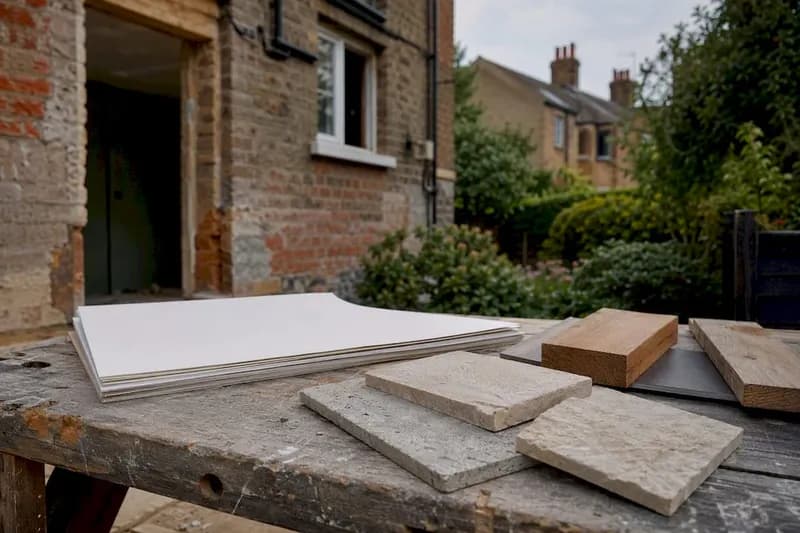
A provisional sum is an allowance built into your contract sum for work that cannot be accurately defined or priced when the contract is signed. It is not a spare fund. Once the work is instructed, the allowance is replaced by the actual cost, which can push your final price up or down. Whether that adjustment goes smoothly or turns into a dispute depends largely on whether the sum was labelled "defined" or "undefined" at tender stage.
TL;DR:
- Provisional sums are placeholders for anticipated work that cannot be precisely priced before construction begins, and their final cost can raise or lower the overall contract price.
- The key difference between defined and undefined provisional sums lies in whether the tender documents specify the nature, scope, and limits of the work; missing any of these elements makes the sum undefined.
- Proper instruction and documentation of provisional sums, including written confirmation of valuation routes and instructions, significantly reduce the risk of disputes and cost overruns.
- Using a tracking platform that attaches invoices, instructions, and quotations directly to each provisional sum streamlines audit trails and prevents mismanagement of budgets.
- Many disputes stem from vague tender wording or mislabeling sums as "defined" without meeting all four NRM2 criteria, emphasizing the importance of accurate documentation and expert advice.
Table of Contents
- What is a provisional sum? Common examples explained
- Defined versus undefined provisional sums: why it matters
- How provisional sums are priced, instructed and adjusted
- How JCT, FIDIC and AIA treat provisional sums
- Common disputes and how to avoid them
- Tracking provisional sums without losing the thread
- What the industry gets wrong about provisional sums
- Keep provisional sums transparent as you build
- Where to read more on provisional sums
- Sources
- FAQ
What is a provisional sum? Common examples explained
You will usually find provisional sums sitting inside the bill of quantities or the contract sum analysis, the documents your contractor priced against at tender. They exist because certain works cannot be measured accurately before a survey, an intrusive investigation, or a decision you have not yet made. Rather than guess, the quantity surveyor inserts a placeholder figure and both sides agree to true it up later.
You will typically encounter provisional sums attached to:
- Bespoke joinery, staircases, or other finishes not yet specified in detail
- Below-ground remedial work, such as unknown drainage runs or contaminated soil
- New utility connections (gas, water, electricity) where the supplier's quote is pending
- Specialist installations like lifts, renewable heating systems, or structural steelwork
- Excavation and site clearance where ground conditions are only confirmed once digging starts
It is worth being precise about what a provisional sum is not. It is earmarked for a specific, identifiable piece of work, not a general buffer against overspend elsewhere on the job. That distinction trips up a surprising number of first-time renovators, and it is the root of the next point.
Defined versus undefined provisional sums: why it matters
The single most consequential distinction in provisional sum practice is whether the sum counts as "defined" or "undefined" under RICS' New Rules of Measurement (NRM2). Get this wrong at tender and you will likely pay for it later, either in cash or in programme delay.
For a provisional sum to qualify as defined under NRM2, the tender documents must state:
- The nature and construction of the work
- A statement of how and where the work is fixed to the building, and what other work is affected by it or affects it
- A quantity or quantities that indicate the scope and extent of the work
- Any specific limitations on the method, sequence, or timing of the work
If even one of these four items is missing, the sum is undefined by default, regardless of what the tender documents call it. That label carries real weight. For a defined sum, the contractor is deemed to have allowed for the work in their programme and preliminaries pricing, meaning they cannot later claim extra time or preliminaries costs just because the work turned out as described. For an undefined sum, the contractor has made no such allowance, so instructing the work can justifiably extend the programme and increase preliminaries. Courts and industry commentary have repeatedly flagged that mislabelling a vague scope as "defined" to avoid this risk is a common source of professionally improper practice.
Pro Tip: Ask your quantity surveyor or contract administrator, in writing, to confirm which of your provisional sums meet all four NRM2 tests before you sign. A five-minute email at tender stage can save weeks of argument at valuation.
How provisional sums are priced, instructed and adjusted
Nothing happens to a provisional sum until someone with the authority to do so issues an instruction. Depending on your contract, that authority sits with the architect, the contract administrator, or the engineer, and a contractor who proceeds without one does so at their own risk.
Once instructed, the sum is adjusted through one of two common routes:
- Quotation before work starts. The contractor submits a priced quotation for the specific item, which you or your contract administrator accept before work proceeds. This gives cost certainty upfront but can slow the programme while quotes are sought and compared.
- Valuation after completion. The work is carried out and then valued as a variation, typically using rates from the original tender where they exist, or fair market rates where they do not.
Either way, the contractor must substantiate the actual cost with quotations, invoices and receipts, and your contract will state explicitly whether overheads and profit can be added on top. This differs from US practice, where the AIA A201 framework typically treats "allowances" as covering materials only, with labour and installation priced separately unless the contract says otherwise. When work is instructed against a provisional sum, a proper valuation separates the change in material cost from any knock-on effect on labour, installation, and preliminaries, so you are not paying twice for the same delay through two different valuation lines.
How JCT, FIDIC and AIA treat provisional sums
Your contract form shapes how much protection you actually have, so it pays to know which convention you are working under.
- JCT (the standard form most common in UK residential and commercial building contracts) adopts the NRM2 defined/undefined split directly, with clear instruction and valuation clauses under SBC/Q pricing rules and explicit consequences for preliminaries depending on which category applies.
- FIDIC, used widely on international and civil engineering projects, requires an Engineer's instruction under clause 13.5 and demands strict substantiation of costs, but it does not draw the same defined/undefined line as NRM2. Entitlement to overheads and profit depends on what the specific FIDIC contract allows.
- AIA A201, the dominant US form, uses "allowances" rather than provisional sums. These commonly cover materials only, meaning labour and installation costs can arrive as a separate adjustment that catches unprepared owners off guard.
If you are working with an international contractor, or a UK-based one using an unfamiliar form, do not assume "provisional sum" means the same thing across every set of documents. LexisNexis's legal guidance is a useful starting point for checking which convention your contract actually follows.
Common disputes and how to avoid them
Most provisional sum disputes trace back to one root cause: vague wording at tender stage that nobody challenged before signing. The Construction Leadership Council's guidance is blunt about this. The clearer the tender documents, the fewer arguments later.
Before you sign anything, work through this checklist:
- Confirm which provisional sums meet all four NRM2 defined-sum criteria, and query any that do not.
- Establish who can issue an instruction to spend a provisional sum, and get that written into the contract.
- Agree the valuation route (quotation versus post-completion valuation) for each sum in advance.
- Set out how preliminaries and programme extensions will be handled for undefined sums.
Keep a running file of every RFI, formal instruction, quotation, invoice, and receipt tied to each provisional sum. This is your evidence trail if a valuation is challenged.
Pro Tip: Log provisional sum instructions the day they are issued, not the day the invoice arrives. A gap of even a few weeks between instruction and paperwork is exactly where memory (and money) gets lost.
Tracking provisional sums without losing the thread
Most disputes over provisional sums do not start with bad faith. They start with a paper trail that lives across three inboxes, a spreadsheet, and someone's memory. House A-Z was built around that exact failure point.
The platform lets you record each provisional sum as its own budget line, separate from your general contingency, so it is never accidentally absorbed into the wrong bucket. You can attach the instruction, quotation, and invoice directly to that line item, which means the audit trail your quantity surveyor asks for at final account stage already exists rather than needing to be reconstructed. Because House A-Z also tracks your programme alongside your budget breakdown, you can see immediately when an instructed provisional sum is likely to push into preliminaries, rather than discovering it three invoices later.

What the industry gets wrong about provisional sums
Most guidance on provisional sums treats them as a legal technicality: memorise the NRM2 clauses, get the wording right, move on. That misses the point for a homeowner sitting across the table from a contractor. The wording matters, but only because it determines who pays when reality diverges from the tender documents, and reality diverges far more often than either party admits at signing.
The overlooked lesson from case law and industry commentary is that defined status is decided by substance, not by what the contract calls something. A provisional sum labelled "defined" but missing one of the four NRM2 requirements will be treated as undefined if it is ever tested, regardless of the label your contractor typed into the bill of quantities. Homeowners who assume the label protects them are the ones most exposed.
My honest read is that the single highest-leverage action here is not legal knowledge, it is documentation discipline. Query vague items before you sign. Keep every instruction and invoice tied to its provisional sum. That habit, more than any clause you memorise, is what keeps a renovation on budget.
— Azai
Keep provisional sums transparent as you build
Reading the NRM2 clauses is one thing. Applying them consistently across dozens of provisional sums, instructions, and invoices over the course of a renovation is another problem entirely, and it is the one most spreadsheets quietly fail at.
House A-Z gives each provisional sum its own tracked line item, linked to the instruction that triggered it and the quotation or invoice that settled it, so nothing gets buried in a shared inbox. That audit trail is exactly what a quantity surveyor or contract administrator needs when a valuation is queried, and it means you are never relying on memory to explain why a figure changed. The platform will not replace a QS or a solicitor when a valuation is genuinely disputed, but it will make sure you walk into that conversation with every document already organised. Start tracking your project on House A-Z and see how your provisional sums, instructions and invoices sit alongside the rest of your budget from day one.
Where to read more on provisional sums
For contract-specific wording, go to the primary sources rather than general guidance. The Construction Leadership Council's briefing covers the distinction from contingency reserves in detail, while the RICS NRM2 extracts set out the four defined-sum tests verbatim. LegalClarity's overview is useful for comparing JCT and AIA practice, and LexisNexis's legal guidance is worth consulting if your contract sits outside standard UK forms. For any provisional sum where the amounts or valuation route are genuinely disputed, bring in a qualified quantity surveyor or construction solicitor rather than relying on general reading.
Sources
- Provisional sums (Construction Leadership Council)
- What Is a Provisional Sum in Construction Contracts? (LegalClarity)
- Provisional sums | Legal Guidance (LexisNexis UK)
- RICS NRM2 provisional sum definitions (extract)
FAQ
What is an example of a provisional sum?
A common example is an allowance for below-ground drainage work where the exact route and condition of existing pipework cannot be confirmed until excavation starts, or an allowance for a new utility connection pending the supplier's formal quote.
What is the difference between a contingency sum and a provisional sum?
A provisional sum is an allowance for identifiable, anticipated work that simply cannot be priced accurately yet, while a contingency sum is a reserve held against genuinely unforeseen risks and is controlled separately under the contract.
What is the difference between a PC sum and a provisional sum?
A prime cost (PC) sum covers the supply cost of a specific item, such as sanitaryware or ironmongery, that has been selected but not yet priced, whereas a provisional sum covers work whose scope or extent is not yet fully known.
What does provisional amount mean?
A provisional amount is another term for a provisional sum: a placeholder figure in the contract sum for work that will be replaced by its actual, instructed cost once the details are confirmed.
Does a provisional sum affect my final contract price?
Yes. Once the work is instructed and valued, the provisional sum allowance is removed and replaced with the actual cost, which can increase or decrease your final contract price depending on what the work actually costs.