Yes, you can reclaim many renovation and repair costs against your rental income, but the deduction depends entirely on whether HMRC treats the expenditure as a revenue repair or a qualifying replacement item. Capital improvements, by contrast, are not deductible against rental profits. Revenue repairs are deductible in the year incurred; capital improvements are not deductible but can increase the property's base cost for Capital Gains Tax. The three frameworks that govern every decision are HMRC's Property Income Manual (PIM), Replacement of Domestic Items Relief (RDIR) under s.311A ITTOIA 2005, and Capital Gains Tax treatment for capital spend.
Your immediate next steps:
- Check your invoices to separate repair elements from improvement elements, and request itemised breakdowns from contractors where invoices are combined.
- Gather receipts and disposal evidence for any domestic items you have replaced, including delivery and installation costs, to support an RDIR claim.
- Review the last two to four years of Self Assessment returns for any misclassifications and consider amending them if you have overclaimed capital spend as repairs or missed qualifying replacement deductions.
Table of Contents
- Common examples: allowable repairs versus capital improvements
- Replacement of Domestic Items Relief: how it works and what you can claim
- When post-purchase works become capital: the 'brought to letting standard' problem
- How to claim renovation deductions on Self Assessment
- Common mistakes that trigger HMRC enquiries, and how to fix them
- Key takeaways
- How House A-Z helps landlords keep renovation records audit-ready
Common examples: allowable repairs versus capital improvements
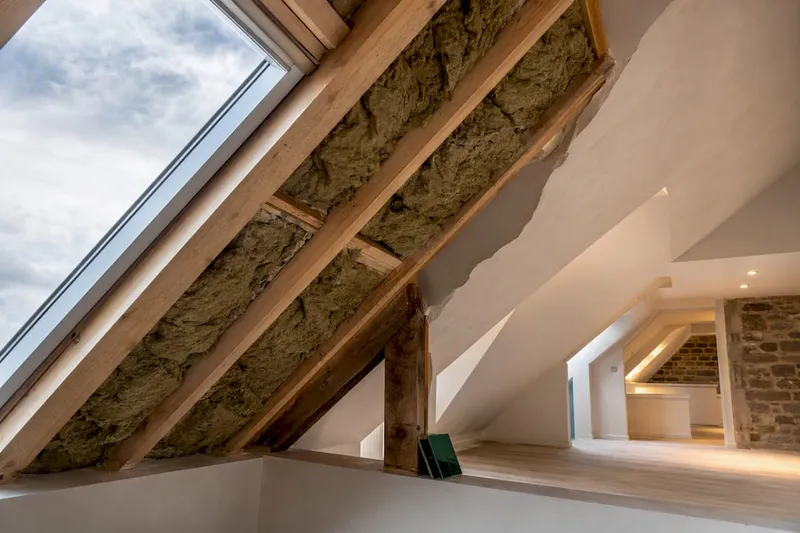
Use these examples to match the facts of your own invoices. If the work restores, it is likely revenue; if it enhances or changes the character of the property, it is likely capital. HMRC accepts a reasonable apportionment for mixed jobs, supported by itemised invoices and contractor quotes.
| Work | Likely treatment | Deciding test |
|---|---|---|
| Like-for-like boiler replacement | Revenue (repair) | Like-for-like, character unchanged |
| New central heating where none existed | Capital (improvement) | Enhancement, new asset created |
| Repointing brickwork | Revenue (repair) | Restoration to original condition |
| Loft conversion | Capital (improvement) | New usable space, character changed |
| Replacing broken roof tiles | Revenue (repair) | Part replacement, restoration |
| Full roof replacement (same specification) | Revenue (repair) | Entirety principle, like-for-like |
| Replacing kitchen units with equivalent | Revenue (repair) | Like-for-like, no enhancement |
| Extending kitchen and fitting new units | Capital (improvement) | Extension changes character |
| Redecorating between tenancies | Revenue (repair) | Maintenance, no enhancement |
| Adding a new bathroom | Capital (improvement) | New asset, enhancement |
Mixed jobs are common. A refurbishment that replaces a bathroom suite on a like-for-like basis while also extending the room into an adjacent cupboard contains both revenue and capital elements. The correct approach is to apportion the invoice by asking the contractor to provide a written scope of works with separate cost lines for each element. Keep that scope alongside the invoice. HMRC will accept a reasonable, documented split; it will not accept a single undivided invoice claimed entirely as repairs where the work clearly included improvements.
One practical note on VAT: most routine repair and maintenance work on residential lets is standard-rated at 20%, and because residential lettings are normally VAT-exempt, landlords generally cannot recover that VAT. The VAT-inclusive cost is therefore the deductible figure.
Replacement of Domestic Items Relief: how it works and what you can claim
RDIR lets you deduct the cost of replacing domestic items in a furnished or part-furnished residential let as a revenue expense, provided specific conditions are met. The relief does not apply to the first purchase of an item when you initially furnish a property.
How to calculate the deduction
The deductible amount under RDIR follows this formula:
Deductible amount = Cost of new item + Incidental costs − Proceeds from disposal of old item
Where the new item is an upgrade beyond the like-for-like equivalent, the deductible cost is capped at the cost of a like-for-like replacement, not the actual cost of the superior item.
Incidental costs that count towards the deductible amount include delivery charges, installation fees, and disposal or recycling costs for the old item.
Worked example
| Item | Amount |
|---|---|
| New washing machine (like-for-like equivalent) | £480 |
| Delivery and installation | £60 |
| Disposal of old machine | £30 |
| Part-exchange value received for old machine | £40 |
| Deductible amount | £530 |
Calculation: £480 + £60 + £30 − £40 = £530.
Common pitfalls to avoid:
- Claiming RDIR on the first purchase of an item when furnishing a property for the first time — this is not allowable.
- Claiming the full cost of an upgraded item (e.g. a premium appliance) when the like-for-like equivalent costs less; only the like-for-like cost is deductible.
- Forgetting to include incidental costs — many landlords overlook delivery and disposal charges, which increases the deductible amount.
When post-purchase works become capital: the 'brought to letting standard' problem
Substantial works carried out to put a newly acquired property into a lettable state are often capital, not revenue. This is one of the most costly misclassifications a landlord can make.
HMRC and the courts, following the Law Shipping and Odeon cases, treat expenditure on a property that was unusable or in serious disrepair at the time of purchase as capital enhancement rather than revenue repair. The reasoning is that the purchase price reflected the dilapidated condition, so the cost of remedying that condition forms part of the acquisition cost of the asset. Case law treats initial works needed to make a newly bought, dilapidated property lettable as capital.
HMRC looks at three indicators:
- Was the property unusable for letting when you bought it?
- Did the purchase price reflect the disrepair (i.e. did you pay less because of the condition)?
- Were the works necessary to make the property usable as a let?
If all three apply, the expenditure is almost certainly capital. It will not reduce your rental profits in the year you spend it, but it will increase the property's base cost for CGT purposes, reducing your gain when you eventually sell.
Pro Tip: If you buy a property that needs significant work before it can be let, consider letting it briefly in its current condition before starting major works. This can help establish that subsequent works are repairs to a property already in use as a let, rather than initial capital expenditure to bring it into use. Obtain a survey at purchase that records the condition and confirms the price reflected the disrepair — this evidence is valuable if HMRC later challenges the treatment of early expenditure.
How to claim renovation deductions on Self Assessment
Claim revenue repairs and RDIR in your rental profit calculation for the tax year in which the expense was incurred (accruals basis) or paid (cash basis). HMRC's official guidance on rental income sets out the allowable expenses and where to enter them.
- Itemise every invoice. Separate repair elements from improvement elements. For mixed invoices, request a written breakdown from your contractor before filing.
- Apportion mixed invoices. Document the method you used and keep the contractor's scope of works alongside the invoice. A reasonable, evidenced split is acceptable to HMRC.
- Enter repairs and RDIR on SA105. On the property pages of your Self Assessment return (SA105), enter allowable repairs and maintenance costs in the relevant expense box. RDIR is entered as a revenue expense in the same section.
- Retain all supporting evidence before submitting (see the recordkeeping section below).
- Amend earlier returns if needed. You can amend a Self Assessment return online via your HMRC personal tax account within 12 months of the original filing deadline for that tax year. For older returns, you may need to write to HMRC with a formal amendment request; the enquiry window is generally four years from the end of the relevant tax year for innocent errors, and longer where HMRC suspects careless or deliberate behaviour.
Cash basis versus accruals basis: Most landlords with rental income below the VAT registration threshold use the cash basis, meaning you deduct costs in the year you pay them. Under the accruals basis (used by landlords with larger portfolios or those who opt out of cash basis), you deduct costs in the year they are incurred, regardless of when payment is made. The timing difference can matter for invoices that straddle a tax year end.
For complex refurbishment projects involving significant mixed spend, consulting a qualified tax adviser before filing is worth the cost.
Common mistakes that trigger HMRC enquiries, and how to fix them
Misclassifying capital work as repairs is the most frequent trigger for an HMRC enquiry into a landlord's property income return. Claiming initial purchase repairs as revenue expenditure and overclaiming upgrades under RDIR are close behind.
Red flags HMRC notices:
- A large single invoice described only as "refurbishment" or "renovation" with no breakdown.
- A sudden spike in repair expenditure in the year of purchase or shortly after acquisition.
- Repair costs that are disproportionately high relative to the rental income or property value.
- Retrospective reclassification of expenditure after a purchase at a reduced price.
- RDIR claims for items that appear to be first-time purchases rather than replacements.
- Claims for upgraded items at full cost rather than the like-for-like equivalent cost.
If you have overclaimed, act promptly:
- Gather your supporting evidence — invoices, contractor scopes, photos, and any correspondence about the works.
- Recalculate the correct tax position for each affected year, separating allowable revenue costs from capital spend.
- Amend your Self Assessment return online via your HMRC personal tax account if within 12 months of the filing deadline, or write to HMRC with a formal amendment for older years.
- Consider a voluntary disclosure if the error is material and the amendment window has closed. HMRC's approach to penalties is significantly more favourable for taxpayers who come forward voluntarily before an enquiry is opened.
- Seek professional advice before contacting HMRC if the amounts are significant or the position is complex. A tax adviser can help you frame the disclosure correctly and negotiate penalty mitigation.
Correcting a mistake before HMRC raises an enquiry typically results in a lower penalty than waiting to be caught. Unprompted disclosures attract the minimum penalty range under HMRC's standard framework.
This article provides general information only and is not formal tax advice. Confirm your specific position with a qualified tax adviser or accountant before filing or amending returns.
Key takeaways
Correctly classifying renovation spend as revenue or capital is the single most important step to reclaiming renovation tax deductions without triggering an HMRC enquiry.
| Point | Details |
|---|---|
| Repairs are deductible; improvements are not | Revenue repairs reduce rental profits in the year incurred; capital improvements increase your CGT base cost instead. |
| RDIR covers replacement items, not first purchases | Claim the like-for-like cost plus incidental costs (delivery, installation, disposal), minus any disposal proceeds. |
| Initial works on a newly bought property are often capital | Law Shipping/Odeon case law means pre-letting works on a dilapidated property are usually capital, not revenue repairs. |
| Amend returns within the correct time limits | Online amendments are available within 12 months of the filing deadline; older errors require a written request to HMRC. |
| House A-Z helps you keep audit-ready records | Use House A-Z's project registers and receipt storage to classify spend and support every claim from day one. |
Why getting this right protects more than just this year's tax bill
Careful classification of renovation expenditure matters beyond the immediate tax saving. Every pound of capital spend that is correctly recorded as an addition to your property's base cost reduces the CGT liability when you sell. Landlords who blur the line, claiming capital works as repairs for short-term income tax relief, often face a double problem: an HMRC enquiry into the income tax return and a reduced CGT base cost that inflates the gain on disposal.
Recordkeeping is not a compliance chore. It is the mechanism that preserves both your immediate tax relief and your long-term CGT position. A well-maintained project register, updated at the time of each job, costs very little effort and is worth considerably more than a retrospective reconstruction when HMRC asks questions.