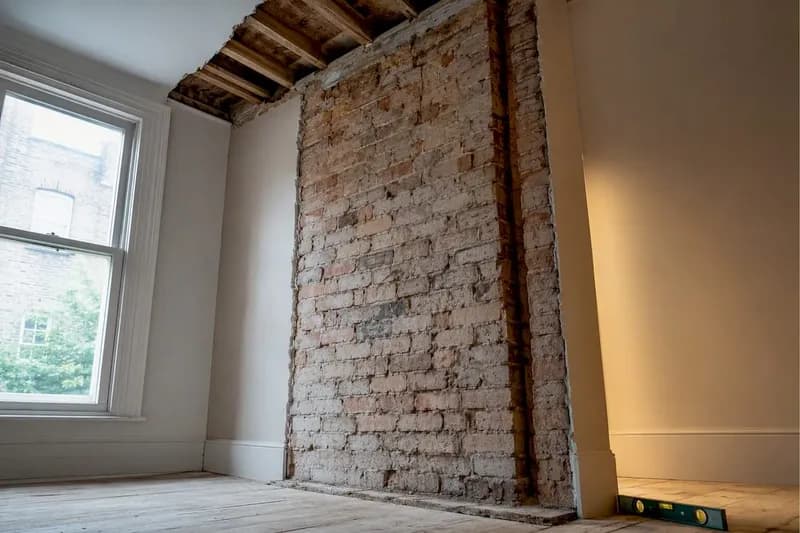
A renovation decision log records who decided what, when, and with what cost and schedule impact. It's a running record with fields for the decision itself, the alternatives you weighed, the reasoning, the owner, and the outcome. Homeowners who keep one from day one tend to see fewer disputes and fewer costly variations, because nothing important gets decided over a phone call and then forgotten.
TL;DR:
- Keeping a decision log from the start helps homeowners avoid costly variations caused by undocumented changes that ripple through trades.
- Each log entry should be tied to a specific version of artefacts like samples or drawings, with clear ownership and deadlines linked to the build sequence.
- Prioritize decision-making before requesting quotes and establish routine site and decision log management to prevent delays and disputes.
- Variations need separate documentation with detailed cost and schedule impacts, and they require formal approval before work proceeds.
- Using a dedicated renovation platform or a well-structured template can improve collaboration, reduce miscommunication, and prevent budget overruns.
Table of Contents
- What a renovation decision log and decision freeze mean in practice
- Setting up a decision hub: who owns it, where it lives and how to version it
- The decision-log template: fields every entry should include
- Tie decisions to the programme: sequencing, lead times and procurement actions
- Variations and change control: recording cost and schedule impact properly
- Keeping the log live: weekly routines, site meetings and handover checklists
- Copyable templates and quick checklists you can use today
- Practitioner evidence and why this approach reduces cost
- Three habit changes that make decision logs work
- An honest option if you want everything in one place
- Sources
- FAQ
What a renovation decision log and decision freeze mean in practice
A decision freeze is the point at which a category of choices, layout, services, or finishes gets locked so trades can order materials and plan sequencing with confidence. Before the freeze, ideas can shift. After it, changing your mind costs money and time, because someone has already placed an order or cut a chase for cable.
The trouble with most renovations isn't a lack of good decisions. It's that good decisions get made verbally, on site, and never written down anywhere anyone can check later. The electrician asks where you want the downlights. You point. Three weeks later the plasterer arrives, the position has "changed" in your memory, and now there's a patch to fix before paint goes on.
That's the pattern behind most avoidable renovation delays: an undocumented change ripples forward through every trade that follows it. A live record of changes from the first week of work heads off the majority of these disputes before they start, according to a practical guide to renovation project management. The knock-on effects are rarely isolated to one trade:
- Move a socket after first-fix electrics, and you may need to reopen plaster that's already skimmed.
- Change a kitchen carcass width after cabinets are ordered, and the worktop template no longer fits.
- Swap a tap after the sink cut-out is finalised, and pipework centres can be wrong by the time it arrives.
- Decide on tile size after the screed is laid, and floor build-up can be out by several millimetres.
Start the log before you request quotes, not after you accept one. Every quote, demolition date, and order confirmation should trace back to a decision that's already written down, dated, and owned by someone. If you're still deciding on layout while a contractor is pricing the job, you're pricing against a moving target.
Setting up a decision hub: who owns it, where it lives and how to version it
Every log needs one owner. On most residential jobs, that's the homeowner or a delegated project owner, not the main contractor, because contractors have every incentive to interpret gaps in their own favour. The owner's job is simple: update the log before leaving site, chase outstanding decisions weekly, and never let a verbal instruction stand unrecorded for more than a day.
Where the log lives matters less than whether everyone with a stake in the project can actually see it. Three common set-ups, each with real trade-offs:
- Spreadsheet. Free, flexible, and familiar, but versioning is manual and it's easy for two people to be editing different copies at once.
- Notion or Confluence. Good for linking photos, drawings, and comments in one place, though it takes some initial setup to structure fields consistently.
- A dedicated renovation platform. Built-in structure and shared access from the start, with less risk of someone working from a stale export.
Whichever you choose, anchor every entry to a specific version of a drawing or sample, not a vague description. "Grey tile, kitchen floor" means nothing six weeks later when three greys have been sampled. "Tile SKU 4471, per sample board v2, approved 14 March" means something a tiler can act on without a phone call. This mirrors how engineering teams structure design decision logs, tying each entry to a specific artefact rather than a memory of a conversation, as the Microsoft engineering playbook on decision logs sets out.
Pro Tip: Name files with the decision date first, not the room. Chronological sorting shows you the most recent approved version at a glance, without opening every file to check.
If several people are weighing in on choices, whether that's a partner, a designer, or a contractor, it's worth reading how shared decision-making works in practice before you assign ownership, so one person isn't left chasing sign-off from three others every week.
The decision-log template: fields every entry should include
A workable entry needs a consistent shape, whatever tool you use. This structure draws on the same logic behind Architecture Decision Records used in engineering, adapted for a building site rather than a codebase, and it holds up whether you're deciding on a kitchen layout or a tap finish.
Here are the fields worth including in every entry, in the order you'll typically fill them:
- Reference number — a short code (K01, B03) so you can point to a decision without retyping its description.
- Area or trade — kitchen, bathroom, electrics, joinery, so entries can be filtered by who needs to act on them.
- Decision — the actual choice, stated plainly, not the question that prompted it.
- Alternatives considered — what else was on the table and why it was ruled out.
- Constraints — budget ceiling, structural limit, supplier stock, planning restriction.
- Reasoning — the "why," in a sentence or two. This is the field most people skip, and the one that prevents the same question being asked twice.
- Owner — who has final say on this specific item.
- Date raised — when the question first came up.
- Required-by date — the last date a decision can be made without delaying an order or a trade.
- Final decision date — when it was actually confirmed.
- Cost impact — the number, even if it's zero.
- Programme impact — days added or saved, if any.
- Linked artefacts — drawing reference, sample photo, quote number.
- Status — pending, approved, revised, or superseded.
- Outcome — what was actually installed, once it's done.
A minimum version of this, the decision, alternatives, constraints, reasoning, owner, and outcome, matches what practitioners commonly recommend as a core structure for tracking any complex decision, and it scales down neatly for a household renovation.
Two sample entries show how this looks filled in:
- K01, kitchen layout: Island moved 300mm from original drawing to clear door swing. Alternatives: keep original position (rejected, blocks fridge door), reduce island width (rejected, loses seating). Constraint: 900mm minimum clearance required by kitchen fitter. Owner: homeowner. Required by: 2 March. Decided: 28 February. Cost impact: none. Status: approved. Linked: drawing v4.
- B03, downlight position: Bathroom ceiling spots repositioned 150mm to avoid new extractor duct run. Alternatives: reroute duct (rejected, adds cost). Owner: electrician, confirmed by homeowner. Required by: first-fix date. Decided: same day, on site. Cost impact: none. Status: approved. Linked: site photo 0312.
Status values matter more than they look. "Pending" means don't order yet. "Approved" means it's locked. "Revised" means an approved item changed, and every trade downstream needs to know. Leaving an entry at "pending" when work has already started is how outdated instructions end up followed on site, which is exactly the gap a checklist for construction daily logs is designed to close for site-level records.
Tie decisions to the programme: sequencing, lead times and procurement actions
The order you decide things in should follow the order the build actually happens in: layout first, then services, then anything that fixes dimensions, then finishes last. Decide your tile size before the screed goes down, not after. Decide your sink and tap before first-fix plumbing is priced, not after the pipes are in the wall. This sequence is consistent with the staged approach set out in the RIBA plan of work, which separates concept, technical design, and construction into distinct decision windows rather than one continuous scramble.
Every decision entry with a cost or programme consequence needs two dates, not one: when the decision must be made, and when the order must be placed. These aren't the same thing, and confusing them is where most procurement delays creep in.
- Required-by date: the last point you can decide without holding up a trade.
- Order-by date: the last point you can place the order and still receive it in time, working backwards from the lead time.
Lead times vary enough by category that a single rule of thumb won't cover you. Bespoke kitchens typically require a lead time of several weeks from final sign-off to delivery. Aluminium windows and doors often have longer lead times, varying by fabricator's capacity. Specific appliances, particularly integrated models tied to a cabinet spec, sometimes run longer if a model is discontinued mid-project. Build these into the log as procurement triggers: as soon as a decision status flips to "approved," the order-by date should generate its own flag, not sit buried in an email thread. Vendor-side scheduling quirks are common enough that it's worth reading how interior joinery lead times affect a renovation timeline before you assume a supplier can turn something around quickly just because they said so on the phone.
Variations and change control: recording cost and schedule impact properly
Not every logged decision is a variation, but every variation should start life as a logged decision. The distinction is contractual: a variation is a change to agreed scope, cost, or programme after a contract is signed, and it needs formal sign-off, not a nod on site. If a change alters price or completion date, escalate it from a decision entry to a proper change order before work continues.
A variation entry needs its own fields, separate from a routine decision:
- Description of the change and what triggered it.
- Cost adjustment, stated as a specific figure, not "to be confirmed."
- Programme impact in days, agreed before work proceeds where possible.
- Approver, named, with the date they signed off.
- Linked invoice or purchase order once priced.
Pro Tip: Never let a verbal "yes, go ahead" stand as approval for anything with a cost attached. Confirm it in a text message or email the same day, photograph the affected area before work covers it up, and mark the entry "pending" until you have an actual price. A vague verbal agreement is the single most common source of the "but you said it was fine" argument that surfaces at final invoice stage.
Keeping this discipline separate from routine choices matters because a decision log genuinely does two jobs at once: it's a planning tool before the contract is signed, and a variations register once work is under way. Treating both functions as one continuous record, rather than switching systems partway through, is what keeps the paper trail intact if a dispute ever needs resolving.

Keeping the log live: weekly routines, site meetings and handover checklists
A log only earns its keep if someone actually opens it every week. Build a short routine around it rather than treating it as paperwork you catch up on later.
- Start the site meeting with five open decisions, not general chat. List each one, its owner, and its required-by date, so nothing quietly slips another week.
- Capture on-site choices before you leave, even a rough note on your phone. A downlight position agreed verbally at 4pm is gone from memory by the time you're home.
- Confirm every on-site choice in writing that evening, and update the log's status field so the entry isn't still sitting at "pending" days after it was actually settled.
- Update procurement status weekly, flagging anything approaching its order-by date so a supplier delay doesn't surprise you two weeks before installation.
- Close the log at practical completion, exporting a final version with every entry marked approved, revised, or superseded, and hand it to whoever takes over the property, whether that's you in five years' time or a future buyer's surveyor.
That last step is easy to skip and genuinely useful later. A completed decision log tells a future owner why the boiler sits where it does, what tile adhesive was used, and which supplier made the bespoke wardrobe doors, which saves real time if anything needs matching or repairing years down the line.
Copyable templates and quick checklists you can use today
Before demolition starts, lock the following through a decision freeze so trades aren't pricing against choices still up in the air:
- Room layout and any structural openings.
- Services routing: electrics, plumbing, ventilation.
- Anything that fixes a dimension, kitchen carcass sizes, window openings, sanitaryware positions.
- Any item with a lead time over six weeks.
For the log itself, a one-page field list you can paste straight into a spreadsheet header row:
- Reference, Area/Trade, Decision, Alternatives, Constraints, Reasoning, Owner, Date Raised, Required-By, Decided On, Cost Impact, Programme Impact, Linked Artefacts, Status, Outcome.
For your weekly meeting, keep it to:
- Top five open decisions and their owners.
- Required-by dates approaching within seven days.
- Any status flipped to "revised" since last week.
- Order-by dates due this week, checked against supplier confirmations.
Practitioner evidence and why this approach reduces cost
Some platforms consolidate budget tracking, decision records, and AI-driven suggestions into one interface, so a decision entry, its cost impact, and its linked drawing sit in the same place instead of across multiple tools. This shared access can help reduce misunderstandings between contractors and homeowners.
Consolidated records matter because most renovation cost overruns trace back to decisions made twice, once verbally and once (differently) on paper. House A-Z's AI agents flag budget conflicts and layout clashes as decisions are logged, catching the kind of error that's easy to miss when you're tracking dozens of entries by hand...
If you're comparing how different households structure this, it's worth seeing how decision fatigue shows up in renovation projects and why writing the reasoning down, not just the choice, is what actually reduces repeated questions from trades.
Three habit changes that make decision logs work
Most decision logs fail for behavioural reasons, not template reasons. The fields are rarely the problem. What breaks it is a verbal "yes, that's fine" on site that never makes it into the record, an entry with no named owner so three people assume someone else is handling it, or a log that gets updated once a month instead of once a week.
The fix isn't a better spreadsheet. It's three small habit changes. First, no cost-bearing decision counts until it's written down, even if that means texting yourself a note before you've left the site. Second, every entry gets exactly one owner, never "the homeowners" as a group, because shared ownership means nobody actually checks it. Third, and this is the one people resist most, don't just say yes to a change; say yes with a condition attached, and write down what it costs in time or money before the trade starts work.
Treat the log as something you use, not something you archive. A log you only open when a dispute arises has already failed at its actual job, which is stopping the dispute from happening in the first place.
— Azai
An honest option if you want everything in one place
Running a decision log in a spreadsheet works, right up until three people are editing different versions of it. House A-Z was built for exactly that gap: budget tracking, decision records, and AI-driven design suggestions sit in one interface, so a decision, its cost impact, and the drawing it's linked to never live in three different apps at once.
It suits first-time renovators most, people juggling contractor quotes, product choices, and a live budget for the first time, without a project manager translating between them. The Free plan covers the basics if you're just starting to structure your project; the Pro plan at €29 per month adds the fuller decision-tracking and collaboration tools once contractors are involved and the log needs to stay live across multiple trades. Larger teams managing several properties can look at the Enterprise tier, priced on request. Have a look at the pricing page and see which tier matches where your project actually is right now.
FAQ
What should a house renovation checklist include?
A renovation checklist should cover scope by room, a target budget, a list of open decisions with owners, and required-by dates for anything with a lead time. Pairing that checklist with a running decision log, rather than a one-off list, is what keeps early planning connected to what actually gets ordered and installed.
What are the biggest home renovation mistakes homeowners make?
The most common mistake is letting decisions happen verbally on site and never writing down the reasoning behind them, which leads to repeated questions and disputed changes later. Deciding finishes before services are locked, rather than after, is a close second, since it routinely forces expensive rework.
What is the best app for tracking a renovation budget?
The right tool depends on how much you want in one place: a spreadsheet works for simple budgets, while a platform like House A-Z combines budget tracking with decision records and AI-driven suggestions so cost impacts and layout choices sit together rather than across separate tools. Current pricing for House A-Z's plans is available on the pricing page.
Is £50,000 enough to renovate a house in the UK?
It depends heavily on the scope, property size, and region, since a light cosmetic refresh and a full structural renovation sit at very different points on that budget. A decision log helps regardless of budget size, because tracking cost impact against each choice as you go is what catches an overspend early enough to adjust, rather than discovering it at final invoice.
When should I start a decision log on a renovation project?
Start the log before you request quotes or book any demolition date, not after work begins. Every early layout and services decision should already be recorded before a contractor prices the job, so the quote reflects a fixed scope rather than one still in flux.