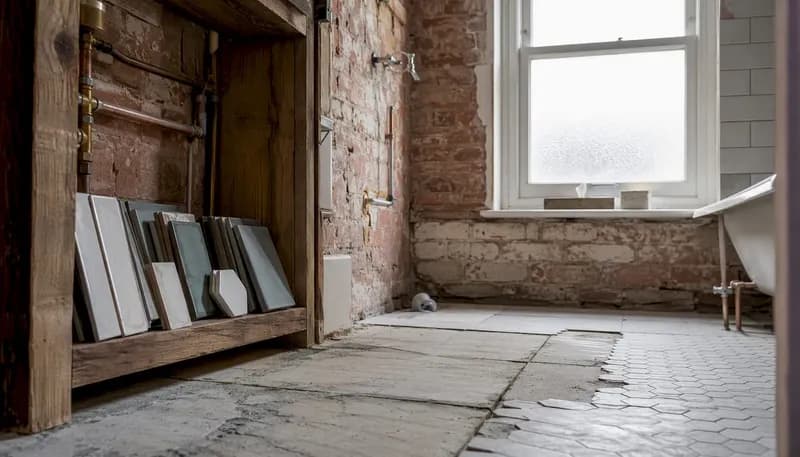
A typical full bathroom renovation in the UK costs between a few thousand pounds to around twenty thousand pounds, depending on size, specification, and location. A small or basic refresh is closer to a few thousand pounds; a mid-range family bathroom with new fixtures, tiling, and plumbing typically costs several thousand pounds; a high-spec or luxury project can reach around twenty thousand pounds or more. In London, expect to pay notably more than the UK average for equivalent work, driven primarily by higher labour rates.
Most standard quotes include labour, a basic fixture set (bath or shower, toilet, basin and vanity), floor and wall tiling, and waterproofing to the wet area. What they commonly exclude:
- VAT (usually 20%, often shown separately on contractor invoices)
- Structural or subfloor repairs discovered during strip-out
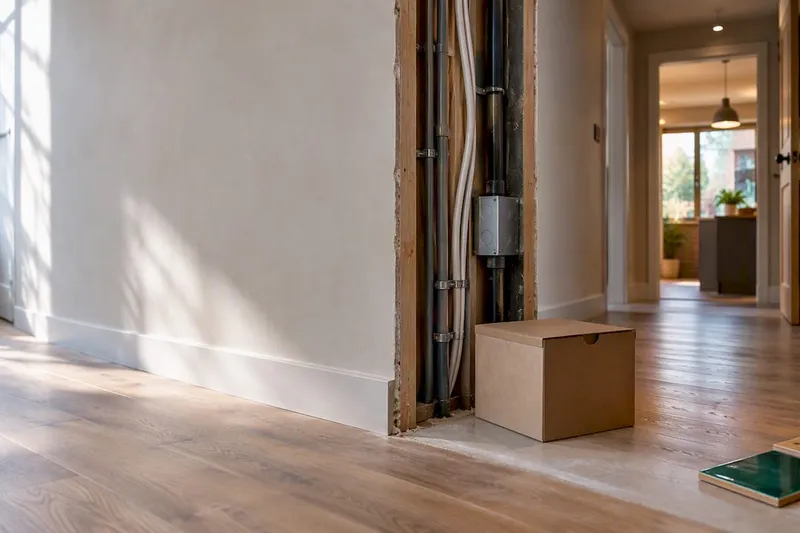
- Replastering, rewiring, or asbestos remediation
- Waste disposal, unless explicitly stated
- Building control fees or inspection costs
One figure worth noting early: small bathrooms often cost more per square metre than larger rooms. The reason is straightforward. Labour for plumbing, tiling, and waterproofing takes a similar number of hours regardless of whether the room is 3m² or 6m², so fixed costs are spread across fewer tiles and less floor area.
Key takeaways
| Point | Details |
|---|---|
| Set a realistic cost range | Budget £5,000–£20,000 for most UK bathrooms; London adds 20–40% to labour costs. |
| Allow a contingency | Reserve 10–20% of your total budget for hidden defects discovered during strip-out. |
| Prioritise waterproofing and skilled trades | Tanking and tiling quality determine how long the renovation lasts; do not economise here. |
| Get three comparable quotes | Use a written brief so every contractor prices the same scope; check VAT status on every quote. |
| Keep the layout where possible | Avoiding drain relocation saves £500–£2,000 and is the single most effective cost control. |
| Use House A-Z to track it all | House A-Z consolidates itemised budgets, quote comparisons, and contingency tracking in one place. |
Table of Contents
- What does a bathroom renovation cost, element by element?
- How much does it cost by bathroom type and size?
- How do costs vary across the UK, and does VAT apply?
- How long does a bathroom renovation typically take?
- What hidden costs catch homeowners out most often?
- How do you get accurate, comparable quotes?
- Which savings preserve durability and which ones cost you later?
- Does a new bathroom add value to your home?
- Worked sample budgets for three project types
- How these estimates were calculated
- Do you need a permit or building control sign-off?
- What happens to your insurance during a renovation?
- Does choosing eco-friendly materials cost more?
- A planner's perspective on where bathroom budgets go wrong
- The mistake most homeowners make before a single tile is laid
- Plan your bathroom budget without the spreadsheet chaos
- Sources
- FAQ
What does a bathroom renovation cost, element by element?
Understanding where the money goes is the fastest way to compare quotes and identify where savings are realistic. Labour is the single largest cost driver in any bathroom project. US modelling from RenoCosts puts labour at roughly 55% of a full remodel total, and UK trade experience broadly mirrors this split. Skilled wet-area trades (plumbers and tilers) command the highest day rates, and their work cannot be rushed without compromising waterproofing integrity.
A typical cost breakdown by element looks like this:
| Element | Low estimate | Typical | High estimate |
|---|---|---|---|
| Labour (all trades) | £1,800 | £3,500 | £7,000+ |
| Plumbing (pipework, connections) | £600 | £1,200 | £2,500 |
| Tiling (supply and fit) | £500 | £1,200 | £3,000+ |
| Waterproofing (tanking, membrane) | £200 | £400 | £900 |
| Shower (enclosure or wet room) | £400 | £1,000 | £4,000+ |
| Bath | £200 | £500 | £2,500 |
| Toilet and cistern | £150 | £350 | £1,200 |
| Basin and vanity unit | £150 | £400 | £2,000 |
| Electrics (lighting, extractor, UFH) | £300 | £700 | £2,000 |
| Flooring (vinyl, tile, or wood-effect) | £200 | £500 | £1,500 |
| Waste removal and disposal | £100 | £250 | £500 |
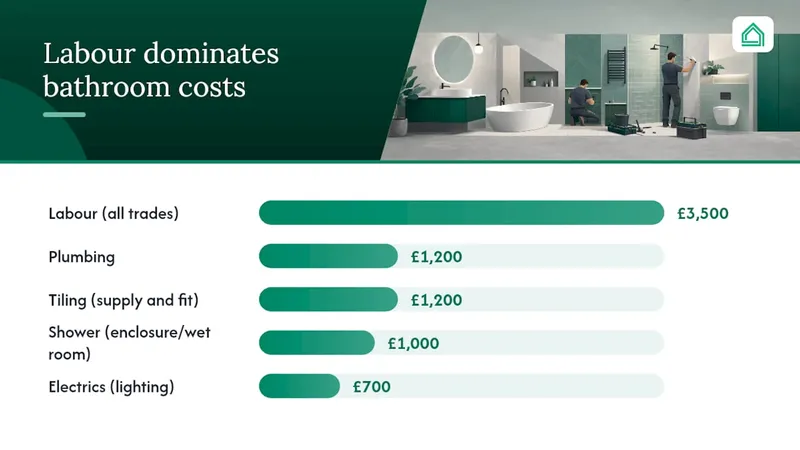
These figures are UK-specific estimates based on trade-body guidance and pooled project data. Cost calculators such as HomeCostCalc break projects into the same categories and confirm that fixtures, tiling, and labour are the three largest individual buckets, a pattern that holds across markets.
The reason skilled trades dominate costs is simple: tiling and plumbing are time-intensive, require specialist tools, and carry liability if done poorly. A tiler working in a wet room needs to apply a tanking membrane correctly before a single tile goes up, and that process cannot be abbreviated. Cutting costs on labour in these areas is where most renovation regrets originate.
Pro Tip: When reviewing renovation cost categories, ask each contractor to split their quote into labour and materials separately. A quote that bundles everything into one line makes it impossible to compare like-for-like.
How much does it cost by bathroom type and size?
Room type and scope are the two variables that move a project between budget tiers more than almost anything else. A cloakroom (WC and basin only) is a very different proposition from a full wet room conversion.
| Bathroom type | Low | Typical | High | Notes |
|---|---|---|---|---|
| Cloakroom (WC + basin) | £1,500 | £3,000 | £5,500 | Small footprint; high per-m² cost |
| Small bathroom (3-piece, up to 4m²) | £3,500 | £6,500 | £10,000 | Bath or shower, toilet, basin |
| Family bathroom (4-piece, 5–8m²) | £5,500 | £9,000 | £15,000 | Bath and separate shower common |
| En-suite (shower room, 3–5m²) | £4,000 | £7,500 | £13,000 | Often requires new drainage run |
| Wet room (full tanking required) | £6,000 | £11,000 | £20,000+ | Waterproofing and drainage premium |
| Luxury primary bathroom | £15,000 | £22,000 | £40,000+ | Bespoke fixtures, heated floors, premium tile |
A few points worth understanding behind these ranges. Moving drains or relocating the soil stack adds £500–£2,000 to any project and is one of the most common causes of budget escalation. Keeping the existing layout, with fixtures staying in their current positions, is the single most effective way to hold costs down.
Small rooms carry a disproportionately high per-m² cost for the same reason that kitchen renovations are expensive: the skilled-trade hours for plumbing connections, waterproofing, and tiling are largely fixed regardless of room size. A 3m² shower room requires almost as much plumber time as a 6m² family bathroom.
En-suites often require a new drainage run from the first floor, which means opening ceilings or floors below. That work adds both cost and disruption that is easy to underestimate at the quoting stage.
How do costs vary across the UK, and does VAT apply?
Location is one of the most significant variables in any bathroom remodel price range. RemodelerIQ's analysis of metro-level variation confirms that the same scope can cost substantially more in high-wage localities, a pattern that applies directly to the UK market.
Rural areas present a different challenge: trade availability is lower, and travel time is often charged, which can offset the lower headline day rate.
VAT is a common source of confusion on quotes. A quote from a VAT-registered trader that does not show VAT separately is almost certainly exclusive of it, meaning the final invoice will be higher. Always confirm:
- Whether the quote is inclusive or exclusive of VAT
- Whether the contractor is VAT-registered (check via HMRC's online tool)
- Whether materials are supplied by the contractor (VAT applies) or by you directly (you pay VAT at point of purchase)
Every quote you receive should confirm the following inclusions in writing:
- All labour (including second-fix and snagging)
- Materials and fixtures (or a clear allowance if you are supplying them)
- Waste removal and skip hire
- VAT status
- Any permit or building control fees
How long does a bathroom renovation typically take?
A standard family bathroom renovation takes 5–10 working days from strip-out to completion. A wet room or high-spec project with bespoke tiling can run to 3–4 weeks. The phases below reflect a typical project sequence:
- Survey and specification (1–3 days): Trades visit, measure, and confirm the scope. Long-lead items (bespoke tiles, specialist fixtures) should be ordered at this stage.
- Strip-out and demolition (1–2 days): Existing fixtures, tiles, and flooring are removed. This is when hidden defects are discovered.
- First-fix plumbing and electrics (2–3 days): New pipe runs, drainage, and electrical circuits are installed before walls are closed.
- Waterproofing and boarding (1–2 days): Wet areas are tanked or membraned. This phase cannot be rushed; membranes need curing time.
- Tiling (2–5 days depending on area): Wall and floor tiles are laid. Grout curing adds at least 24 hours before wet use.
- Second-fix plumbing and electrics (1–2 days): Fixtures, switches, and fittings are connected and tested.
- Decoration and snagging (1–2 days): Painting, silicone sealing, and final checks.
Pro Tip: Order tiles, sanitaryware, and any bespoke items before the strip-out begins. Supply delays are the most common cause of a project stalling mid-way through. If you are living at home during the renovation, plan for at least one week without a functioning bathroom.
Where building control notification is required (see Section 12), factor in an inspection visit that may need to be booked in advance. In busy periods, that wait can add several days to the programme.
What hidden costs catch homeowners out most often?
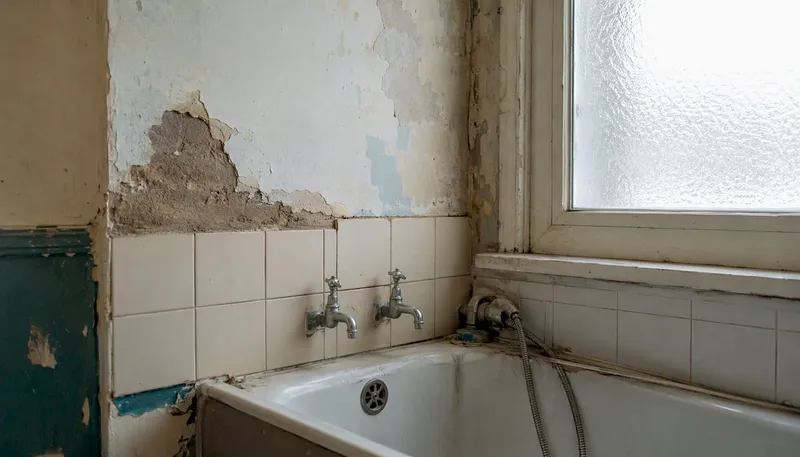
Strip-out is the moment of truth in any bathroom project. Once tiles and flooring come up, the condition of the subfloor, joists, and pipework is exposed, and what lies beneath is frequently worse than expected. The Federation of Master Builders warns that unusually cheap quotes commonly omit 'make good' items, including subfloor repairs, replastering, and electrical upgrades, which later increase the final bill significantly.
The most common surprise costs, in rough order of frequency:
- Subfloor rot or damaged joists: Caused by years of minor leaks or condensation. Repairs range from £300 to £1,500+ depending on extent.
- Corroded or non-compliant pipework: Older properties often have lead or iron pipework that must be replaced. Budget £500–£2,000 for a full re-pipe.
- Replastering: If tiles were applied directly to plasterboard that has absorbed moisture, full replastering is needed before retiling. Add £400–£900.
- Electrical faults or non-compliant wiring: Any electrical work in a bathroom zone must comply with Part P of the Building Regulations. Upgrading a consumer unit or adding a new circuit can add £500–£1,500.
- Asbestos: Properties built before 2000 may contain asbestos in floor tiles, artex, or pipe lagging. Testing costs £100–£300; licensed removal adds significantly more.
- Damp or structural issues behind tiles: Particularly common in ground-floor bathrooms and older terraced houses.
A contingency of around 10 to 20 percent of your total budget is the standard industry recommendation for bathroom projects, precisely because these discoveries are common rather than exceptional. For more detail on how hidden costs emerge, the pattern is consistent: the older the property and the longer since the last renovation, the higher the probability of finding something unexpected.
Early warning signs that a job is likely to reveal hidden work: a house built before 1980, any history of damp or leaks, tiles that sound hollow when tapped, or a bathroom that has not been touched in more than 20 years.
How do you get accurate, comparable quotes?
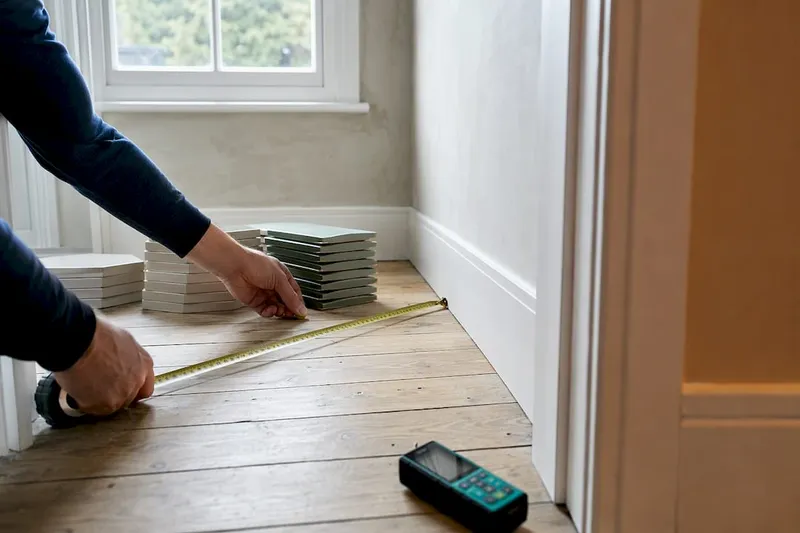
Getting three quotes is the minimum. Getting three comparable quotes requires a written brief that every contractor prices against the same scope. Without it, you will receive three different documents that cannot be meaningfully compared.
Your written brief should include:
- Room dimensions (length, width, ceiling height)
- The fixtures you want (or a budget allowance per item)
- Tile specification (size, format, whether feature walls are planned)
- Waterproofing standard required (tanking, membrane type)
- Whether the layout changes (drain moves, new soil stack connections)
- Access constraints (parking, floor level, building type)
- Your preferred start date and programme
Ask each contractor the following questions before accepting a quote:
- Are you VAT-registered, and is this quote inclusive or exclusive of VAT?
- Do you carry public liability insurance, and can I see the certificate?
- Are you a member of a recognised trade body such as the Federation of Master Builders?
- Does the price include waste removal and skip hire?
- What is your lead time, and how many other jobs will run concurrently?
- What guarantee do you offer on workmanship?
- Who is responsible for obtaining building control sign-off?
For a detailed guide to comparing renovation quotes, the principle is always the same: compare scope, not just price.
Retailer fitting services, such as those offered by B&Q, are worth checking separately. These typically cover supply and basic installation but may not include waste removal, tiling, or specialist plumbing work. Always confirm exactly what is and is not included before treating a retailer fitting quote as equivalent to a full trade quote.
Which savings preserve durability and which ones cost you later?
The most effective cost savings in a bathroom renovation are structural, not cosmetic. Keeping the existing layout is the single biggest lever: avoiding drain relocation and soil stack changes can save £500–£2,000 on a typical project.
Savings that work well in practice:
- Keep the layout: Reusing existing pipe runs and drain positions avoids the most expensive plumbing work.
- Choose mid-range tiles: Large-format porcelain tiles at £25–£50/m² perform as well as premium options at £80–£150/m² in most domestic wet areas. The difference is aesthetic, not functional.
- Use a prefabricated shower enclosure: A quality framed or frameless enclosure costs £300–£800 fitted. A fully tiled bespoke shower with a linear drain costs £2,000–£5,000. The tiled version looks better but the functional difference is minimal for most households.
- Supply your own sanitaryware: Buying a toilet, basin, and vanity from a retailer such as B&Q or Victorian Plumbing and having your contractor fit them can save 15–25% on fixture costs, since contractors typically mark up supplied goods.
- Avoid bespoke joinery: Fitted furniture adds cost and lead time. Freestanding vanity units achieve a similar result at a fraction of the price.
Where to invest rather than economise:
- Waterproofing: Tanking and membrane work is not visible once tiled, but it is the difference between a bathroom that lasts 15 years and one that fails in 5. Professional grout sealing and proper waterproofing behind tiles are areas where cutting corners creates expensive remedial work later.
- Skilled tiling labour: A poorly tiled bathroom is immediately obvious and costly to fix. Pay for an experienced tiler, particularly in wet areas and around shower enclosures.
- Extractor fan specification: Undersized extractors cause condensation and mould. A correctly specified fan costs £80–£200 fitted and prevents replastering costs down the line.
For a fuller guide to renovation spending priorities, the consistent principle is to spend on what is hidden and structural, and economise on what is visible and replaceable.
Does a new bathroom add value to your home?
A well-executed bathroom renovation typically adds value, though the return varies by property type, location, and the quality of the existing bathroom it replaces. Estate agents and property surveys consistently report that a modern, clean bathroom is among the top features buyers notice, alongside kitchens and kerb appeal.
Upgrades that tend to return the most at resale:
- Adding an en-suite to a property that lacks one: this can add 5–10% to perceived value in many markets, particularly for family homes with three or more bedrooms.
- Replacing a visibly dated bathroom (avocado suite, cracked tiles, mould) with a clean, neutral scheme.
- Installing a walk-in shower or wet room in a primary bathroom, particularly where the existing bath is rarely used.
- Improving ventilation and waterproofing, which reduces the risk of damp-related survey findings that depress valuations.
One caution: over-specifying beyond neighbourhood expectations rarely returns its full cost. A £30,000 luxury bathroom in a £250,000 terraced house is unlikely to recover that investment at sale. The sensible benchmark is to match the specification to the property's value band and the expectations of likely buyers in that area.
Worked sample budgets for three project types
These three itemised examples give you a starting point for your own bathroom renovation budgeting. All figures are exclusive of VAT and assume a standard UK property with no major hidden defects.
Small bathroom refresh (up to 4m², keeping existing layout)
Mid-range family bathroom (5–7m², new fixtures, some layout adjustment)
High-spec bathroom (wet room or luxury primary, 6–9m²)
| Item | Cost |
|---|---|
| Demolition and strip-out | £700 |
| Plumbing (full wet room drainage, relocation) | £2,200 |
| Electrics (underfloor heating, lighting circuit) | £1,500 |
| Full tanking and waterproofing system | £900 |
| Large-format tiling (supply and fit) | £3,000 |
| Walk-in shower with linear drain | £2,500 |
| Freestanding bath | £1,500 |
| Wall-hung toilet and concealed cistern | £900 |
| Designer basin and furniture | £1,200 |
| Labour (all trades) | £5,500 |
| Waste removal | £400 |
| Subtotal (ex. VAT) | £20,300 |
| Contingency (15%) | £3,045 |
| Total including contingency | £23,345 |
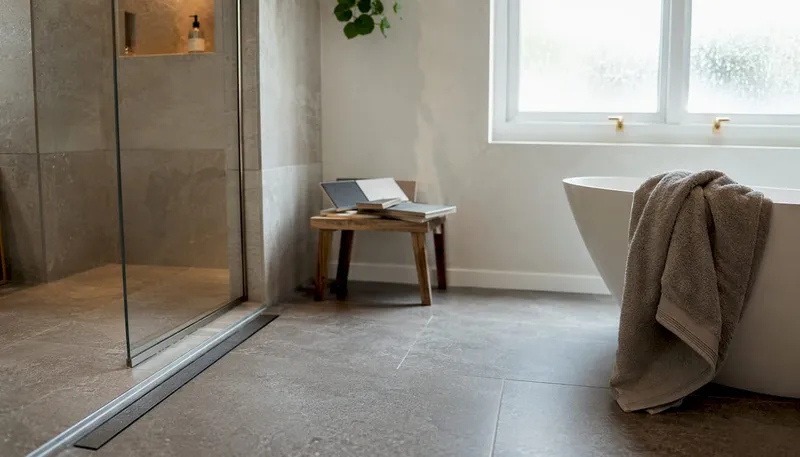
Scaling notes: switching from a prefabricated shower enclosure to a fully tiled bespoke wet room adds £1,500–£3,500 to any project. Adding underfloor heating to a mid-range bathroom typically costs £600–£1,200 fitted, depending on floor area and whether the floor screed needs raising. Always confirm VAT and any building control fees separately, as these are not included in the subtotals above.
How these estimates were calculated
The figures in this guide draw on several sources, each with different methodologies and geographies. Understanding the basis helps you judge how to apply them to your own project.
Primary sources used:
- Federation of Master Builders cost guidance: UK-specific trade-body data covering labour rates, make-good costs, and quote structure. The most directly applicable source for UK homeowners.
- RenoCosts 2026 modelling: US national data used to illustrate labour share (approximately 55% of total) and the structure of cost drivers. Figures translated conceptually, not converted directly, for UK application.
- HomeCostCalc calculator outputs: Used to validate line-item category structure (fixtures, tiling, plumbing, electrical, labour). US-denominated; used for structural insight only.
- RemodelFinder 2026 guide: Detailed midrange line-item breakdown and permit/inspection timing data. US market; used for budget structure and phase sequencing.
- TheFatBook 2026 modelling: Demonstrates how different methodologies produce different headline averages; used to contextualise why published averages vary.
Key assumptions in the UK estimates:
- Room sizes: small bathroom 3–4m²; family bathroom 5–7m²; luxury 6–9m²
- Labour rates: mid-range UK regional average (not London-adjusted unless stated)
- Materials: mid-range specification unless noted as low or high
- Included: labour, materials, waterproofing, waste removal
- Excluded: VAT (20%), building control fees, structural repairs beyond standard make-good
Local variation is significant. These figures are starting points, not fixed prices. Obtain at least three local quotes before committing to a budget.
Do you need a permit or building control sign-off?
Most bathroom renovations in the UK do not require planning permission, but several elements do require building control notification under the Building Regulations.
Building control is required for:
- Any new electrical circuit in a bathroom (Part P of the Building Regulations). This must be carried out by a Part P-registered electrician or notified to your local authority building control.
- Moving or creating a new soil stack connection (Part H).
- Structural alterations, such as removing a load-bearing wall to enlarge a bathroom.
- Installing a new drainage run that connects to the public sewer.
The cost of building control notification for a standard bathroom project is typically £100–£300, depending on your local authority. A Part P-registered electrician can self-certify their work, which avoids the need for a separate building control application for the electrical element.
Skipping required notifications is a risk that transfers directly to you at resale. Solicitors' enquiries routinely ask for building control certificates for electrical and structural work, and missing paperwork can delay or derail a sale. RemodelFinder's analysis of permit and inspection timing confirms that this step adds both direct cost and scheduling risk when not planned for in advance.
What happens to your insurance during a renovation?
Your home insurance policy may not automatically cover a bathroom renovation, and the gap in cover can be significant. Most standard home insurance policies contain clauses that limit or exclude cover during building works, particularly for damage caused by contractors or by the works themselves.
Before work begins:
- Notify your home insurer that renovation work is planned. Some policies require this; failing to notify can void a claim.
- Check whether your policy covers accidental damage by contractors. Many do not.
- Confirm that your buildings cover remains in place during the works, particularly if any structural elements are being altered.
- Ask your contractor for evidence of public liability insurance (minimum £1 million, preferably £2 million or more). This covers damage they cause to your property or a third party.
If your existing policy excludes renovation works, specialist renovation or unoccupied property insurance is available from brokers. This is particularly relevant if you plan to move out during the project. The cost varies by project value and duration but is worth factoring into your overall bathroom renovation budget.
Keep copies of all contractor insurance certificates and your own policy documents together with your project file. If something goes wrong mid-project, having those documents to hand avoids delays in making a claim.
Does choosing eco-friendly materials cost more?
Sustainability choices in a bathroom renovation generally carry a modest upfront premium but can reduce running costs over time. The gap between standard and eco-specified materials has narrowed considerably as demand has grown.
Areas where sustainable choices add cost:
- Water-efficient sanitaryware: Dual-flush toilets and low-flow showerheads cost roughly the same as standard equivalents at mid-range specification. High-efficiency models from premium brands carry a 20–40% price premium over entry-level options.
- Recycled or sustainably sourced tiles: Tiles made from recycled glass or certified sustainable stone typically cost 15–30% more per m² than standard ceramic equivalents. Performance in wet areas is comparable.
- Natural or low-VOC paints and sealants: Low-VOC bathroom paint costs £5–£15 more per tin than standard equivalents. The difference across a typical bathroom is under £30.
- Underfloor heating with a heat pump: Pairing electric underfloor heating with a heat pump rather than a direct electric system adds significant upfront cost but reduces running costs over time.
Where sustainability choices save money over time:
- A water-efficient showerhead at £40–£80 can reduce water usage noticeably for a household on a water meter.
- LED lighting specified correctly from the outset costs the same to install as halogen and uses a fraction of the energy.
- Proper waterproofing and ventilation, regardless of material choice, extend the life of the renovation and reduce the frequency of remedial work.
Sourcing mid-range materials with durability credentials, rather than the cheapest available option, typically offers the best balance between upfront cost and long-term value.
A planner's perspective on where bathroom budgets go wrong
The mistake most homeowners make before a single tile is laid
The most common budgeting error is not underestimating the cost of fixtures or tiles. It is underestimating the cost of labour and then trying to recover the shortfall by cutting corners on waterproofing or tiling quality. Those are precisely the two elements that determine whether a bathroom lasts 5 years or 20.
The second mistake is treating the quoted price as the final price before strip-out has happened. A quote given before demolition is an estimate, not a contract. Any contractor who guarantees a fixed price without a contingency clause is either very confident or not accounting for what they might find.
The practical prioritisation tip: fix the layout first, then the waterproofing, then the tiling. Everything else, fixtures, finishes, accessories, is replaceable. Those three elements are not, at least not without significant cost and disruption.
Plan your bathroom budget without the spreadsheet chaos
Tracking a bathroom renovation across multiple contractor quotes, fixture costs, VAT calculations, and a contingency reserve is genuinely difficult with a spreadsheet. Numbers get updated in one place and not another; VAT gets forgotten; the contingency line disappears when the budget gets tight.
House A-Z gives you a single place to manage all of it. You can build an itemised budget from the line items in this guide, log quotes from multiple contractors against the same scope, track actual spend against estimates, and flag when a category is running over. The AI-powered planning tools help you spot where a single choice, such as switching from a tiled shower to a prefabricated enclosure, moves your total budget between tiers.
For contractors and project managers, the collaboration and agent tools let you share budgets, documents, and timelines with trades directly, reducing the back-and-forth that delays decisions. Start with a free plan and upgrade when your project needs it.
Sources
- Bathroom renovation costs: a cost breakdown | Federation of Master Builders
- Bathroom Remodel Cost Calculator (2026) — Free Online Estimate | HomeCostCalc
- Bathroom Remodel Cost — $11,500 Avg by State (2026)
- How Much Does a Bathroom Remodel Cost? (2026 Local Data) | RemodelFinder
FAQ
What is a realistic budget for a bathroom renovation in the UK?
A realistic budget for a mid-range family bathroom in the UK is £7,000–£12,000 excluding VAT, rising to £15,000–£25,000 for a high-spec or wet room conversion.
How much does B&Q charge for fitting a bathroom?
B&Q offers bathroom fitting services through third-party installers, but the fitting charge is separate from the cost of the sanitaryware and tiles you purchase. Always confirm exactly what the fitting service includes, as waste removal, tiling, and specialist plumbing work are often excluded from basic fitting packages.
What adds the most value to a bathroom?
Adding an en-suite to a property that lacks one typically adds the most perceived value, followed by replacing a visibly dated suite with a clean, neutral scheme and installing a walk-in shower. Over-specifying beyond the property's value band rarely recovers its full cost at resale.
How much does it cost to rip out and replace a bathroom?
Strip-out and disposal for a standard bathroom typically costs £300–£700, depending on room size and access. A full rip-out and replacement, including new fixtures, tiling, plumbing, and labour, ranges from £5,500 to £20,000+ depending on specification and location.
Does bathroom renovation work require building control sign-off?
Any new electrical circuit in a bathroom requires either a Part P-registered electrician (who can self-certify) or a building control notification to your local authority. Moving drainage or making structural changes also requires notification. Building control fees for a standard bathroom project typically run £100–£300.