Your renovation budget is a plan. Your actual cost is what the project really takes once walls are open, prices move and decisions change. The gap between the two is where most renovations go wrong, and the way to keep it small is to record both in one place, line by line, and compare them every week while a miss can still be fixed. That is exactly what House A-Z is built for: budget tracking, product pricing and project management in a single platform, so you are not juggling spreadsheets and apps.
Below you will find what the two numbers mean, how to set the budget so it survives contact with reality, a simple tracking routine, and what to do when the actual column pulls ahead.
TL;DR
- A budget is the money you allocate; an estimate is a forward projection of likely cost. Actual cost is what you have really committed and paid.
- Add a contingency on top of the quote: the Federation of Master Builders suggests 10%, rising to 15% or more for older homes or structural work.
- Track three figures per line: original budget, committed (signed, not yet paid) and actual (paid). Review weekly.
- Scope misunderstandings and what is found behind walls cause most overruns, so write the scope down before work starts.
- If you go over, get a written revised total before you decide anything else.
Table of Contents
- Budget, estimate and actual: what each number means
- Why renovations drift over budget
- Setting a budget that can be measured against
- Tracking budget against actual, week by week
- When actual costs overtake the budget
- Perspective
- Keep budget and actual in one place
- FAQ
- Sources
Budget, estimate and actual: what each number means
A university project management text defines a budget as the funds allocated to a project and an estimate as a projection of what it is likely to cost. Cost itself is driven by scope, resources and prices. A spreadsheet does not cause an overrun; changing scope or rising prices does.
For a renovation, three figures matter:
- Budget: the total you can afford, split into categories.
- Committed: everything you have agreed to pay, including signed quotes and approved variations, even if no invoice has arrived.
- Actual: what you have paid so far.
The committed figure is the one most people skip, and it is the early warning. A builder's 2026 guide points out that the gap between committed and actual is future liability, and that an overrun is forming when committed spend plus the estimate to finish exceeds the original budget, often weeks before the invoice lands.
Why renovations drift over budget
The same few causes come up again and again.
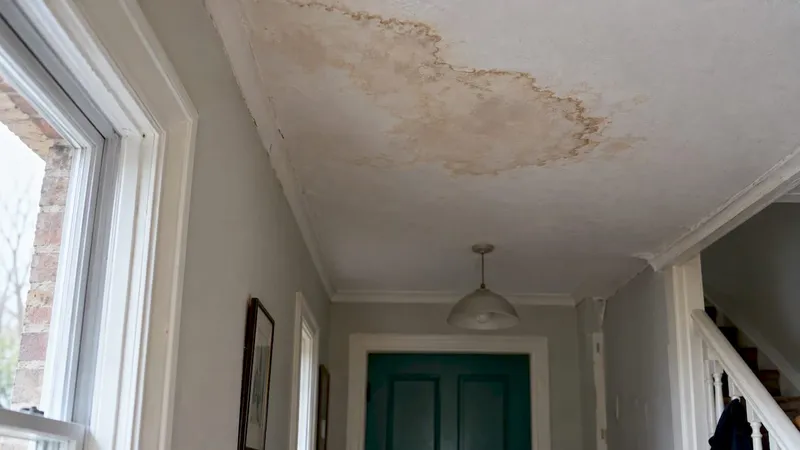
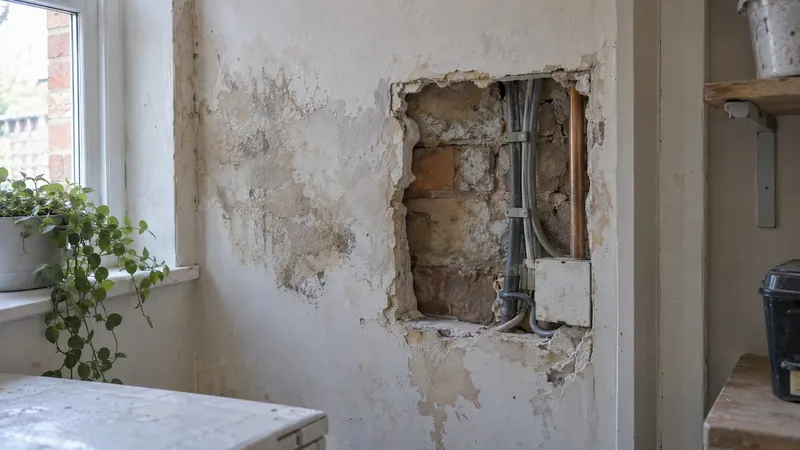
Hidden conditions. A renovation is exposed to whatever already exists. A US contractor told Realtor.com that the biggest driver of mid-project growth is what is discovered once work begins: electrical panels at capacity, old plumbing, hidden subfloor damage. UK homes of a certain age hold the same kind of surprises, such as old wiring or damp behind plaster. Our guide to how hidden costs emerge in renovations goes deeper.
Scope misalignment. Another contractor in the same article gives a simple example: the quote covers patching and painting only where work was done, while the homeowner assumed the whole house would be painted. The difference becomes extra cost. A written scope of work prevents this, and our guide on how to write a scope of work shows the structure. On larger jobs, a clear plan for site safety and responsibilities also keeps expectations aligned: the construction phase plan is the document that sets out how work will be organised and managed.
Upgrades along the way. In a US survey reported by Money Crashers, 37% of homeowners who renovated in 2025 went over budget, more than half blamed products or services costing more than expected, and 35% had picked pricier materials than planned. The figures are American, but the pattern of choosing better finishes mid-project is familiar anywhere.
Forgotten soft costs. The Federation of Master Builders lists labour, materials, fixtures, professional fees, planning and Building Control fees, waste removal, decoration, surveys, skip hire and temporary accommodation. If your budget has only the first three, the actual column will beat it. See also our renovation cost categories guide.
Setting a budget that can be measured against
A budget you cannot compare against is just a hope. Build it in this order.
- List must-haves and nice-to-haves. When money tightens, the nice-to-haves are the first to go. Our spending priorities list helps you rank them, which is easier to do as a couple before work starts than in the middle of it.
- Get itemised quotes on the same scope. Two or three quotes based on the same finished plan can be compared line by line; vague lump sums cannot. Our quote comparison tips show what to look for.
- Break the total into categories. Use the categories above so nothing is left off.
- Add the contingency. Keep it separate from the quote and from optional upgrades.
How much contingency
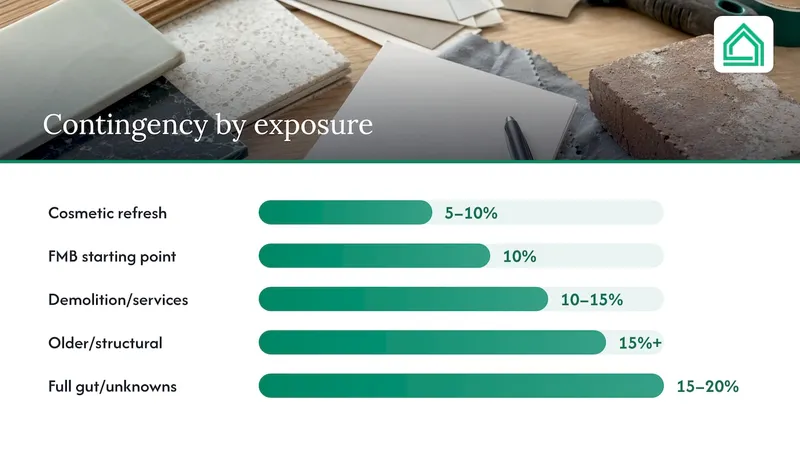
The Federation of Master Builders advises setting aside 10% of total project cost, rising to 15% or more for older homes or structural work, and reserving it for genuine unexpected issues rather than optional extras. An interior designer writing for Renoversity scales it by how much is opened up: 5–10% for a cosmetic refresh, 10–15% where there is demolition or plumbing and electrical changes, and 15–20% for a full gut or many unknowns.
A worked example in pounds, using the FMB's 10% starting point. Suppose your all-in ceiling is £60,000 and you want the reserve on top of the planned work. Planned work of £54,545 plus 10% (£5,455) reaches the ceiling. If the house is older and you are moving walls, use 15%: planned work of £52,174 and a reserve of £7,826. The higher the unknowns, the lower the planned-work figure should be. Our construction contingency guide and room-by-room contingency guide take this further.

Tracking budget against actual, week by week
The routine is simple. The discipline is the hard part.
- One line per cost. Each line carries a category, the original budget, committed, actual and the difference. A renovation firm's guide suggests columns for item, estimated cost, actual cost, difference and status.
- Record every invoice straight away. Receipts left in a drawer for a month turn a small drift into a large one.
- Log commitments when you sign, not when you pay. A signed variation raises committed cost today.
- Review weekly. The same guide recommends a short weekly review with the contractor of completed work and how actuals compare to estimates, so a 20% overrun is caught halfway through rather than at the end.
- Rebalance. If one category is over, look for savings in another before touching the contingency.
With House A-Z you keep this in one place rather than across several files: budget tracking sits alongside project management and shared access for partners and contractors, so you and your partner or builder see the same numbers. Our four-step guide to tracking a renovation budget walks through the workflow, and the renovation Gantt guide shows how to line costs up with the schedule.
A quick worked example
Say the kitchen line is budgeted at £12,000.
| Item | Budget | Committed | Actual (paid) |
|---|---|---|---|
| Units and worktops | £6,500 | £7,200 | £3,600 |
| Plumbing and electrics | £3,000 | £3,000 | £0 |
| Tiling and decoration | £2,500 | £2,900 | £0 |
| Total | £12,000 | £13,100 | £3,600 |
Only £3,600 has left your account, so an actual-only view would say you are comfortably under. Committed is £13,100, already £1,100 over the line. That is the moment to act, by choosing a cheaper worktop or drawing on the contingency knowingly, not after the final invoice.
When actual costs overtake the budget
Do not carry on and hope. A cost guide suggests this order:
- Pause and get a written, updated total cost projection.
- Look for savings in finishes that have not been bought yet.
- Phase the remaining work, leaving clean stopping points.
- Agree variations one at a time, in writing.
- Fund the gap only if the revised numbers still work for you.
Contract type changes who carries the risk. In a lump-sum contract the contractor generally absorbs overruns within the agreed scope while the owner carries scope changes and hidden conditions through variations; in cost-plus the owner carries cost variability in return for full visibility of spending, as explained by Renovation Authority. Read your contract before the work starts, and keep your own contingency separate from any held by the contractor.
Perspective
Most budgets fail not because the numbers were wrong on day one, but because nobody kept comparing them to reality. First-time builders often hold the budget in one spreadsheet, quotes in an inbox, product choices in screenshots and the schedule in a head. The gap between plan and actual then goes unseen until it is expensive.
We built House A-Z to put those pieces together: budget tracking, real product pricing, room layouts and project management in one place, in plain language. Our AI agents give personalised insights based on your budget, preferences and timeline, with actionable proposals for saving money. Users have told us it helped them avoid errors worth around €20K.
The habit we would give any first-time renovator: log commitments the day you agree them, check the gap weekly, and decide calmly while there is still room to choose.
Azai
Keep budget and actual in one place
House A-Z has a Free plan for basic use, Pro at 29 € per month and Enterprise from 99 € per month for professional contractors and property businesses. If you are about to start, set up your budget lines, contingency and quotes together so the comparison is ready from day one. See the plans and pricing or meet the AI agents.
FAQ
What is the difference between budget and actual in a renovation?
The budget is the money you plan to spend; the actual is what you have really paid. Track a third figure, committed cost, for everything you have signed but not yet paid. The difference between budget and committed shows an overrun before it hits your bank account.
What is a good contingency for a renovation?
The Federation of Master Builders recommends 10% of total project cost, and 15% or more for older homes or structural work. Cosmetic refreshes can sit at the lower end, while full strip-outs deserve more. Keep it for genuine surprises, not upgrades.
How often should I compare actual spending with the budget?
Weekly while work is running. Frequent checks mean a drift is spotted when you can still change finishes or phasing, rather than after the money is spent.
What costs are most often forgotten?
Planning and Building Control fees, professional fees, surveys, skip hire, waste removal, decoration and temporary accommodation. Add each as its own line from the start.
Sources
- Managing Project Value, Budgets, and Costs, Wisconsin Open Textbook
- How to Manage a Home Construction Project: 2026 Guide
- When Renovation Budgets Change Midproject, Realtor.com
- Budget a Renovation From Itemized Bids, Money Crashers
- How to budget for a renovation, Federation of Master Builders
- Renovation Contingency Budget, Renoversity
- How to Manage Home Renovation Costs, First Class Renos
- What to Do When a Renovation Goes Over Budget
- Renovation Budgeting: Contingencies, Overruns, and Planning