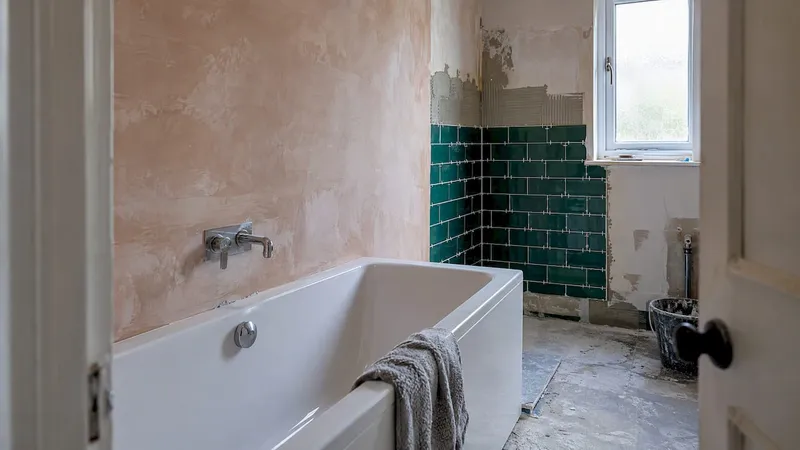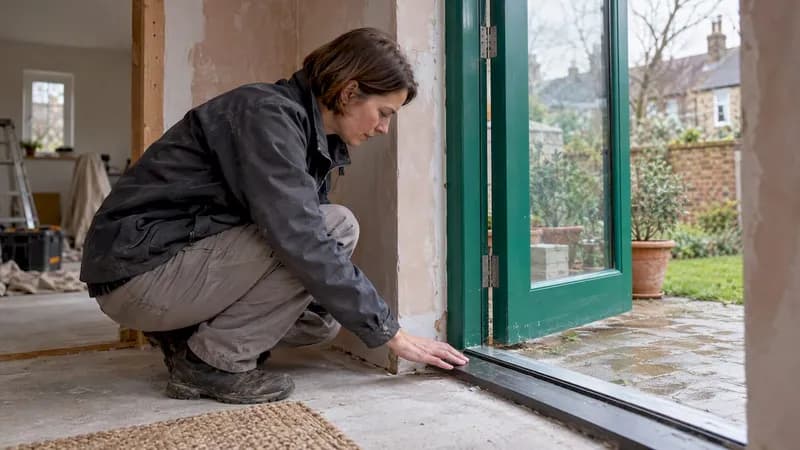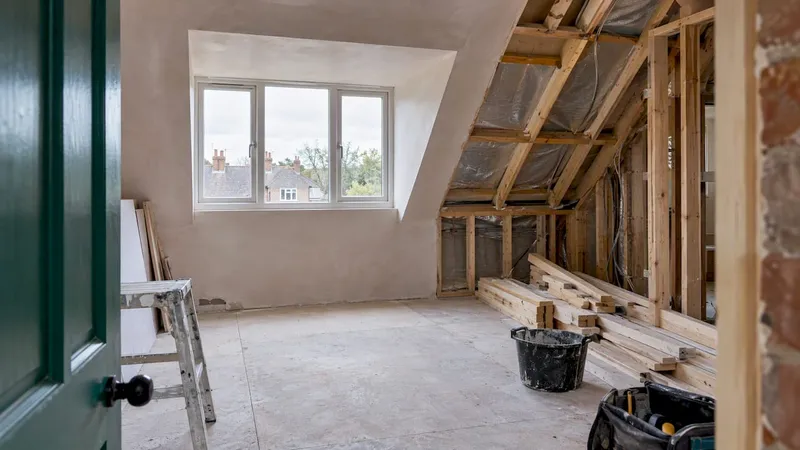
A construction contingency is money you hold back, on top of your quoted build cost, to pay for problems nobody could price in advance: rotten joists, odd drainage, a wall that is not where the drawings say. For most UK renovations and small builds, a sensible starting point is 10% to 20% of the construction cost, rising for older houses and projects with unfinished plans. The rest of this guide shows how to pick your number, keep it ring-fenced and spend it without drama.
TL;DR
- Hold 10% to 15% for a well-defined extension or loft, 15% to 20% or more for a full renovation, and more again for pre-1930 homes or half-finished designs.
- Contingency is for genuine surprises, not upgrades. Keep it in a separate line and never merge it into your working budget.
- The less complete your design, the higher the figure should be. Lower it as plans firm up and work is signed off.
- Agree in writing who can release the money, for what, and with what paperwork, before the first brick is touched.
- Keep a live log of every draw. A tracker beats a spreadsheet buried in your inbox.
Table of Contents
- What a construction contingency actually is
- Owner's and contractor's contingency
- How much contingency should you hold?
- A worked example
- How to shrink the unknowns before you start
- Rules for spending contingency
- Perspective: what we see go wrong
- Track it as you go
- Common mistakes
- FAQ
- Sources
What a construction contingency actually is
Think of it as a safety net with rules. Industry guidance from AIA describes a contingency as a predetermined amount or percentage of the contract held for unpredictable changes, and as a safeguard that lets designer, contractor and owner finish the project on budget.
It is not padding, and it is not a pot for a nicer worktop. A New Zealand quantity surveying practice makes the same point: contingency protects against identified or reasonably foreseeable cost uncertainty, and a healthy one spares everyone the adversarial haggling that follows when an unexpected cost surfaces mid-build.
Two terms often get tangled:
- Contingency covers things that might happen but have not yet been priced, such as hidden damp behind plaster.
- Allowances (in UK contracts, often called provisional sums or prime cost sums) cover items you know you will buy but have not yet chosen, such as tiles or a kitchen. We cover those separately in our guide to checks homeowners must run on prime cost items.
Keeping the two apart matters. If tile choices eat your contingency in month one, there is nothing left for the day the electrician opens the consumer unit and finds a surprise.
Owner's and contractor's contingency
Larger contracts split the reserve in two. According to the AIA's guidance, an owner's contingency covers scope changes and owner-directed decisions, while a contractor's contingency covers risks inherent to performing the work, such as errors, omissions and execution problems.
On a typical home project your builder may price their own risk inside the quote, but the money you hold is the owner's contingency. Ask your builder directly: "What risk have you already priced, and what have you left for me to carry?" The answer tells you how much of your own reserve you will really need.
How much contingency should you hold?
There is no universal figure, and anyone quoting one without asking about your house is guessing. There are, however, reliable ranges.
- A US contractor suggests 10% to 20% of construction cost as a practical starting range for renovations, with the lower end suited to a newer home, a tightly defined scope, complete plans and minimal demolition.
- A UK architecture practice advises setting aside 10% to 15% of total build cost on a house extension, citing tricky ground conditions and hidden pipework as typical reasons.
- UK-focused guidance from a builder-matching service suggests higher figures for pre-1930 properties, in the 15% to 25% range, and lower ones for cosmetic work.
Putting those together, here is a working table for UK homeowners. Treat it as a starting point and adjust for your own survey results.
| Project type | Starting contingency | Why |
|---|---|---|
| Redecorating, flooring | 5% | Little hidden work |
| Kitchen or bathroom refit | 10% | Hidden pipes, wiring, damp |
| Single-storey extension | 10% to 15% | Ground and drainage unknowns |
| Loft conversion | 10% to 15% | Existing structure and roof condition |
| Full house renovation | 15% to 20% | Many trades, many hidden areas |
| Pre-1930 house, major work | 15% to 25% | Age, past alterations, no records |
Why design completeness changes the answer
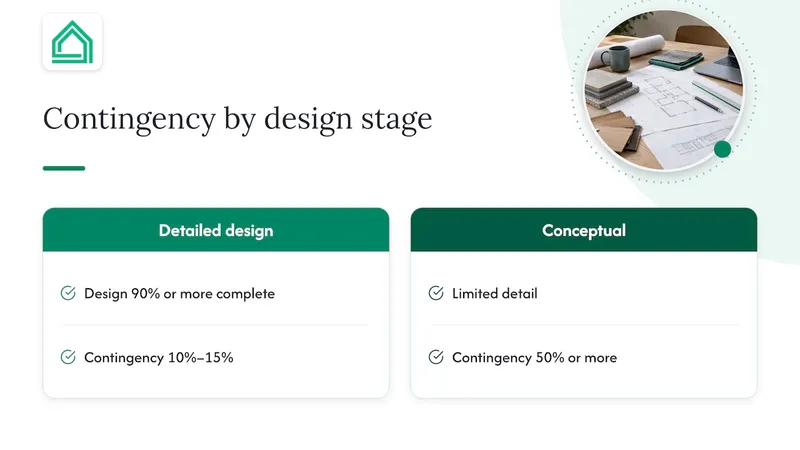
The biggest driver is how finished your design is. Portland, Oregon project guidance ranges from 10% to 15% for projects with 90% or more of the design complete, up to 50% or more for conceptual projects with limited detail. That guidance is written for public works in the US, so do not copy the numbers literally onto a loft conversion. The principle travels well, though: if you are budgeting before you have structural drawings, a survey and fixed quotes, your honest contingency is bigger, and it should shrink as uncertainty does.
A worked example
Say you are renovating a 1920s semi in the Midlands. Your builder's fixed quote for the works is £80,000. The house has an original roof, old wiring and a back wall you suspect has damp.
- Start at 15% for a full renovation: £12,000.
- Add weight for age and known suspicions, taking you to 20%: £16,000.
- Add a time buffer. If the programme is 16 weeks, plan for two to three weeks of slippage, because delay costs you rent or a longer mortgage overlap.
- Hold the £16,000 in a separate account or budget line, outside the £80,000.
Now split it by risk rather than treating it as one lump. For instance, 5% on finishes where costs are known, and 15% to 20% on structure, drainage and services where the unknowns live. That weighting is the practical version of the idea that different parts of a job deserve different cushions.
If £16,000 on top of £80,000 makes the project unaffordable, do not quietly shrink the contingency. Reduce the scope instead. The National Academies' review of contingency practice reflects a sound principle: de-scoping and thorough risk identification come first, and contingency is the final backstop for the unknowns that remain after proper surveys and design work.
How to shrink the unknowns before you start
The cheapest contingency is the surprise you found early. Before you fix your number:
- Commission the right surveys. A structural engineer, a drainage survey and a damp or timber check cost far less than a mid-build discovery.
- Finish decisions early. Late changes are the most common way a contingency vanishes. Our guide to avoiding costly change orders through contractor selection shows how the choice of builder affects this.
- Compare quotes like for like. Gaps and exclusions in one quote become variations later. Our bid-levelling workflow helps you spot them.
- Check references. A contractor onboarding checklist with three verified references reduces the risk of a builder who treats every discovery as a price increase.
- Remember the end-of-job costs. Items such as professional cleaning are easily forgotten. An Australian guide to post-construction cleaning costs shows how this line gets missed, though its prices are for Australia and will differ in the UK.
Rules for spending contingency
A reserve with no rules is just an argument waiting to happen. AIA guidance stresses that agreements should define who controls the funds, what the money may be used for and what documentation is needed to release it. It also notes that projects stall when no one has defined what counts as a trigger, so the contractor waits on approval while the site problem gets worse.
For a home project, a simple version looks like this:
- Define what qualifies. Hidden conditions, such as rot, unmapped services or ground issues, qualify. Upgrades and new ideas do not.
- Name the approver. If you are two people, agree now who signs off, and by when. Couples who decide this at the kitchen table avoid deciding it on a muddy site.
- Require a written quote for every draw. A description, a photo, a cost and the effect on programme.
- Set a response window. For example, a decision within 48 hours for anything blocking work.
- Log every draw. Date, reason, amount, remaining balance.
A clear change process is the backbone of this. Our piece on managing construction modifications and change orders walks through it, and good document control keeps the paper trail tidy.
Ask for transparency
Experienced builders often update clients on how the reserve is being used. One US builder's guide notes that regular updates, monthly or quarterly, keep trust intact through the stressful stretches. On a home job, ask for a monthly statement at minimum, and a quick message whenever you spend more than a set amount, say £500.
A useful habit: keep a quarter of the contingency untouched until late in the build. Problems found at second fix or in the final weeks tend to be expensive to fix, and you do not want to arrive there with an empty pot.
Perspective: what we see go wrong
At House A-Z we built our platform for first-time builders and renovators who are tired of spreadsheets, scattered apps and guesswork. From that vantage point, the contingency itself is rarely the problem. The trouble is that it lives in someone's head, or in a spreadsheet nobody updates.
Here is how we think about it:
- Treat contingency as a number that moves. It starts high, falls as decisions firm up, and every draw changes the picture. A static percentage written once on day one is a guess.
- Separate it from selections. Many overruns that feel like surprises are product choices that drifted. Tracking real product prices against your allowances keeps the reserve for real unknowns.
- Make collaboration visible. When you, your partner and your contractor all see the same budget, nobody is surprised by a draw.
- Write it in plain language. If you cannot explain in one sentence why a cost is eligible, it probably is not.
The most expensive mistakes tend to be invisible until they land, and the reserve is there so that a surprise becomes an inconvenience rather than a crisis.
— Azai
Track it as you go
If you want the reserve to behave, track it like a live line item. Our four-step workflow for tracking a renovation budget shows how to compare estimate, committed cost and actual spend, and our procurement log template stops late product orders from becoming contingency drains. For a regular rhythm with your builder, the contractor meeting agenda gives you a standing slot to review contingency every week.
If you would rather have it all in one place, House A-Z brings budget tracking, product pricing, project management and contractor collaboration together, with AI agents that work from your budget, preferences and timeline. You can start on the Free plan, move to Pro at €29 per month when you want the advanced features, and professionals can look at Enterprise from €99 per month. See the plans and pricing or meet the AI agents.
Common mistakes
- Spending it on upgrades. Once the reserve funds a nicer bathroom, it cannot fund a burst pipe.
- Cutting it to make the sums work. A thin budget with no reserve is a plan for a mid-build argument. Cut scope first.
- Forgetting time. Delays cost money through rent, storage and extended finance. Allow a time buffer, not only a cash one.
- Never reviewing it. As design matures and risks are cleared, guidance suggests reviewing the percentage downward. If the project finishes with money unspent, that is a good outcome, not wasted money.
- Verbal agreements. If it is not written down, it is not agreed.
FAQ
What is a good construction contingency percentage?
For a UK renovation or extension with complete plans, 10% to 15% is a common range. For a full renovation, or an older house where much will be opened up, 15% to 20% or more is safer. The less finished your design, the higher the figure should be.
What does a 5% contingency mean?
It means you hold back an extra 5% of the construction cost, so £2,500 on a £50,000 job. That is thin, and only suits low-risk work such as decorating or flooring. For anything involving walls, floors, pipes or wiring, most guidance points higher.
How much contingency should I allow for a renovation?
Start with the table above and adjust for age, survey findings and how complete your plans are. A 1920s house with old wiring warrants more than a ten-year-old flat. If the total looks unaffordable, reduce the scope rather than the reserve.
How do you calculate construction contingency?
Take the confirmed construction cost, multiply by your chosen percentage, and hold that sum separately. For better accuracy, weight it: a lower percentage on finishes and a higher one on structure, drainage and services. Add a separate allowance for time.
Should I tell my builder how much contingency I have?
It is wise to agree how the reserve works, but you do not need to reveal the full amount. What matters is that you both know the rules for drawing on it, who approves each use, and what paperwork is needed.
Sources
- Managing the contingency allowance, AIA
- Construction contingency: how much should you allow, Quantity Surveyor Auckland
- How much renovation contingency budget is enough, Canelli Construction
- A guide to the cost of house extension UK, Harper Latter Architects
- Renovation contingency budget: plan for UK cost overruns, Book a Builder UK
- Project estimate confidence level rating index, City of Portland
- Contingency practice, National Academies
- Residential construction contingency guide, Bolster Built